
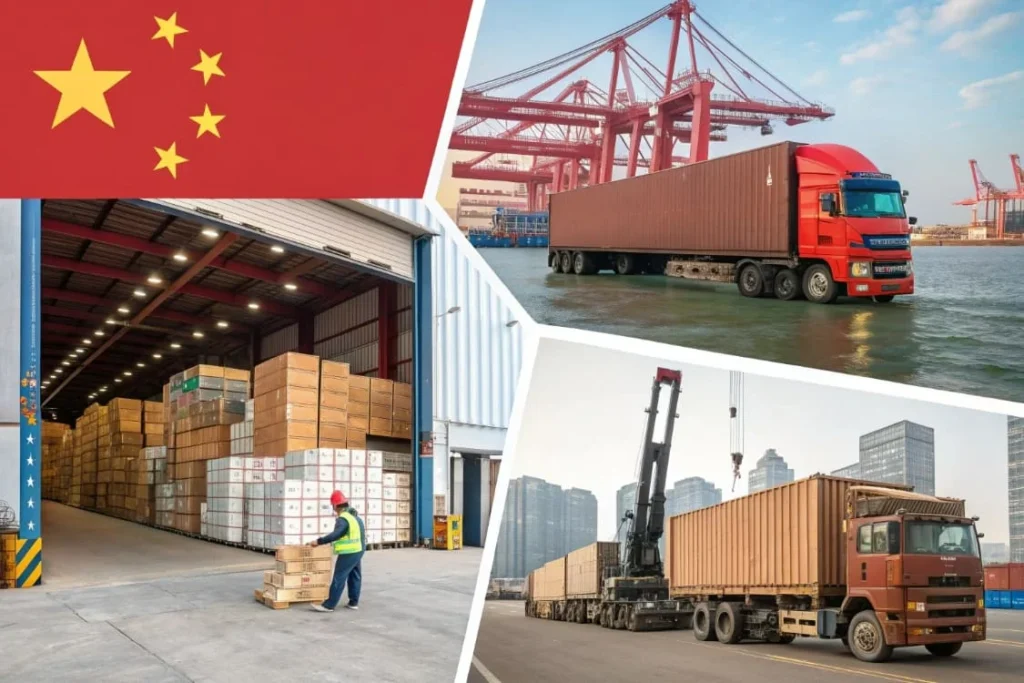
Shipping from China to Canada feels complex and overwhelming. Hidden costs and delays can disrupt your business plans, causing stress and lost profits. We're here to make it simple.
Sea freight is the most cost-effective method for shipping large volumes of goods from China to Canada. It involves transporting cargo in containers on ships, a process that typically takes 25 to 45 days. Key options include FCL (Full Container Load) and LCL (Less than Container Load).
Understanding the basics is a great start, but knowing the exact process will save you headaches and money. It's not as complicated as it seems when you have a partner guiding you. Let's break down how it all works so you can ship your products with complete confidence.
What Is Sea Freight from China to Canada, Really?
Are you confused by all the shipping jargon? This confusion can lead to expensive mistakes and missed deadlines. Let's define sea freight in very simple terms for your business.
Sea freight is the process of transporting goods by cargo ships across the ocean. For importers, it's the most popular and affordable way to move large or heavy products from Chinese factories to Canadian warehouses. The journey involves ports, containers, and customs clearance on both sides.
When people ask me about sea freight, I tell them to think of it as the workhorse of global trade. It’s not the fastest option, but it offers the best value for bulk shipments. If you’re shipping more than a couple of boxes, sea freight is almost always the right answer.
Cost vs. Speed
The main reason my clients choose sea freight is the cost. It is significantly cheaper than air freight, especially for heavy or large-volume goods. The trade-off is time. A plane can get your products to Canada in days, but a ship will take weeks. For most businesses that plan their inventory, this is a smart and economical trade-off.
Who Is Involved?
Several parties make a sea shipment happen. There's you (the importer), your supplier in China (the shipper), and us (the freight forwarder). We act as your logistics coordinator, managing the entire process from the factory door to your final destination.
How Does Sea Freight Actually Work, Step-by-Step?
The shipping process can feel like a black box. If you don't know the steps involved, you can't prepare for potential delays. Here is a clear, step-by-step guide.
The process starts with booking your shipment. Then, your goods move from the factory to the Chinese port, clear export customs, and are loaded onto a ship. After ocean transit, they arrive in Canada, clear import customs, and are delivered to your final destination.
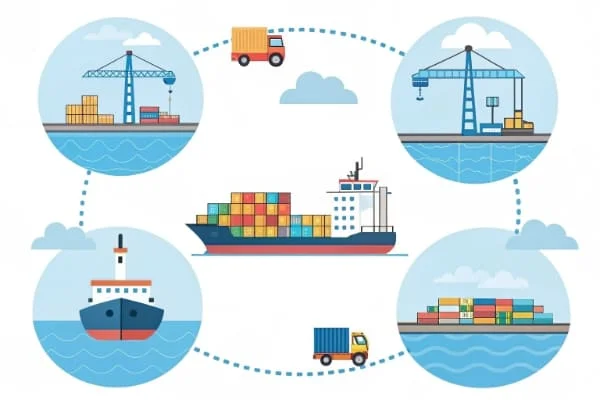
I've managed thousands of shipments, and they all follow the same core path. Breaking it down makes it much less intimidating. Here is the journey your products take.
| Step | Action | What It Means |
|---|---|---|
| 1 | Booking | You provide us with shipment details (weight, volume, addresses). We give you a quote and book space on a vessel. |
| 2 | Cargo Pickup | We arrange for a truck to pick up your finished goods directly from your supplier's factory in China. |
| 3 | Export Clearance | We handle all the necessary paperwork to clear your goods through Chinese customs at the port of origin. |
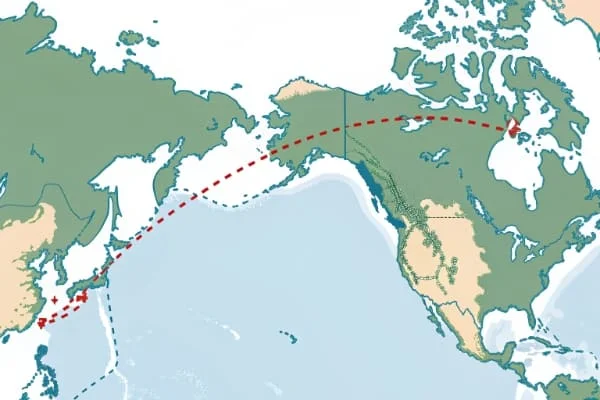
| 4 | Ocean Transit | Your container is loaded onto the cargo ship, and it begins its journey across the Pacific Ocean to Canada. |
| 5 | Import Clearance | Your shipment arrives in Canada. This is where we handle Canadian customs, duties, and taxes. |
| 6 | Final Delivery | After clearance, we transport your goods from the port to your warehouse, office, or an Amazon FBA center. |
Many of my e-commerce clients used to tell me that shipping was the hardest part of their business. Then DDP (Delivered Duty Paid) shipping became popular. It was a game-changer. With DDP, you don't need an import license or a customs bond. You don't have to worry about paperwork or inspection fees. You just hand the goods to us in China, and the next thing you know, they're ready for sale. It simplifies everything.
FCL vs. LCL: Which Shipping Method Should You Choose?
Choosing between FCL and LCL shipping can be confusing. Making the wrong choice can cost you extra money or add unnecessary transit time. Let's help you decide which is best.
Choose FCL (Full Container Load) if you have enough cargo to fill a 20ft or 40ft container (usually 15 CBM or more). It's faster and more secure. Choose LCL (Less than Container Load) for smaller shipments, as you only pay for the space you use inside a shared container.
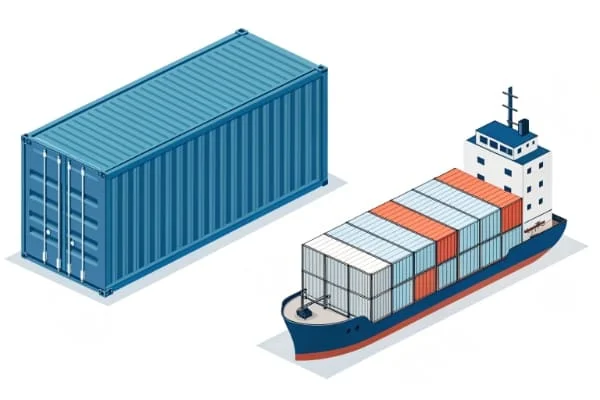
I always explain this choice to my clients with a simple analogy. Think of FCL as chartering a private bus—it’s all yours, it goes directly to your destination, and it’s faster. LCL is like buying a ticket on a public bus—you share the space with others, and the bus makes multiple stops, so it takes longer.
FCL (Full Container Load)
With FCL, you rent an entire container for your goods alone. This is ideal for larger shipments. The container is sealed at the factory and isn't opened again until it reaches you in Canada. This reduces handling and the risk of damage. As a rule of thumb, if your shipment volume is over 15 cubic meters (CBM), FCL is often the more cost-effective and efficient choice.
LCL (Less than Container Load)
With LCL, your goods are consolidated with other importers' cargo to fill a container. It's a great option for smaller businesses or those testing new products. You only pay for the volume your goods occupy. However, the transit time is longer because of the extra steps of consolidating and deconsolidating the cargo at both ports.
Here is a simple table to help you decide:
| Feature | FCL (Full Container Load) | LCL (Less than Container Load) |
|---|---|---|
| Best For | Shipments over 15 CBM | Shipments between 1-15 CBM |
| Cost | Cheaper per CBM for large volumes | More expensive per CBM |
| Speed | Faster | Slower due to consolidation |
| Security | Higher (sealed container) | Lower (more handling) |
Which Chinese Ports Should You Ship From to Canada?
China is a massive country with dozens of ports. Choosing the wrong port can add hundreds of dollars in local transport fees and days to your schedule. So, which one is right?
The best port depends on your factory's location. The main ports for Canada-bound cargo are Shanghai, Shenzhen, and Ningbo. Choosing the port closest to your supplier is crucial for minimizing domestic trucking costs and transit time within China.
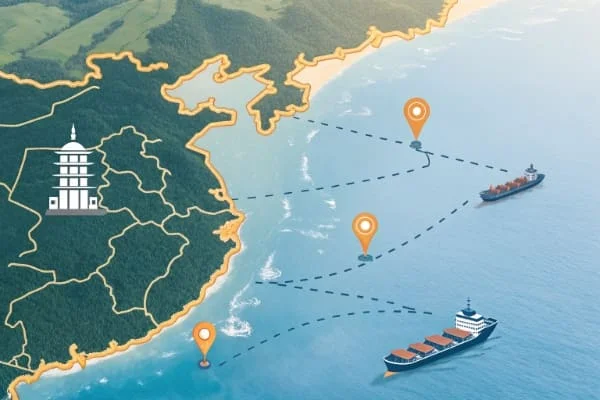
I always tell my clients that the port choice is simple: we go with whatever is closest to the factory. There’s no sense in trucking goods from northern China all the way to a southern port. That just adds unnecessary cost and risk. Our job is to find the most logical and efficient route for you. Here are the main players:
Port of Shanghai
This is the busiest port in the world. It’s located in central China and can handle virtually any type of product. If your supplier is in Zhejiang or Jiangsu province, Shanghai is usually the best choice.
Port of Shenzhen
Located in southern China near Hong Kong, Shenzhen is a powerhouse for electronics and high-tech goods. It serves the manufacturing-heavy Pearl River Delta region. If your factory is in or around Guangdong province, Shenzhen is your port.
Port of Ningbo-Zhoushan
Just south of Shanghai, Ningbo is another one of the world's busiest ports. It’s a fantastic alternative to Shanghai, often with less congestion. It's great for miscellaneous goods, tools, and textiles from the surrounding industrial areas.
By working with a partner on the ground like us, you don't have to worry about these details. We coordinate with your factory to select the optimal port, saving you time and money.
Conclusion
Sea freight from China to Canada doesn't have to be a headache. Understanding the basics of FCL, LCL, and DDP helps you make smart decisions for your business's supply chain.