
Confused about shipping costs1 and delays from China to Canada? Unexpected fees and long transit times2 can ruin your budget and deadlines. This guide breaks down everything for smooth, predictable shipping.
Shipping from China to Canada in 2026 can cost $5–$12 per kg for air freight3 (3–10 days) or $2,500–$6,000 for a 40ft sea container (20–40 days). The best route depends on your urgency, budget, and final destination, with Vancouver being the fastest sea port.
I've helped hundreds of clients just like you navigate the complexities of international shipping. The key is to really understand all your options before you commit to a shipment. Getting this right saves you money and headaches down the road. Let's dive into the details so you can make the best choice for your business. We will start with the question I get asked the most: how much does it all cost?
How Much Does Shipping from China to Canada Cost?
Worried about unpredictable shipping costs1 eating into your profits? Hidden charges and confusing quotes make it hard to budget accurately for your imports. Let's look at the real costs.
Air freight costs $5–$12 per kilogram. Sea freight for a full container (FCL) costs $2,500–$6,000. Less than Container Load (LCL) costs $200–$400 per cubic meter. Express couriers like DHL cost $6–$15 per kg for small, urgent shipments.
The final price on your shipping invoice4 depends on several factors, not just the weight and size of your cargo. You need to consider the shipping method5, the time of year, and current fuel prices. As we look toward 2026, I'm advising my clients to budget for a 5-10% increase in sea freight6 rates due to ongoing capacity issues on Pacific routes and volatile fuel costs.
To give you a clearer picture, here is a breakdown of the typical costs.
| Shipping Method | Typical Cost Range | Best For |
|---|---|---|
| Sea Freight (FCL) | $2,500 - $6,000 / 40ft container | Shipments over 15 CBM; less time-sensitive goods |
| Sea Freight (LCL) | $200 - $400 / CBM | Small shipments (2-15 CBM); budget-conscious |
| Air Freight | $5 - $12 / kg | Shipments 150-500 kg; urgent or high-value goods |
| Express Courier | $6 - $15 / kg | Small parcels under 150 kg; very urgent delivery |
Don't forget about peak seasons7. Factories in China shut down for Chinese New Year (usually Jan/Feb), so you need to ship weeks in advance. The period before Golden Week (October) and the pre-Christmas rush (Aug-Nov) also see prices spike by 10–20% due to high demand. Planning your orders around these times can save you thousands.
How Long Does Shipping from China to Canada Take?
Are shipping delays8 from China hurting your inventory management and sales? Long, uncertain transit times2 mean you can't promise delivery dates to your customers. Here are the realistic transit times2.
Express shipping is fastest at 2–5 days. Air freight takes 3–10 days door-to-door. Sea freight is the slowest, taking 20–40 days for a full container and 25–45 days for LCL shipments. These times do not include customs clearance9 or inland transport.
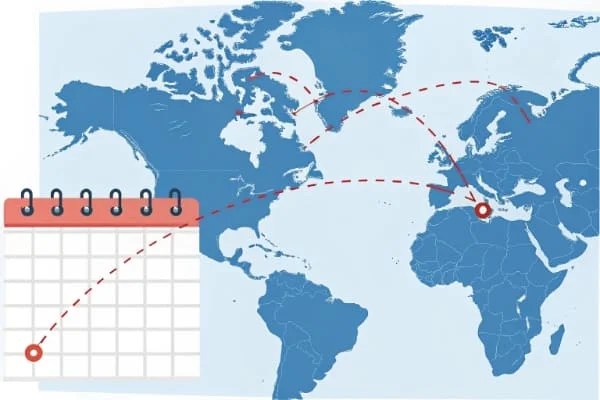
It's important to understand the difference between "port-to-port" transit time and "door-to-door" transit time. Many quotes only show the time on the water. But the total time includes getting your goods from the factory to the port in China, waiting for customs, loading, sailing, unloading, clearing customs in Canada, and finally trucking to your warehouse. This entire process can add 1-2 weeks to the port-to-port time. I had a client whose first shipment was quoted at "20 days transit." They were shocked when it took 35 days to arrive at their door. We now always plan using the full door-to-door timeline.
Here’s a realistic look at total door-to-door timelines:
| Shipping Method | Port-to-Port Time | Total Door-to-Door Time | Main Factors Affecting Time |
|---|---|---|---|
| Sea Freight (FCL) | 15-30 days | 20-40 days | Port congestion, customs clearance9, final destination |
| Sea Freight (LCL) | 20-35 days | 25-45 days | Consolidation/de-consolidation time, customs inspections |
| Air Freight | 1-5 days | 3-10 days | Flight availability, customs clearance9 speed |
| Express Courier | 1-3 days | 2-5 days | Direct flights, streamlined customs |
Delays are most common with LCL sea freight6 because your goods have to be bundled with others at a warehouse in China and then separated at a warehouse in Canada. Customs inspections, bad weather, and port congestion can also add unexpected delays. Always build a buffer of at least one week into your timeline.
What Is the Best Route from China to Canada?
Choosing the wrong shipping route can add weeks to your transit time and hundreds of dollars in extra costs. Your goods could get stuck in a congested port or take a slow, inefficient path. Let's find the fastest and most cost-effective route for your specific needs.
For speed, the best sea route is from Shanghai or Ningbo to Vancouver (13–17 days port-to-port). For cargo headed to Eastern Canada, shipping to Montreal is common. The hybrid sea-rail route via Prince Rupert can also save 3–5 days for Toronto-bound goods.
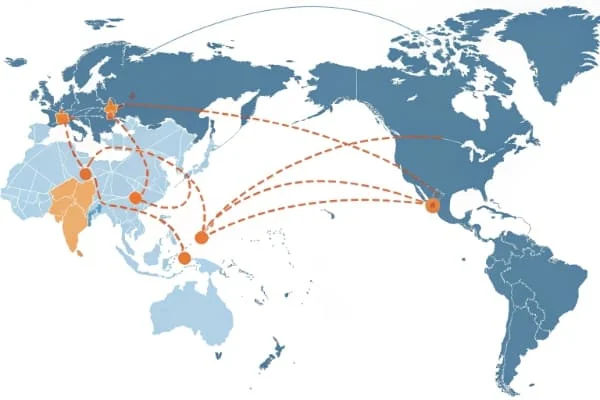
The "best" route always depends on where your goods need to end up in Canada. Sending a container to Toronto via the port of Vancouver is very different from sending it via Montreal.
Main Sea Routes to Canada
- To Western Canada (e.g., Vancouver, Calgary): The fastest and cheapest route is from a major Chinese port like Shanghai, Ningbo, or Shenzhen directly to the Port of Vancouver. With transit times2 as low as 13-17 days on the water, it’s the primary entry point for goods destined for British Columbia and Alberta.
- To Eastern Canada (e.g., Toronto, Montreal): You have two main options. You can ship to Vancouver and then move the container across the country by rail, which is reliable but can be slow. Or, you can ship all-water through the Panama Canal to the Port of Montreal. This takes longer on the ocean (around 30 days) but can sometimes be cheaper overall by reducing expensive inland rail costs.
A Faster Alternative: The Prince Rupert Advantage
For goods going to cities like Toronto or Chicago, I often recommend the hybrid sea-rail route through the Port of Prince Rupert. It’s a bit further north than Vancouver and is almost exclusively a rail terminal. Containers are offloaded directly onto trains. This avoids the port congestion and trucking delays common in Vancouver, often cutting the total transit time to Toronto by 3-5 days compared to the Vancouver-rail route.
FCL vs LCL: Which Should You Choose for Your Shipment?
Don't know whether to book a full container or share one? Choosing the wrong option can mean overpaying for empty space or facing delays and potential damage from extra handling. Let's quickly determine if FCL or LCL is right for your shipment.
Choose Full Container Load (FCL) if your cargo is over 15 cubic meters (CBM). It's faster and more secure. Choose Less than Container Load (LCL) for smaller shipments. It's cheaper for low volumes but can take longer due to consolidation and de-consolidation.
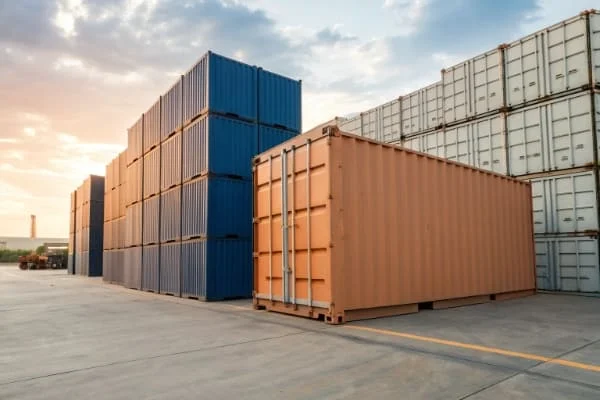
This is one of the first decisions we make with a client. The choice between FCL and LCL shipping impacts your cost, speed, and the security of your goods. FCL means you rent an entire 20ft or 40ft container for your exclusive use. LCL means you share container space with other importers.
Here’s a side-by-side comparison to help you decide:
| Feature | FCL (Full Container Load) | LCL (Less than Container Load) |
|---|---|---|
| Best For | Shipments over 15 CBM | Shipments between 2 and 15 CBM |
| Cost | Flat rate per container. More cost-effective for volume. | Billed per cubic meter (CBM) or per 1000 kg. Cheaper for small shipments. |
| Speed | Faster. Container is sealed at the factory and goes directly to the destination. | Slower. Requires time for consolidation in China and de-consolidation in Canada. |
| Security | Higher. Less handling means a lower risk of damage or loss. | Lower. Goods are handled multiple times, increasing risk of damage or being misplaced. |
The general rule of thumb is that if your shipment volume is around 15 CBM, it's time to start comparing prices. Sometimes, even for a 13 CBM shipment, the flat rate for a 20ft FCL container is cheaper than the LCL rate. Even if it costs a little more, I often advise clients with fragile or high-value goods to choose FCL for the added security and faster transit.
What Duties & Taxes Will You Pay When Importing to Canada?
Worried about getting hit with unexpected taxes and duties at the border? These surprise costs can destroy your profit margins and delay your shipment's release. Here's how to calculate the duties and taxes for your Canadian imports.
You will pay a 5% Goods and Services Tax (GST) on the value of your goods. Additionally, customs duties10 apply based on the product's HS Code11, ranging from 0% to 18% or more. Use the Canada Border Services Agency (CBSA) CARM portal12 for pre-clearance.

This is a critical step that many new importers overlook. The price you pay your supplier is not your final cost. Before your goods are released in Canada, you must pay duties and taxes to the Canada Border Services Agency (CBSA).
Here’s how it breaks down:
- Find Your HS Code11: Every product has a Harmonized System (HS) code. This 10-digit number tells the CBSA exactly what you are importing. Your supplier should be able to provide this, but it is your responsibility as the importer to ensure it's correct. An incorrect code can lead to fines and major delays.
- Calculate Customs Duty: Using the HS code, you can look up the duty rate in Canada's Customs Tariff schedule on the CBSA website. Rates vary widely. For example, some electronics might be 0%, while apparel could be 18%. The duty is calculated as a percentage of the "value for duty," which is the price you paid for the goods in Canadian dollars.
- Calculate GST: Next, you must pay the Goods and Services Tax (GST), which is 5% nationwide. The GST is calculated on the total of the value for duty plus the customs duty amount.
For example, if you import $10,000 CAD worth of goods with an 8% duty rate:
- Duty: $10,000 x 8% = $800
- GST: ($10,000 + $800) x 5% = $540
- Total to CBSA: $800 + $540 = $1,340
The CBSA's CARM portal12 is becoming essential for managing these payments. It allows you or your customs broker to handle this online before the goods even arrive, speeding up clearance.
FOB13 vs CIF14 vs DDP15: Which Incoterm Is Best for Shipping to Canada?
Confused by shipping terms like FOB13, CIF14, and DDP15? Choosing the wrong one can leave you responsible for unexpected risks, paperwork, and costs you didn't plan for. Let's simplify these terms so you can choose the best one for you.
FOB13 (Free On Board) gives you control over shipping but requires you to manage it. CIF14 (Cost, Insurance, and Freight) is easy but can have hidden fees. DDP15 (Delivered Duty Paid) is the most hands-off, as your supplier or agent handles everything to your door.
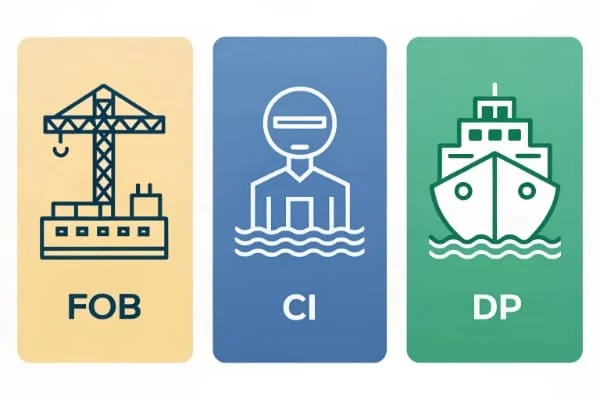
Incoterms are trade terms that define who is responsible for what during the shipping process. Choosing the right one is crucial for managing your costs and risks. For most of my clients, the choice comes down to FOB13, CIF14, or DDP15.
| Incoterm | What It Means | Who Has Control & Risk | Best For... |
|---|---|---|---|
| FOB13 | Free On Board. The seller gets the goods to the port in China. You take over from there. | You control the main freight, insurance, and Canadian customs. You choose your own forwarder. | Experienced importers who have a trusted freight forwarder and want to control costs. |
| CIF14 | Cost, Insurance, and Freight. The seller arranges and pays for shipping to the Canadian port. | The seller chooses the carrier. You take over at the Canadian port for customs and delivery. | Beginners, but be cautious. This option often has high, hidden destination fees. |
| DDP15 | Delivered Duty Paid. The seller (or their agent) handles everything to your final address. | The seller/agent manages the entire process, including shipping, customs, and duties. | Importers who want a single, all-in price and zero hassle. This is what we provide. |
I strongly caution my clients against using CIF14. While the initial quote looks cheap, the seller picks the cheapest ocean carrier. That carrier's agent in Canada will then charge you very high fees for handling and paperwork, and you have no power to negotiate.
For most businesses, especially those focused on their brand and not logistics, DDP15 is the best option. It gives you one clear, landed cost for your goods. When we provide a DDP15 service, we act as your partner, managing every step from the factory floor to your front door, eliminating surprises.
What's on the Final Cost Checklist Before You Ship from China?
Think you know the total cost of your shipment? Small, forgotten fees can add up quickly, leading to a surprise bill at the end that can wipe out your profit. Use this final checklist to ensure you've accounted for every possible cost.
Before shipping, confirm costs for: the product, ocean/air freight, insurance, destination port fees, customs brokerage, duties and GST, and final inland delivery. A DDP quote from a reliable partner like us covers all these elements in one price.
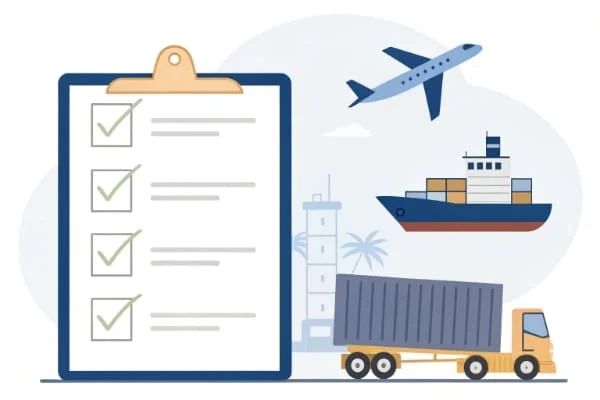
To avoid any surprises, I always walk my clients through a complete cost breakdown before we finalize an order. Your "landed cost" is the true cost of getting a product from the factory to your warehouse, ready for sale. It’s much more than just the product price and the main shipping fee. Before you agree to any shipment, make sure you have a number for each of these items.
Here is the checklist we use to build a complete DDP quote:
- Product Cost: The price you pay your supplier (often based on FOB terms).
- Export Handling: Fees in China for trucking to the port, documentation, and export clearance.
- Main Freight: The cost for sea or air transport from China to Canada.
- Cargo Insurance: Essential protection against damage or loss during transit.
- Destination Charges: Fees at the Canadian port/airport for terminal handling and unloading. These are the "hidden fees" in many CIF quotes.
- Customs Brokerage: The fee paid to a licensed broker to clear your goods through CBSA.
- Duties & GST: The taxes and tariffs you must pay to the Canadian government.
- Inland Delivery: The cost of trucking your goods from the port or warehouse to your final address.
If you are trying to manage this all yourself, it's easy to miss one of these. Working with a single partner who provides a transparent, all-inclusive DDP price is the safest way to protect your budget and ensure a smooth delivery.
Conclusion
Shipping from China to Canada is manageable with the right plan. Understanding costs, times, and terms empowers you to import successfully. We are here to help you manage it all.
Understanding shipping costs is crucial for budgeting and planning your imports effectively. ↩
Knowing transit times helps in planning your inventory and managing customer expectations. ↩
Air freight can be a fast option; explore its costs and benefits for urgent shipments. ↩
Knowing what affects your shipping invoice can help you budget more accurately. ↩
Explore various shipping methods to find the best fit for your cargo and budget. ↩
Understanding FCL vs LCL can help you choose the best shipping method for your needs. ↩
Learn how to plan your shipments around peak seasons to save money. ↩
Learn strategies to minimize delays and ensure timely delivery of your goods. ↩
Navigating customs clearance is essential to avoid delays and additional costs. ↩
Understanding customs duties helps in budgeting and avoiding surprises at the border. ↩
Finding the right HS Code is crucial for calculating duties and ensuring compliance. ↩
The CARM portal simplifies customs processes; learn how to use it effectively. ↩
Understanding FOB is essential for managing shipping responsibilities and costs. ↩
CIF can seem convenient, but it may have hidden costs; explore its implications. ↩
DDP offers a hassle-free shipping experience; learn how it can benefit your business. ↩