
Confused by all the new charging terms like MagSafe1, Qi, and Qi22? Choosing the wrong one for your promotional product could mean slow charging and unhappy customers.
MagSafe1 uses magnets for perfect alignment on iPhones, enabling 15W charging3. Qi22 is an open standard with similar magnets for all brands. Traditional Qi wireless charging4 lacks magnets, making it slower and less efficient.
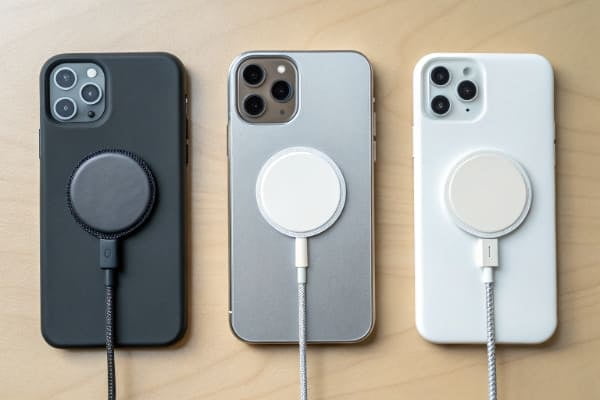
That's the short version. But the details are what really matter, especially when you're investing in custom branded chargers5. The speed, safety, and cost differences can make or break your product's success. Let's dive into what sets these technologies apart so you can make the right choice for your brand.
How does MagSafe1 charging work vs standard wireless charging4?
Standard wireless chargers can be frustrating. You place your phone down, but it doesn't charge. This misalignment wastes energy and leads to slow, inconsistent charging for your customers.
MagSafe1 uses a ring of magnets to snap an iPhone into the perfect charging position, delivering up to 15W. Standard Qi wireless charging4 uses induction coils without magnets, so you have to manually find the "sweet spot," often resulting in slower 5-7.5W charging.
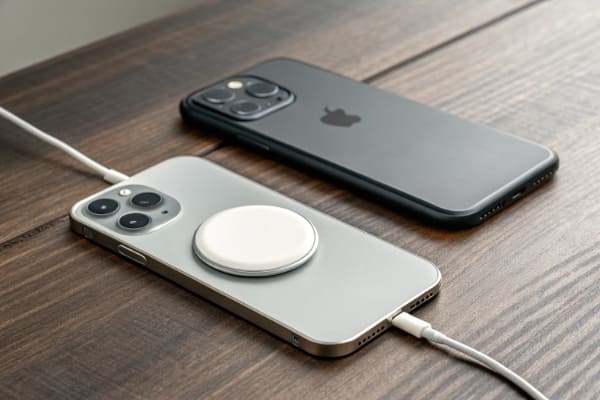
I remember when we first started sourcing standard Qi chargers. Customers loved the idea, but we got feedback about phones getting hot or not charging overnight. The alignment was the problem. Standard Qi works through a process called electromagnetic induction6, where one coil in the pad transfers power to a coil in the phone. If those coils are not lined up almost perfectly, the power transfer is weak.
The Core Technology: Induction vs. Magnetic Alignment
MagSafe1 changed the game. It introduced a ring of magnets around the charging coil inside the iPhone. This isn't just for holding the phone; it ensures the coils line up perfectly every single time. This perfect alignment is the key. It reduces energy loss, which means less heat and faster, more reliable charging. It's a simple idea, but it makes a huge difference in the user's experience.
| Feature | Standard Qi Wireless Charging | Apple MagSafe1 Charging |
|---|---|---|
| Alignment | Manual (user must find the spot) | Automatic (magnetic snap) |
| Max Speed (iPhone) | 7.5W | 15W |
| Connection | Rests on pad | Snaps securely in place |
| Efficiency | Lower due to potential misalignment | Higher due to perfect alignment |
What is Qi22 and how does it relate to MagSafe1?
You love MagSafe1's magnetic snap, but it's an Apple-only feature. This limits your branded product's audience, excluding the huge Android market. Qi22 is here to bring MagSafe1-like convenience to everyone.
Qi22 is the new universal standard for wireless charging4. It was developed with Apple's help and incorporates a Magnetic Power Profile7 (MPP) very similar to MagSafe1. This brings magnetic alignment and 15W charging3 to both iPhones and compatible Android devices, creating one universal ecosystem.
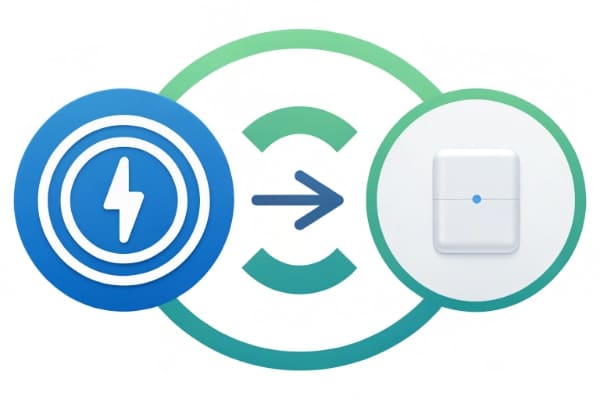
It's a fascinating story from a manufacturing perspective. The Wireless Power Consortium (WPC), the group behind the Qi standard, wanted to solve the same alignment problem we just discussed. Apple had already perfected it with MagSafe1. So, Apple contributed its MagSafe1 technology to the WPC to create a new, open standard. This became Qi22.
The Birth of a Universal Standard
Specifically, they created the Magnetic Power Profile7, or MPP. Think of MPP as the universal, non-Apple version of MagSafe1. It uses a ring of magnets for perfect alignment and enables 15W charging3 speeds for any Qi22-certified device, not just iPhones. Qi22 chargers are also backward compatible. They can still charge older, non-magnetic Qi devices, but they will do so at the slower, non-MPP speeds. This move is huge for the promotional products8 industry. We can now design one magnetic charger that works perfectly for everyone.
What are the speed differences between MagSafe1, Qi, and wired charging?
No one likes waiting for their phone to charge. A slow promotional charger reflects poorly on your brand and gets left in a drawer. Understanding charging speeds9 helps you deliver a product people will actually use.
Wired charging is the fastest, often reaching 20W or more. MagSafe1 and Qi22 are next, both offering a peak speed of 15W with perfect alignment. Traditional Qi wireless charging4 is the slowest, typically maxing out at 5W to 7.5W.
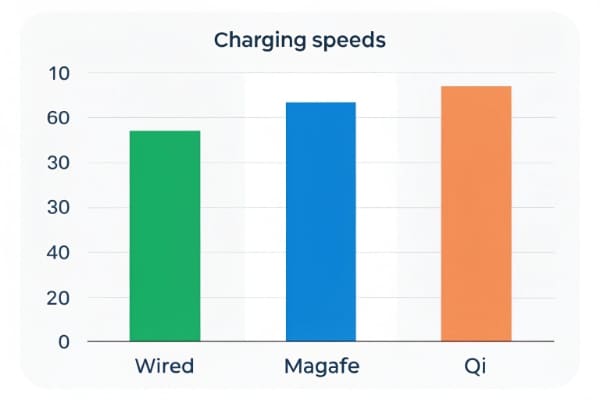
Let's talk numbers, because that's what your customers will notice. Power is measured in watts (W). More watts generally means faster charging. A standard USB-C wired charger can easily deliver 20W or more, charging a phone to 50% in about 30 minutes. It's the undisputed speed king.
A Look at the Numbers: Watts and Charging Times
Now let's look at wireless. MagSafe1 and the new Qi22 standard both top out at 15W for compatible devices. This is a big jump from the old Qi standard, which on an iPhone was limited to 7.5W. For other devices, basic Qi can be as low as 5W. The 15W speed of MagSafe1 and Qi22 is a sweet spot. It's fast enough for a meaningful charge during a meeting or a quick top-up, without generating excessive heat. It's a significant improvement that makes wireless charging4 a truly practical daily option for everyone.
| Charging Method | Typical Max Power | Key Feature |
|---|---|---|
| Wired (USB-C) | 20W+ | Fastest possible speed |
| MagSafe1 / Qi22 (MPP) | 15W | Fast wireless with magnetic alignment |
| Standard Qi (for iPhone) | 7.5W | Basic wireless, no alignment |
| Standard Qi (Basic) | 5W | Slowest wireless option |
Are there any safety and efficiency differences?
You've heard wireless charging4 can make phones hot or even damage the battery. A faulty or inefficient charger is a safety risk and a liability for your brand. Newer magnetic technologies are designed to be safer.
MagSafe1 and Qi22 are more efficient because their magnetic alignment reduces energy loss, which in turn generates less heat. Less heat is safer for the battery's long-term health. Standard Qi can be less efficient and create more heat if the phone is not placed perfectly.
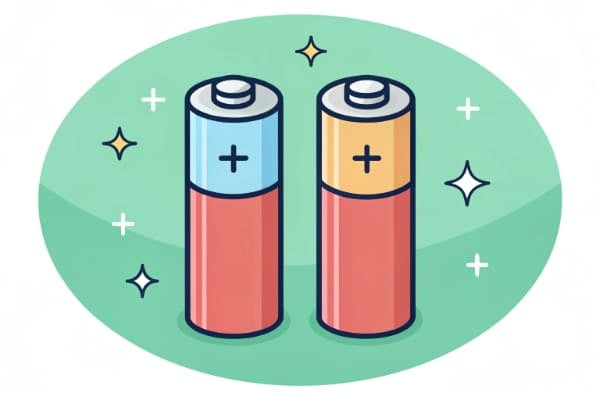
When we source electronic products, safety is our number one priority. In wireless charging4, efficiency and safety are directly linked. The energy transfer from the charger to the phone isn't 100% perfect. Some energy is lost as heat. With standard Qi charging, if the coils are misaligned, the system works harder to transfer power, creating even more excess heat.
How Alignment Impacts Heat and Battery Health
This heat is bad for the phone's battery, degrading its health over time. This is where the magnets in MagSafe1 and Qi22 make a huge difference. By ensuring a perfect alignment every time, they maximize the efficiency of the power transfer. More energy goes into the battery, and less is wasted as heat. This makes the charging process not only faster but also much safer for the device. That’s why we always recommend using certified chargers—either Apple MFi-certified for MagSafe1 or Qi-certified for Qi/Qi22—to ensure they meet strict safety and performance standards.
What is the cost comparison10 of these charging technologies?
You need to choose a charging technology that fits your promotional budget. Overspending on features your audience doesn't need hurts your ROI. Let's break down the costs so you can invest wisely.
Standard Qi chargers are the most affordable. Qi22 chargers are in the middle, offering premium features at a competitive price. MagSafe1 chargers are typically the most expensive due to Apple's "Made for iPhone" (MFi) licensing fees.
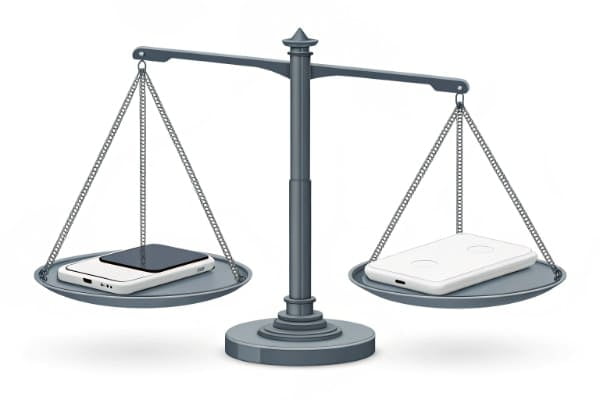
As a sourcing partner, I see the cost breakdown firsthand. The price differences come down to technology and licensing. Basic 5W Qi chargers are the cheapest to produce. They use simple components and have minimal certification costs. This makes them great for large-scale, budget-friendly giveaways.
Understanding the Price Tag: Licensing and Components
MagSafe1 products are on the other end. To officially use the "Made for MagSafe1" branding and get the full 15W speed, manufacturers like us must join Apple's MFi program. This involves licensing fees and using specific Apple-approved components, which drives up the cost. Qi22 sits in a very interesting middle ground. It offers the premium magnetic experience of MagSafe1 without the expensive Apple licensing. While Qi22 certification has costs, it's an open standard, which promotes competition and keeps prices lower than MFi. This makes Qi22 a fantastic value proposition for high-quality promotional products8.
| Technology | Relative Cost | Key Cost Driver | Best For |
|---|---|---|---|
| Standard Qi | Low | Simple components, minimal licensing | Budget-conscious mass giveaways |
| Qi22 | Medium | Certification, magnetic components | High-value promos with broad appeal |
| MagSafe1 | High | Apple MFi licensing fees, specific components | Premium Apple-focused branding |
Which charging method11 should you choose?
Now you know the differences, but you're still not sure which is right for your project. Making the wrong choice means a missed opportunity to connect with your target audience.
Choose Qi22 for the best balance of modern features, universal compatibility12, and value. Choose MagSafe1 if your audience is exclusively high-end Apple users. Choose standard Qi for large-volume, budget-sensitive campaigns13.
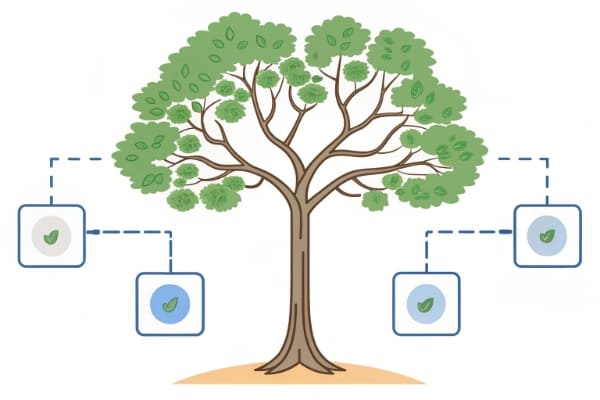
The best choice depends entirely on your goal, audience, and budget. I help clients walk through this decision every day. Here’s how I usually break it down for them.
A Practical Guide for Your Brand
If you need a cost-effective item for a large trade show and your goal is mass brand exposure, a simple, custom-branded 5W Qi charger is a perfect fit. It’s affordable and introduces people to the convenience of wireless charging4.
If you're creating a high-end corporate gift for valued clients or employees, Qi22 is the new gold standard. It shows your brand is modern and thoughtful, providing a premium experience for both iPhone and Android users. It has a high perceived value.
And what about MagSafe1? I recommend focusing on official MagSafe1 products only if your brand is tightly integrated with the Apple ecosystem, like an app developer or an exclusive accessories retailer. For most brands, Qi22 now offers the same great experience with a much wider audience reach.
Conclusion
In short, Qi22 is the future, blending MagSafe1’s magnetic convenience with universal compatibility12. It offers the best value and experience for most brands looking to create modern promotional products8.
Explore how MagSafe's magnetic alignment enhances charging efficiency and user experience. ↩
Learn about Qi2's universal compatibility and how it improves wireless charging for all devices. ↩
Discover the benefits of 15W charging speeds for faster device power-ups. ↩
Discover the benefits of wireless charging and why it's becoming a popular choice. ↩
Explore how custom branded chargers can enhance your marketing and brand visibility. ↩
Learn how electromagnetic induction works and its impact on charging efficiency. ↩
Find out how the Magnetic Power Profile enhances wireless charging for various devices. ↩
Learn how to select the best charging technology for your promotional product strategy. ↩
Get insights into the charging speed differences among wired, MagSafe, Qi2, and standard Qi. ↩
Get a detailed breakdown of the costs associated with different charging technologies. ↩
Get expert advice on selecting the most effective charging method for your audience. ↩
Discover the importance of universal compatibility in choosing charging products for diverse users. ↩
Get tips on planning effective promotional campaigns that stay within budget. ↩