
Feeling the pressure to be more eco-friendly? Traditional energy is expensive and has a bad reputation. But switching feels complex. Solar is the clear winner for our planet's health.
Yes, solar energy1 is significantly better for the environment. Its total carbon footprint2 is tiny compared to fossil fuels3. It produces clean electricity without releasing harmful greenhouse gases4, air pollutants, or contaminating water, making it a far more sustainable and healthier choice for the planet.

It's easy to say solar is the better choice, but the reasons why are what really matter. When you dig into the details, the difference isn't just small—it's enormous. Let's break down exactly how harmful fossil fuels3 are and see how solar provides a much cleaner path forward. The facts might just surprise you.
Why Are Fossil Fuels Harmful to the Environment?
We all hear that fossil fuels3 are bad for the planet. But the specific reasons can get lost in the noise. Let's get straight to the facts about the damage they cause.
Fossil fuels are harmful because burning them releases massive amounts of carbon dioxide (CO₂), driving climate change5. The process also causes air pollution6n](https://www.nrdc.org/stories/fossil-fuels-dirty-facts)%%%FOOTNOTE_REF_7%%%, oil spills8, and severe land damage from mining, which harms both ecosystems and human health.

The harm from fossil fuels3 happens at every stage of their life. It’s not just about the smoke you see coming from a power plant. It starts long before that. First, you have to get them out of the ground. Coal mining often involves destroying entire mountaintops and forests, which ruins natural habitats forever. Oil and gas drilling can lead to devastating spills that poison oceans and coastlines for decades. I remember seeing images of oil spills8 on the news, and it really stuck with me how one accident can cause so much long-term damage.
Then comes the biggest problem: burning them for energy. This single step is responsible for about 75% of all global greenhouse gas emissions. When coal, oil, or gas is burned, it releases CO₂, methane, and other gases that trap heat in our atmosphere. This is the main engine of climate change5. It also releases pollutants like sulfur dioxide, which causes acid rain, and particulate matter that leads to serious respiratory problems for people living nearby.
How Does Solar Compare to Coal and Gas?
Comparing different energy sources9 can feel complicated. You hear a lot of different numbers and claims. Here is a simple, direct breakdown of how their environmental footprints really stack up.
Solar energy is dramatically cleaner across its entire lifecycle. It produces zero pollution7 while operating. In contrast, coal and gas power plants constantly release harmful emissions every single day they are running.

When we talk about an energy source's environmental impact, we have to look at the whole picture, from start to finish. This is often called the "lifecycle" impact. For solar, this includes manufacturing the panels, transporting them, and eventually recycling them. Yes, making a solar panel does create some emissions. But here’s the key point: a solar panel pays back that initial carbon "debt" in just one to three years. After that, it produces completely clean energy for the next 30 years or more.
Now, let's look at fossil fuels3. Their impact is constant and massive. Coal is about 23 times more carbon-intensive than solar, and natural gas10 is about 11 times worse. They create pollution7 when they're extracted, transported, and, most of all, when they're burned. It's an ongoing environmental cost that we pay every single day.
Here's a simple way to see the difference:
| Feature | Solar PV | Coal Power | Natural Gas Power |
|---|---|---|---|
| Operational Emissions | None | Very High | High |
| Air & Water Pollution | Minimal (mfg only) | High | High |
| Resource Type | Renewable | Finite | Finite |
| Lifecycle Impact | Low | Extremely High | High |
Which Energy Source Produces More CO₂?
We know CO₂ is the main gas causing climate change5. But it’s easy to lose track of just how much worse fossil fuels3 are. The actual numbers are shocking and make the choice obvious.
Fossil fuels produce overwhelmingly more CO₂. On average, coal generates around 1,000 grams of CO₂ for every kilowatt-hour of electricity. Solar produces only about 40-50 grams, almost all of which comes from manufacturing.

The difference in carbon dioxide emissions is the most important reason why solar is better for the environment. Let's put those numbers into perspective. A kilowatt-hour (kWh) is a standard unit of energy, about what you'd use to run a small appliance for an hour. For every single unit of electricity from a coal plant, you get a massive amount of CO₂. Natural gas is better, but still produces over 400 grams of CO₂ per kWh.
Solar energy, on the other hand, produces only 40 to 50 grams of CO₂ per kWh over its entire lifecycle. That number isn't zero because, as I mentioned, it takes energy to make the panels. But once a solar panel is installed, it produces electricity with zero CO₂ emissions11. It just sits there, silently converting sunlight into power. The CO₂ from fossil fuels3 comes from the fundamental chemical reaction of burning them. You can't have one without the other. When I first saw these figures laid out, it was a real wake-up call. It's not a small difference; it's a completely different league.
Which Uses More Water: Solar or Fossil Fuels?
When we think about energy, we often forget about its impact on water. But many power plants use huge amounts of it. Let's look at how solar helps solve this hidden environmental problem.
Fossil fuel and nuclear power plants are incredibly thirsty, using billions of gallons of water for cooling every year. In contrast, solar panels12 use almost no water at all to generate electricity.
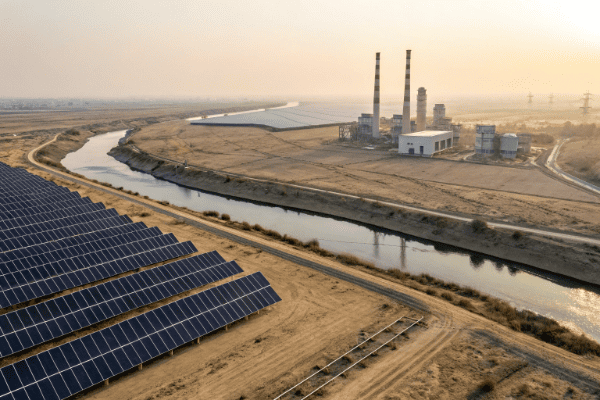
This is a benefit of solar that doesn't get enough attention. Most traditional power plants, whether they burn coal, gas, or use nuclear fission, work on the same basic principle: they heat water to create high-pressure steam, which then spins a turbine to generate electricity. After the steam does its job, it needs to be cooled back down into water so the process can repeat. This cooling stage requires a tremendous amount of water, which is why these plants are almost always built next to a major river, lake, or ocean. They continuously draw in water and then discharge warmer water back out, which can also harm local aquatic ecosystems.
Solar panels work differently. They use a process called the photovoltaic effect to convert sunlight directly into electricity. There's no steam and no turbines. Because of this, they don't need any water for cooling. The only water a solar farm typically uses is a small amount for cleaning the panels once in a while to wash off dust. In a world where water scarcity is becoming a bigger and bigger problem, this is a huge advantage.
Is Solar the Most Sustainable Energy Option?
"Sustainable" is a word we hear all the time. But what does it actually mean when we're talking about energy? Let's define it and see if solar really is the best long-term choice.
Yes, solar is one of the most sustainable energy13 options we have. Its fuel source, the sun, will never run out. This is a sharp contrast to fossil fuels3, which are finite and disappearing quickly.

Sustainability really comes down to one simple idea: can we keep doing this forever without messing things up for future generations? When you apply that question to our energy sources9, the answer becomes very clear. Fossil fuels are, by definition, unsustainable. They are finite resources that took millions of years to form, and we are burning through them in just a couple of centuries. Once they're gone, they're gone for good.
Solar energy is the complete opposite. The sun is an almost limitless source of power. It's going to be shining for another few billion years, so we don't have to worry about it running out. This makes it truly renewable. Beyond the fuel source, solar is sustainable because its environmental impact is so low. It doesn't pollute our air, doesn't consume our fresh water, and doesn't require destructive mining practices. While we do need to get better at recycling old solar panels12, that is a manageable problem. It's a technical challenge we can solve, unlike the irreversible damage of climate change5 caused by burning fossil fuels3.
What Happens If We Switch to Solar?
Imagining a world powered mostly by solar can feel like a huge leap. Is it just a dream, or is it a realistic goal? Let's explore the practical, positive changes this shift would bring about.
A switch to solar power14 would mean drastically cleaner air, a more stable climate, and healthier communities. We would conserve precious water resources and end our dependence on the finite, polluting fuels of the past.

If we made a global shift to solar and other renewables, the positive changes would be felt everywhere. The most immediate impact would be on our air and climate. With far less CO₂ being pumped into the atmosphere, we could begin to slow down the effects of climate change5. In our cities, air quality would improve dramatically, leading to fewer cases of asthma and other respiratory illnesses. It’s a direct improvement to public health15.
The benefits go even further. We would free up billions of gallons of fresh water that are currently being used by old power plants. This water could be used for farming and for communities in dry regions. We would no longer have to destroy landscapes for coal mining16 or risk catastrophic oil spills8. On an economic level, it would create a more stable energy market17. The price of solar isn't tied to volatile international fuel markets because the fuel—sunlight—is free and available everywhere. This transition would create millions of new jobs in manufacturing, installation, and technology, building a stronger and more resilient global economy for everyone.
Conclusion
The evidence is clear. Solar energy is not just another option. It's a fundamentally better, cleaner, and more sustainable way to power our businesses, our homes, and our future.
Explore the numerous advantages of solar energy for both the environment and your wallet. ↩
Learn how solar energy significantly lowers carbon emissions compared to fossil fuels. ↩
Discover the environmental impacts of fossil fuels and why transitioning to renewables is crucial. ↩
Understand the role of greenhouse gases in climate change and how solar energy helps mitigate them. ↩
Get insights into the causes of climate change and the importance of renewable energy solutions. ↩
Find out how air pollution from fossil fuels harms health and ecosystems. ↩
Explore the various forms of pollution caused by fossil fuels and their impacts. ↩
Understand the devastating consequences of oil spills on ecosystems and communities. ↩
Explore the various energy sources available and their environmental impacts. ↩
Explore the environmental implications of natural gas compared to renewable energy sources. ↩
See the stark differences in CO₂ emissions between fossil fuels and solar energy. ↩
Discover the lifecycle and environmental impacts of solar panels. ↩
Learn why solar energy is considered one of the most sustainable energy sources available. ↩
Learn about the numerous benefits of solar power compared to traditional energy sources. ↩
Learn about the connection between air quality and public health, especially in urban areas. ↩
Learn about the destructive effects of coal mining on ecosystems and communities. ↩
Find out how solar energy can stabilize and transform the energy market. ↩