
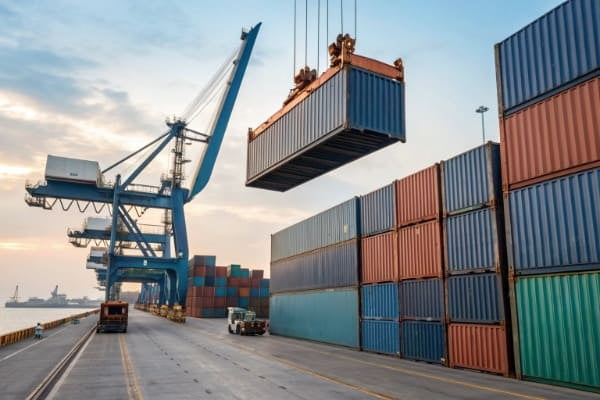
Struggling to figure out sea shipping from China to the UAE1? Hidden costs and complex steps can be overwhelming. Let me show you how to make the process simple and clear.
Sea freight from China to the UAE is a cost-effective method for shipping2 large goods, typically taking 15-25 days. The process involves booking freight, Chinese export clearance, ocean transit3 to a port like Jebel Ali4, and UAE import clearance5. Accurate documents are essential for a smooth process.
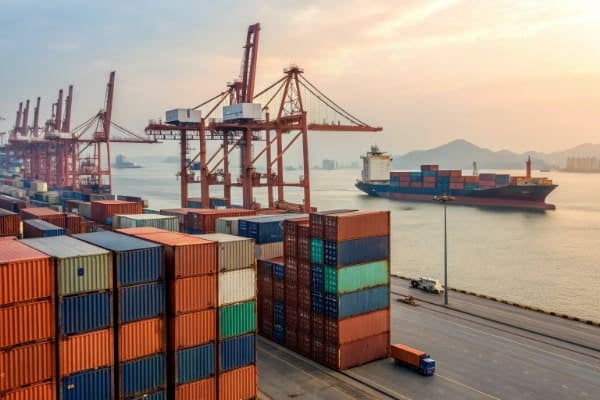
I've managed countless shipments for clients, and I know the journey from a factory in China to a warehouse in Dubai can seem complicated. But once you understand the key parts, it becomes a predictable and reliable part of your supply chain. Let's break it down so you can ship with confidence.
What Is Sea Shipping from China to the UAE?
You've heard of sea freight, but what does it really mean for your cargo? Choosing the wrong service can lead to overpaying or waiting much longer than you need to.
Sea shipping is the most popular way to move goods internationally, using large vessels to carry containers. You can choose between a Full Container Load (FCL)6 for large shipments or a Less than Container Load (LCL)7 for smaller volumes, where you share container space with others.

When we help clients ship to the UAE, the first question is always about volume. This helps us decide between FCL and LCL.
FCL (Full Container Load)
With FCL, you rent an entire container (usually 20ft or 40ft) for your goods alone. This is the best option if you have enough product to fill most of a container. It’s faster than LCL because the container is sealed at the factory and opened at your destination, with no extra handling in between. It's also more secure.
LCL (Less than Container Load)
If your shipment is smaller, LCL is a great choice. You only pay for the space you use inside a shared container. We consolidate your cargo with goods from other clients at our warehouse in China. This process adds a bit of time for loading and unloading, but it’s very cost-effective for smaller orders. The cost is based on the volume in cubic meters (CBM).
| Feature | Full Container Load (FCL)6 | Less than Container Load (LCL)7 |
|---|---|---|
| Best For | Large shipments (15+ CBM) | Small shipments (1-15 CBM) |
| Cost | Flat rate per container | Per cubic meter (CBM) |
| Speed | Faster transit | Slower due to consolidation |
| Security | Higher (sealed container) | Lower (shared space) |
Which UAE Ports Are Commonly Used for Sea Freight?
Your goods are leaving China, but where will they land in the UAE? Picking the wrong port can add unexpected inland transport costs and significant delays to your timeline.
The main port for shipments from China is Jebel Ali4 in Dubai, one of the busiest ports in the world. Khalifa Port8 in Abu Dhabi is another key option. Your choice should depend on where your final warehouse or delivery address is located.
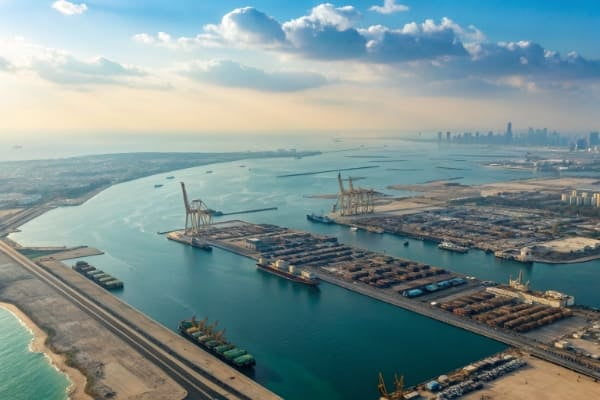
Choosing the right port is a critical step in optimizing your supply chain. For over 90% of our clients shipping to the UAE, Jebel Ali4 is the answer. Its sheer size and incredible connectivity make it the logistics heart of the Middle East9. It has a massive free zone, which simplifies transshipment and storage. If your business is in Dubai or the northern emirates, Jebel Ali4 is almost always the most efficient choice.
However, Khalifa Port8 in Abu Dhabi is a world-class, modern port that is growing fast. If your final destination is in Abu Dhabi or Al Ain, shipping directly to Khalifa Port8 can save you a lot of time and money on inland trucking. We always analyze our client's final delivery address to recommend the port that offers the best balance of ocean freight cost and local delivery fees.
| Port | Location | Key Feature | Best For... |
|---|---|---|---|
| Jebel Ali4 Port | Dubai | Largest port in the Middle East | Businesses in Dubai and Northern Emirates |
| Khalifa Port8 | Abu Dhabi | Modern, growing infrastructure | Businesses in Abu Dhabi and Al Ain |
What Are the Step-by-Step Procedures to Ship by Sea to the UAE?
The journey from a Chinese factory to your UAE warehouse can feel like a black box. If you miss a single step, your entire shipment can get stuck at the port, causing major delays.
The process involves booking with a forwarder, cargo pickup, China export customs10, ocean transit3, UAE import clearance5, and final delivery. A good partner like us manages every step to ensure your goods move smoothly from start to finish.
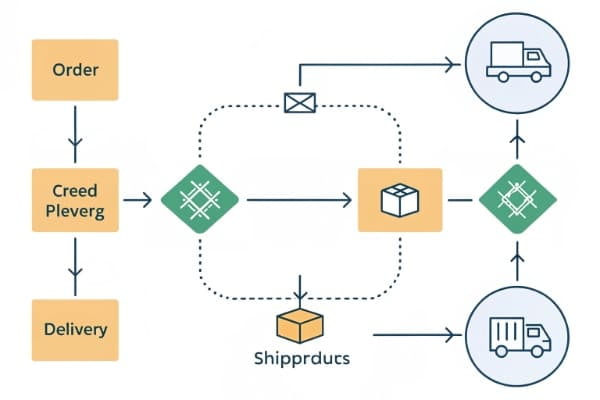
I always tell my clients that our job is to make this complex process feel simple for them. Here is a breakdown of what happens behind the scenes when we manage a shipment:
- Booking and Quoting: You give us the details of your cargo, and we provide a clear, all-inclusive quote. Once you approve, we book space on a vessel.
- Cargo Pickup: We coordinate with your supplier in China to pick up the goods from their factory. The cargo is then transported to our warehouse near the port for consolidation (if LCL) or directly to the port for FCL.
- China Export Clearance: We handle all the necessary paperwork to clear your goods for export from China. This is a crucial step that prevents any issues at the origin.
- Ocean Transit: Your container is loaded onto the ship. The journey from a major Chinese port like Shanghai or Shenzhen to Jebel Ali4 typically takes 15 to 25 days. We provide you with tracking so you can monitor its progress.
- Arrival and UAE Import Clearance: Once the ship arrives in the UAE, we manage the import customs clearance process, submitting all required documents on your behalf.
- Final Delivery: After the goods are cleared, we arrange for them to be trucked from the port directly to your warehouse or specified address in the UAE.
What Documents Are Required for UAE Customs Clearance?
You have a shipment on its way, but do you have the right paperwork? A single missing or incorrect document is the fastest way to get your cargo held up by customs, costing you time and money.
For a smooth customs clearance in the UAE, you primarily need a Commercial Invoice11, a Packing List12, and the Bill of Lading (B/L)13. A Certificate of Origin14 is also very important. Having these documents prepared correctly is non-negotiable.

I can't stress enough how important paperwork is. We work very closely with our clients to ensure every detail is perfect before the ship even leaves China. A small typo can cause big problems. Here are the core documents and why they matter:
- Commercial Invoice11: This is the bill for your goods. It must show the details of the seller and buyer, a description of the items, their value, and the HS codes15. The value declared here is what UAE customs will use to calculate duties.
- Packing List12: This document details the contents of your shipment. It lists each item, the quantity, and the weight and dimensions of each box or pallet. Customs officials use this to verify the contents if they decide to inspect your cargo.
- Bill of Lading (B/L)13: This is the most important document. It acts as a contract between you and the shipping line, a receipt for your goods, and the title of ownership. You need this to claim your cargo when it arrives.
- Certificate of Origin14 (CO): This document certifies that your goods were manufactured in China. It's often required by UAE customs to verify the source of the products.
Making sure all these documents are consistent is key. The company names, values, and product descriptions must match perfectly across all of them.
How Much Are Import Duties and VAT When Shipping to the UAE by Sea?
You've calculated your product and shipping costs, but what about taxes? Unexpected duties and VAT can show up as a surprise, eating directly into your planned profit margins.
Generally, the UAE charges a 5% import duty based on the CIF value16 (Cost, Insurance, and Freight) of your goods. On top of that, a standard 5% Value Added Tax (VAT) is also applied to the total CIF value16 plus the duty.

Helping clients budget accurately is a big part of what we do. No one likes financial surprises. Let’s walk through a simple example to see how it works. The calculation is based on the CIF value16, which is the total cost of your goods plus the cost of shipping and insurance.
First, let's define the terms:
- Cost: The price you paid for the products at the factory.
- Insurance: The cost to insure your shipment against loss or damage.
- Freight: The cost of the ocean shipping itself.
Here’s an example calculation:
- Value of Goods (Cost): $20,000
- Insurance + Freight: $3,000
- CIF Value: $20,000 + $3,000 = $23,000
Now, we calculate the taxes:
- Import Duty (5%): 5% of $23,000 = $1,150
- VAT Base: $23,000 (CIF) + $1,150 (Duty) = $24,150
- VAT (5%): 5% of $24,150 = $1,207.50
- Total Taxes and Duties: $1,150 + $1,207.50 = $2,357.50
While 5% is the standard rate for most products, be aware that some goods like tobacco and alcohol have much higher duties. We always help our clients identify the correct HS codes15 for their products to confirm the exact duty rates beforehand.
Should You Choose Door-to-Door or Port-to-Port Sea Freight to the UAE?
Your shipment has many moving parts from the factory to your warehouse. Trying to manage different vendors for pickup, shipping, and final delivery is a huge hassle and very prone to error.
Door-to-door shipping is an all-in-one service where one partner handles everything from the factory in China to your address in the UAE. Port-to-port only covers the ocean journey, leaving you responsible for the rest.
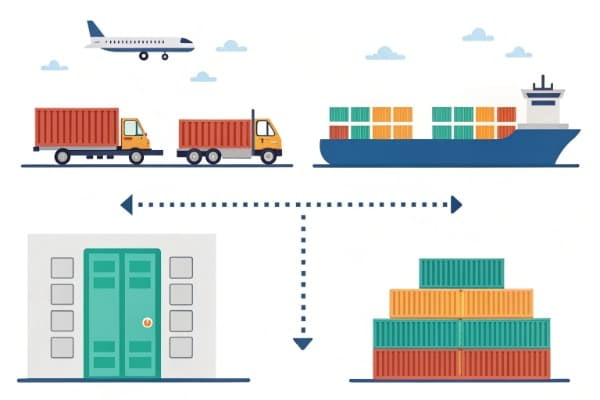
For most of our clients, especially brand owners and e-commerce sellers, a door-to-door service is the best choice. It lets you focus on your business, not on logistics.
Port-to-Port
This service covers only the sea journey between the port in China and the port in the UAE. You would be responsible for arranging transport from your supplier's factory to the Chinese port and from the UAE port to your final destination. This might seem cheaper at first glance, but you have to manage multiple contacts and payments, and any miscommunication can cause delays. This option is typically only suitable for very large, experienced importers who have their own logistics teams on the ground.
Door-to-Door (DDP)
This is the comprehensive, stress-free option. As your freight forwarder17, we manage the entire process. We pick up the goods from the factory, handle all customs paperwork in both countries, manage the ocean freight, and arrange for the final truck delivery to your door in the UAE. You get one point of contact and one simple, all-inclusive invoice. This method, often called DDP (Delivered Duty Paid), provides cost certainty and complete peace of mind.
| Service | Convenience | Responsibility | Best For... |
|---|---|---|---|
| Port-to-Port | Low | High (You manage local transport) | Experienced importers with logistics teams |
| Door-to-Door | High | Low (Your forwarder handles it all) | Businesses seeking a simple, all-in-one solution |
Conclusion
Shipping by sea to the UAE is straightforward with the right plan. Understanding the process, documents, and costs gives you control and helps you avoid delays and unexpected fees.
Explore comprehensive guides on sea shipping to streamline your logistics and avoid hidden costs. ↩
Learn about various shipping methods that can save you money while ensuring timely delivery. ↩
Find out how long ocean transit usually takes to plan your shipping timeline. ↩
Find out why Jebel Ali is a preferred port for many businesses and its logistical advantages. ↩
Ensure your shipment clears customs smoothly by understanding the required documentation. ↩
Understand the advantages of FCL shipping for large shipments to optimize your logistics. ↩
Discover how LCL can be a cost-effective solution for smaller shipments. ↩
Explore the features of Khalifa Port and how it can save you time and money. ↩
Discover the strategic advantages of Jebel Ali in global shipping and logistics. ↩
Get insights into the necessary steps for smooth export customs clearance in China. ↩
Learn about the significance of a Commercial Invoice in international shipping. ↩
Understand how a detailed Packing List can facilitate customs inspections. ↩
Discover the critical role of a Bill of Lading in the shipping process. ↩
Learn about the importance of a Certificate of Origin for customs clearance. ↩
Understand the importance of HS codes in determining shipping duties and taxes. ↩
Get insights into how CIF value impacts your shipping costs and duties. ↩
Learn how a freight forwarder can simplify your shipping experience. ↩