
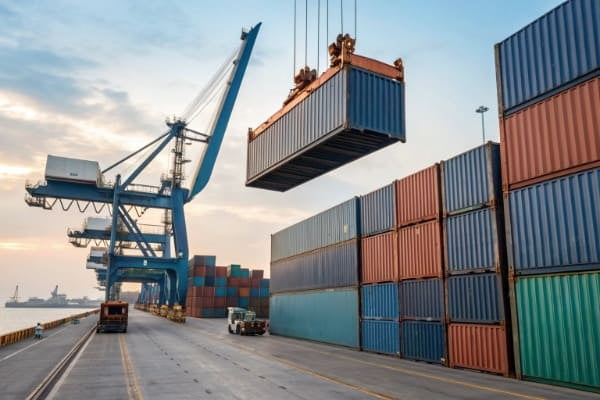
Struggling with high shipping costs and confusing delays? Getting your goods from China to New Zealand can feel very complex. We make the entire process simple, clear, and affordable.
Sea shipping from China to New Zealand1 takes about 25-35 days from port to port. Costs range from around $72 per cubic meter for shared containers (LCL) up to $3,250 for a full 40ft container (FCL). The process involves booking, customs, sea transit, and final delivery.
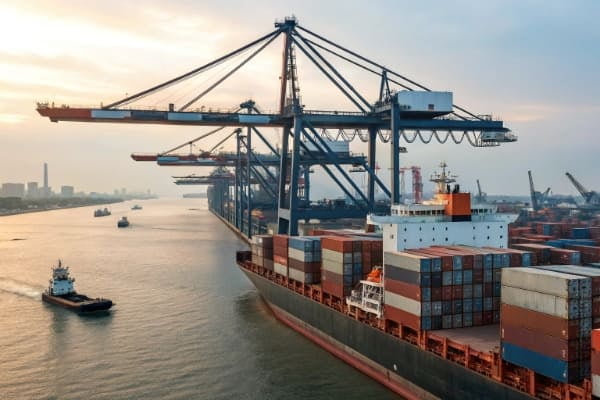
Getting your products across the ocean seems like a huge task. But when you break it down, it's just a series of clear, manageable steps. Let's walk through everything you need to know. This will help you ship with confidence and avoid expensive mistakes. We want you to feel in control of your supply chain.
What Is Sea Shipping from China to New Zealand?
Confused by shipping terms like FCL and LCL? It's hard to know which one is right for your cargo. Choosing the wrong one can cost you a lot of time and money.
Sea shipping is the most cost-effective way to move goods from China to New Zealand. You can choose Full Container Load (FCL) for large shipments or Less than Container Load (LCL) for smaller ones, where you share container space to save money.
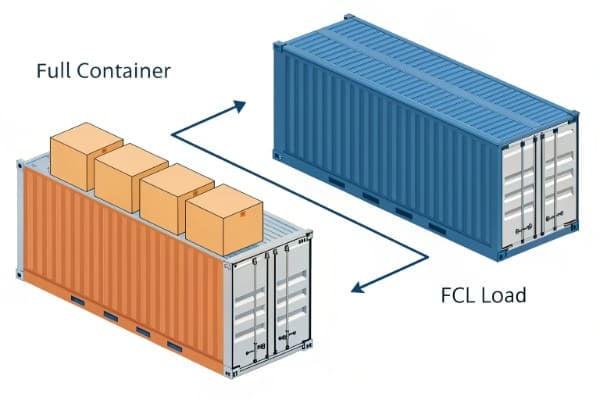
When you ship by sea, you have two main choices. We help our clients decide which is best for them every day.
FCL (Full Container Load)2
This is when you book an entire container for your goods. You can choose a 20-foot or a 40-foot container. It doesn't matter if you fill it completely; you pay for the whole space. This is the best option if you have a large volume of products. It is also faster than LCL because the container goes directly from your supplier to the destination port without being opened. A 20ft container from China to New Zealand can cost between $1,050 and $1,650.
LCL (Less than Container Load)3
This is the perfect choice for smaller shipments. If you don't have enough goods to fill a whole container, you can share space with other importers. You only pay for the volume your cargo takes up, measured in cubic meters (CBM). We often see LCL rates around $72 per CBM. We can even consolidate shipments from different suppliers into one LCL shipment to minimize your costs and paperwork.
| Feature | FCL (Full Container Load)2 | LCL (Less than Container Load)3 |
|---|---|---|
| Best For | Large shipments (15+ CBM) | Small shipments (1-15 CBM) |
| Cost | Flat rate per container | Per cubic meter (CBM) |
| Speed | Faster, direct transit | Slower, requires consolidation |
| Security | More secure, sealed container | Less secure, shared space |
Which New Zealand Ports Are Commonly Used for Sea Freight?
Not sure where your ship will land in New Zealand? Choosing the wrong port adds to your final delivery time and cost. It's a small detail that can make a big difference.
The main sea ports in New Zealand for cargo from China are the Port of Auckland4, the Port of Tauranga5, and Lyttelton Port. Your choice depends on your final destination, as this affects inland transport costs and delivery times. Auckland is the largest.
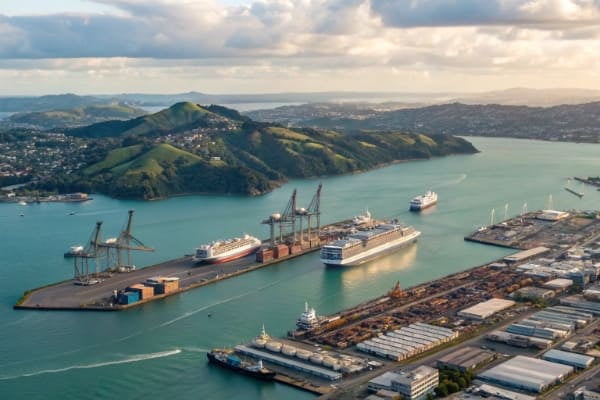
Your final destination inside New Zealand is the most important factor when choosing a port. A shipment that lands closer to your warehouse will save you money and time on local trucking. We always ask our clients for their final delivery address before we book anything.
Here are the main ports you should know:
- Port of Auckland4: This is New Zealand's largest and busiest container port. It's the best choice if your customers or warehouse are in Auckland or the upper North Island. It has great connections to roads and rail.
- Port of Tauranga5: This is New Zealand's largest port by total cargo volume. It's a great option for goods headed to the Bay of Plenty, Waikato, and the central North Island. It is known for its efficiency.
- Lyttelton Port (Christchurch)6: This is the main port for the South Island. If your business is in Christchurch or anywhere else on the South Island, this is your port. Using Lyttelton avoids the extra cost and time of shipping goods from the North Island down to the South Island.
Choosing the right port from the start makes your whole supply chain run smoother.
What Are the Step-by-Step Procedures to Ship by Sea to New Zealand?
The shipping process7 can feel like a black box. You hand your goods over and just hope they arrive. This lack of clarity is very stressful for any business owner.
The process starts with booking with a freight forwarder8. Then, your goods are picked up and sent to the port for China customs clearance9. After the sea journey, they arrive in New Zealand for customs and MPI clearance. Finally, they are delivered to you.
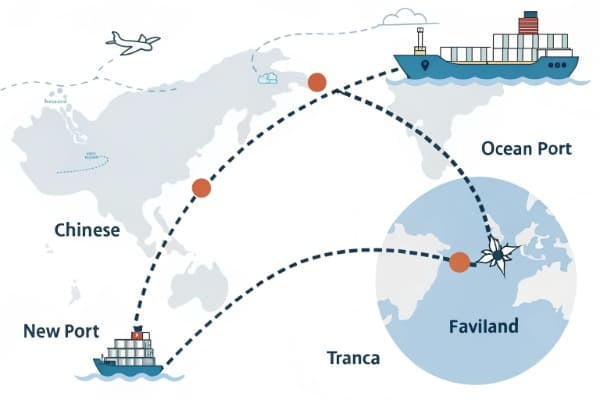
Let me break down the journey of your goods into simple, clear steps. We manage this process for our clients so they don't have to worry about the details.
- Booking: First, you contact us or another freight forwarder8. We will ask for details about your cargo and give you a quote.
- Cargo Pickup: We arrange for a truck to pick up the goods from your supplier's factory in China.
- China Customs: Your shipment is taken to the departure port, for example, Shanghai or Shenzhen. Here, we handle all the export customs paperwork.
- Sea Transit: The container is loaded onto the ship. The journey itself takes between 22 and 30 days, depending on the Chinese port. Shipping from Shenzhen is often a few days faster than from Shanghai.
- Arrival and NZ Customs: The ship arrives at the port in New Zealand. Here, a customs broker10 submits all the necessary documents for clearance. The Ministry for Primary Industries (MPI) may also inspect the shipment.
- Final Delivery: Once cleared, the container is picked up from the port. The goods are then delivered by truck to your warehouse or final address.
The responsibilities for each step are defined by Incoterms11, like FOB or EXW, which we agree on at the start.
What Documents Are Required for New Zealand Customs Clearance and MPI Inspection?
Paperwork is a huge headache. One missing document can get your entire shipment stuck at the port. This causes delays and unexpected storage fees that hurt your bottom line.
You need a Commercial Invoice12, a Packing List13, and a Bill of Lading (B/L)14. New Zealand's Ministry for Primary Industries (MPI) also requires a fumigation certificate for any wooden packaging to meet strict biosecurity standards15. Accurate paperwork is essential.
Getting your documents right is one of the most important parts of shipping. If you don't have the correct paperwork, you will face delays. We double-check every document for our clients before the ship even leaves China.
Here are the three must-have documents:
- Commercial Invoice12: This lists the buyer, seller, what the goods are, and how much you paid for them. Customs uses this to calculate duty and GST.
- Packing List13: This document details everything inside your shipment. It includes the weight, dimensions, and number of cartons. It must be 100% accurate.
- Bill of Lading (B/L)14: This is the contract between you and the shipping company. It acts as a receipt for your goods and is needed to claim them upon arrival.
On top of these, New Zealand has very strict biosecurity rules. The Ministry for Primary Industries (MPI) requires that all wooden packaging, like pallets or crates, be fumigated or heat-treated. You must have a certificate to prove this was done. If you don't, MPI can order the shipment to be treated, or even destroyed, at your expense. We always make sure our clients' suppliers use compliant packaging to avoid these huge fines and delays.
How Much Are Import Duty and GST16 When Shipping to New Zealand by Sea?
Unexpected taxes can destroy your budget. You think you know the total cost, but then customs hits you with a big bill. This uncertainty makes it hard to price your products correctly.
New Zealand charges Goods and Services Tax (GST) at 15% on the total value of your imported goods, including the cost of freight and insurance. Import duty varies by product, but many goods from China are duty-free under a free trade agreement.
Understanding taxes is key to knowing your true product cost. The two main charges you need to plan for are Import Duty and GST16. A good customs broker10 can help you calculate this, but here is how it works.
First, customs calculates the "landed value" of your goods. This is the total of:
- The cost of the goods (from your Commercial Invoice12)
- The cost of sea freight
- The cost of shipping insurance17
Next, they calculate the Import Duty. This depends on the product's HS code, which is a universal code to classify goods. The good news is that the China-New Zealand Free Trade Agreement means many products have 0% duty. But you need the right paperwork, like a Certificate of Origin18, to prove the goods came from China.
Finally, GST is calculated. GST is 15% of the landed value plus the import duty. You have to pay this on almost everything. We always advise our clients to budget for the 15% GST to avoid any surprises when the goods arrive. Accurate documents are critical for paying the right amount.
Should You Choose Door-to-Door or Port-to-Port Sea Freight to New Zealand?
You're not sure where your responsibility begins and ends. Should you handle local delivery yourself? Making the wrong choice can lead to hidden costs and logistical problems you didn't plan for.
Door-to-door service is best for convenience, as one company manages the entire journey from the factory in China to your address. Port-to-port is cheaper for the sea leg but requires you to arrange transport from the New Zealand port yourself.
This is a common question we get from new importers. The best choice depends on your experience, budget, and how much work you want to do yourself.
Door-to-Door
This is the all-in-one, hassle-free option. We manage everything: pickup from the factory, China customs, sea freight, New Zealand customs, and final delivery to your warehouse. It's perfect for busy business owners who want a single point of contact and one simple invoice. This service takes a bit longer, around 35-40 days in total, but it gives you complete peace of mind.
Port-to-Port
This service only covers the journey from the port in China to the port in New Zealand. It's usually cheaper upfront, but your responsibility starts the moment the ship arrives. You have to hire your own customs broker10 and trucking company to get your goods cleared and delivered. This option is better for experienced importers who have their own local logistics partners in New Zealand.
No matter which you choose, always get cargo insurance. We recommend insuring your goods for 110% of their value to protect against any risks during transit. Also, remember to book well in advance during peak seasons like Chinese New Year, as shipping rates can jump by 20-50%.
Conclusion
Shipping by sea from China to New Zealand is simple with the right partner. Plan ahead, prepare your documents, and choose the service that fits your business needs.
Explore comprehensive guides on sea shipping to streamline your logistics and save costs. ↩
Learn about FCL shipping to understand its benefits for large shipments and cost efficiency. ↩
Discover how LCL can save you money on smaller shipments and optimize your shipping strategy. ↩
Find out why the Port of Auckland is a key hub for shipping goods to New Zealand. ↩
Explore the efficiency and cargo volume advantages of the Port of Tauranga. ↩
Learn how Lyttelton Port can streamline your shipping process to the South Island. ↩
Get a detailed overview of the shipping process to ensure smooth logistics. ↩
Understand the role of a freight forwarder in simplifying your shipping logistics. ↩
Understand the customs clearance requirements to avoid delays and fines. ↩
Discover how a customs broker can help you navigate customs regulations. ↩
Explore the significance of Incoterms in defining shipping responsibilities. ↩
Learn about the significance of a Commercial Invoice in international shipping. ↩
Discover how to create an accurate Packing List to facilitate customs clearance. ↩
Understand the importance of a Bill of Lading in securing your shipment. ↩
Understand the biosecurity requirements to ensure compliance and avoid penalties. ↩
Get insights on calculating Import Duty and GST to budget effectively for your imports. ↩
Learn about the necessity of shipping insurance to protect your investment. ↩
Find out how a Certificate of Origin can help you benefit from duty-free imports. ↩