
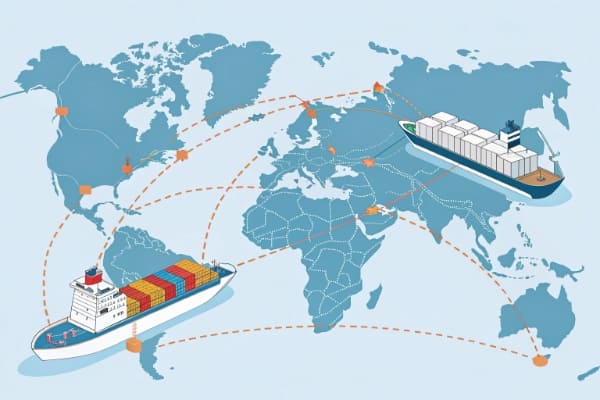
Shipping from China to Germany1 seems complicated. Hidden fees and customs delays2 can hurt your profits. But understanding your options makes the process simple and saves you money.
The best way to ship from China to Germany depends on your budget, timeline, and cargo size. You can choose from air, sea, or rail freight3. Transit times range from 3 to 40 days, and key documents like the Commercial Invoice4 and Bill of Lading5 are essential.
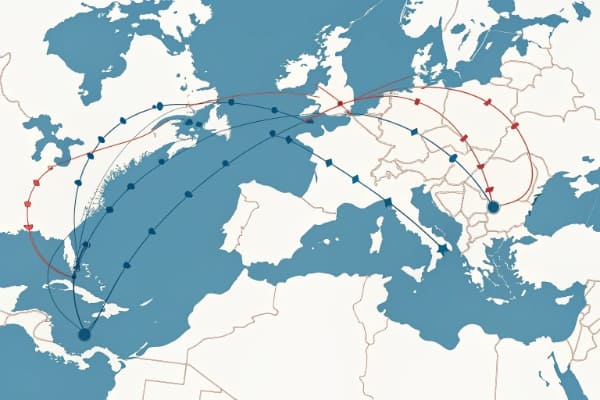
Getting your products from a factory in China to your warehouse in Germany is a critical step in your supply chain. I've helped hundreds of clients manage this journey, and it's much easier than you might think once you know the basics. The key is to match the right shipping method to your specific business needs.
But before you can choose the best route, you need to understand all the available paths. Let's explore each one so you can make an informed decision for your next shipment.
What Shipping Methods Are Available from China to Germany?
Are you unsure which shipping method is right for you? Picking the wrong one means overpaying for speed you don't need or waiting too long for urgent stock to arrive.
The three main shipping methods from China to Germany are sea freight6, air freight7, and rail freight3. Sea freight is best for large, non-urgent shipments. Air freight is fastest for urgent goods. Rail offers a balanced option for both speed and cost.
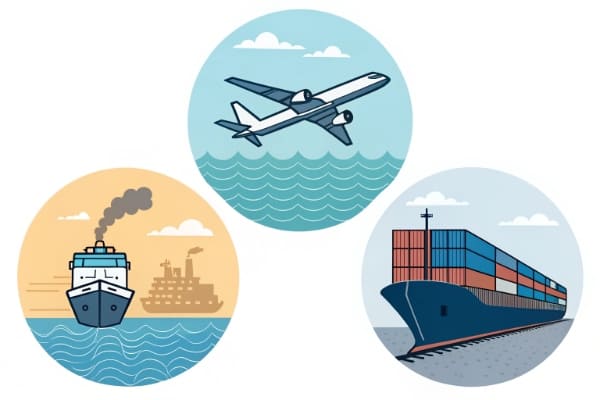
When I work with clients, the first question is always about their priorities: speed or cost. Your answer will point you toward one of three great options for shipping to Germany. Each one has clear advantages depending on what you are shipping.
The Three Main Lanes
- Sea Freight: This is the most popular and cost-effective method for large shipments. It’s perfect for bulk orders of promotional products or merchandise where you can plan ahead. You have two choices here: FCL (Full Container Load)8 if you have enough goods to fill a container, or LCL (Less than Container Load)9 if you are shipping smaller volumes and can share space.
- Air Freight: This is your fastest option. If you need samples, high-value electronics, or last-minute event giveaways, air freight7 gets them there in days, not weeks. It is the most expensive method, so it's best for smaller, high-priority shipments.
- Rail Freight: This is a fantastic middle-ground option that has become very popular. It's faster than sea but much cheaper than air. Trains travel on the "New Silk Road," connecting major Chinese cities to German hubs like Hamburg and Duisburg.
Here is a simple breakdown:
| Shipping Method | Typical Transit Time | Cost Level | Best For |
|---|---|---|---|
| Sea Freight | 20-40 days | Low | Large, heavy, or non-urgent goods |
| Air Freight | 3-7 days | High | Urgent, lightweight, or high-value goods |
| Rail Freight | 12-18 days | Medium | A balance of speed and cost |
How Much Does Shipping from China to Germany1 Cost?
Worried about unpredictable shipping costs10? Hidden fees and sudden surcharges can quickly erase your profit margins, making it almost impossible to budget accurately for your inventory.
Shipping costs vary based on your chosen method, cargo weight and volume, and the time of year. Air freight is the most expensive per kilogram, while sea freight6 is the cheapest for bulk. Always get a detailed quote that includes all fees to avoid surprises.
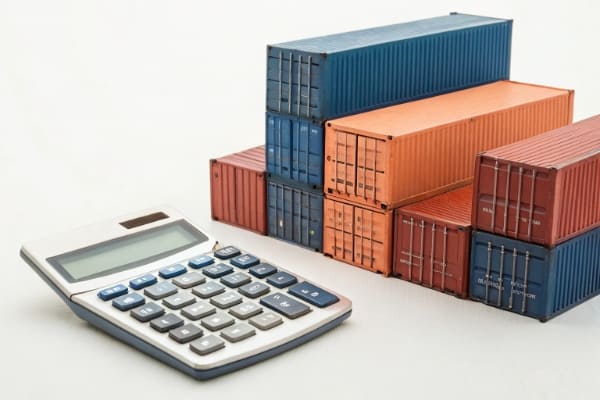
Your final shipping bill is determined by several factors. Understanding them is key to managing your budget. The biggest factor is the chargeable weight11. Carriers will charge you based on either the actual gross weight of your cargo or its volumetric weight, whichever is greater. This is why I always advise clients to optimize their packaging. Tightly packed boxes reduce wasted space and can lower your costs significantly, especially for air freight7.
Key Cost Factors
- Shipping Method: Air freight is priced per kilogram, while sea and rail freight3 are typically priced per cubic meter (CBM).
- Incoterms12: The terms of sale, like FOB (Free On Board) or EXW (Ex Works), decide who pays for which part of the journey. We often provide DDP (Delivered Duty Paid)13 services, which means one all-inclusive price covers everything from the factory to your door.
- Seasonality: Rates are not static. Prices increase during peak seasons, such as the lead-up to Christmas or right before Chinese New Year in late January/early February. Planning your shipments outside these times can lead to big savings.
- Surcharges: Be aware of extra fees like fuel surcharges, terminal handling charges, and customs brokerage fees. A good partner like us will provide a transparent quote that lists every single cost upfront.
How Long Does Shipping from China to Germany1 Take?
Are shipping delays from China hurting your business schedule? Late arrivals mean missed sales opportunities, unhappy customers, and disrupted production plans, which can be incredibly frustrating.
Transit times depend heavily on the shipping method. Air freight is the fastest at 3-7 days. Rail freight offers a good balance, taking 12-18 days. Sea freight is the slowest, with transit times14 of 20-40 days. Remember to add extra time for customs.

When planning your inventory, it's important to look at the total door-to-door transit time, not just the time on the water or in the air. The total journey includes pickup in China, export processing, the main transit, customs clearance15 in Germany, and final delivery to your address. In my experience, it's always wise to add a small buffer for potential delays from weather, port congestion, or unexpected customs inspections.
Estimated Door-to-Door Timelines
- Air Freight: The entire process, from factory pickup to your door, usually takes between 3 to 7 days. It's incredibly reliable for meeting tight deadlines.
- Rail Freight: The train journey itself is about 12-18 days. With pickup and final delivery, you should plan for a total transit time of 18 to 25 days.
- Sea Freight: The ocean voyage takes 20-40 days. When you include time for trucking to the port, loading, unloading, and customs, the total door-to-door time is typically 30 to 50 days.
Here is a table summarizing the different stages:
| Shipping Method | Main Transit | Total Estimated Door-to-Door Time |
|---|---|---|
| Air Freight | 1-3 days | 3-7 days |
| Rail Freight | 12-18 days | 18-25 days |
| Sea Freight | 20-40 days | 30-50 days |
Which Shipping Method Is Best for Your Cargo?
Feeling stuck choosing between speed, cost, and volume? Making the wrong choice can mean paying for express shipping you don't need or getting stuck with slow-moving inventory.
Choose air freight7 for urgent, low-volume, or high-value goods. Use sea freight6 for large, non-urgent shipments to save money; FCL for over 15 CBM and LCL for smaller loads. Rail freight is the ideal compromise between speed and cost.

The best method is the one that aligns with your product, budget, and deadline. I help my clients make this decision every day. For a promotional products company with an urgent event, air freight7 is the only answer. For a wholesaler stocking up on branded bags for the next season, sea freight6 is the most logical choice.
A Simple Decision Guide
-
Choose Air Freight if:
- Your shipment is time-sensitive (e.g., for an event or product launch).
- Your goods are high-value (e.g., electronics) and you want to minimize time in transit.
- Your shipment is small and light (typically under 200 kg).
-
Choose Sea Freight if:
- Your top priority is low cost.
- Your shipment is large, heavy, or bulky.
- You are not on a tight deadline and can wait 30-50 days.
- FCL (Full Container Load)8: Use this if your cargo volume is over 15 CBM. You get an entire container to yourself, which is more secure and often slightly faster than LCL.
- LCL (Less than Container Load)9: Perfect for smaller shipments (around 2-12 CBM). You share container space, making it very cost-effective for smaller volumes.
-
Choose Rail Freight if:
- You need your products faster than sea freight6 allows but find air freight7 too expensive.
- Your shipment is of medium size (e.g., a few pallets).
What Documents Are Required to Ship from China to Germany?
Are you afraid of your shipment getting stuck in German customs? Missing or incorrect paperwork is the number one reason for costly delays, storage fees, and even fines.
Key documents include the Commercial Invoice4, Packing List, and Bill of Lading5 (for sea/rail) or Air Waybill (for air). You also need a Certificate of Origin. German importers must have a valid EORI number16 for customs clearance15.
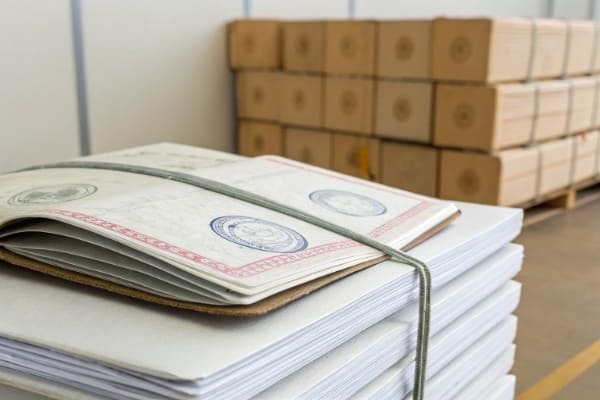
Paperwork might seem boring, but getting it right is the most important step for a smooth shipping experience. At Toncentlink, we manage all of this for our clients to ensure there are no surprises at the border. The German customs authorities are efficient, but they are also very strict. Everything must be in order.
Your Essential Paperwork Checklist
- Commercial Invoice4: This details the buyer, seller, product descriptions, quantities, and value of the goods. Customs uses this to calculate duties and taxes.
- Packing List: This document lists the contents, weight, and dimensions of each carton in your shipment. It allows customs to verify the cargo without opening every single box.
- Bill of Lading5 (B/L) or Air Waybill (AWB): This is the contract between you and the carrier. It acts as a receipt for your goods and is required to claim them upon arrival.
- Certificate of Origin (CO): This document certifies that the goods were produced in China. It can sometimes be required for certain products to qualify for specific tariff rates.
For Importers in Germany
- EORI Number: Your business must have an Economic Operators Registration and Identification (EORI) number to import goods into the EU. You can apply for one through the German customs website.
- VAT and HS Codes17: Your goods will be subject to Germany's standard VAT rate of 19%. The exact import duty depends on the product's HS Code, a universal classification system. We always help our clients identify the correct codes.
Can You Ship Door-to-Door from China to Germany?
Are you tired of juggling multiple contacts for pickup, shipping, customs, and delivery? It's a logistical headache that takes time away from growing your business.
Absolutely. Door-to-door (DDP) shipping is a seamless service where one partner manages the entire journey. A freight forwarder like us handles pickup, transit, customs, and final delivery, giving you a single point of contact and a clear, all-inclusive price.
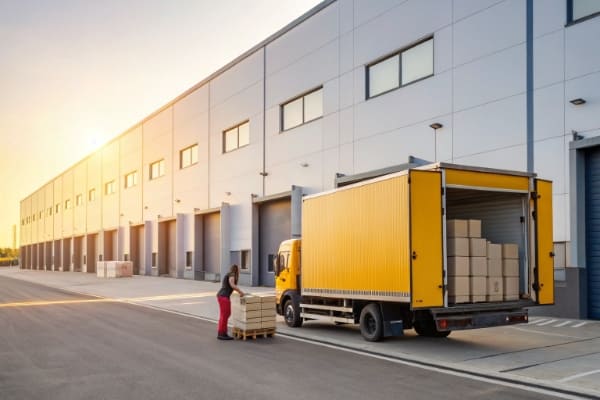
For most of my clients, especially brand owners and e-commerce sellers, door-to-door shipping18 is the best solution. It transforms a complex process into a simple one. Instead of you coordinating with a factory in China, a trucking company, a shipping line, a customs broker in Germany, and a final-mile delivery service, we do it all. This is the core of what we do at Toncentlink. We act as your team on the ground in China, overseeing every step.
The Door-to-Door Process
- Pickup: We collect your finished goods directly from the factory floor.
- Consolidation: If you source from multiple suppliers, we can gather everything at our warehouse to ship as one, saving you significant costs.
- Export & Freight: We handle all Chinese export customs and book the shipment on the vessel, plane, or train.
- Import & Customs: Our partners in Germany manage the import clearance process, including paying the duties and VAT on your behalf.
- Final Delivery: The goods are trucked from the port or rail station directly to your specified address, whether it's a warehouse, an Amazon FBA center, or your office.
This streamlined service provides peace of mind and lets you focus on what you do best: selling your products.
Conclusion
Shipping from China to Germany1 is straightforward with the right partner. Choose your method based on speed and budget, prepare your documents, and use a forwarder for a seamless process.
Explore expert insights on optimizing your shipping process from China to Germany. ↩
Discover strategies to prevent customs delays and ensure timely deliveries. ↩
Explore the advantages of rail freight as a balanced shipping option. ↩
Learn about the significance of the Commercial Invoice in international shipping. ↩
Understand the role of the Bill of Lading in shipping and logistics. ↩
Get insights into sea freight and its cost-effectiveness for large shipments. ↩
Understand the benefits of air freight for urgent shipments and high-value goods. ↩
Understand the benefits of FCL shipping for large shipments. ↩
Discover how LCL shipping can save costs for smaller shipments. ↩
Explore the various factors that affect shipping costs and budgeting. ↩
Discover how chargeable weight affects shipping costs and pricing. ↩
Understand the role of Incoterms in defining shipping responsibilities. ↩
Learn about DDP shipping and its benefits for hassle-free deliveries. ↩
Learn about expected transit times for different shipping methods. ↩
Get insights into the customs clearance process and how to navigate it. ↩
Find out how to obtain an EORI number for importing goods into Germany. ↩
Understand VAT and HS Codes and their impact on shipping duties. ↩
Explore the convenience of door-to-door shipping services for businesses. ↩