

Shipping from China to Germany feels complicated and full of risks. Delays and hidden costs can ruin your budget. This guide breaks it all down into simple, manageable steps.
Sea freight from China to Germany1 usually takes 28-40 days. A 20ft container (FCL)2 costs about $1,755-$3,800, while LCL shipments3 for smaller cargo cost $60-$120 per cubic meter. The process requires careful management of booking, customs, and documentation for a smooth delivery.
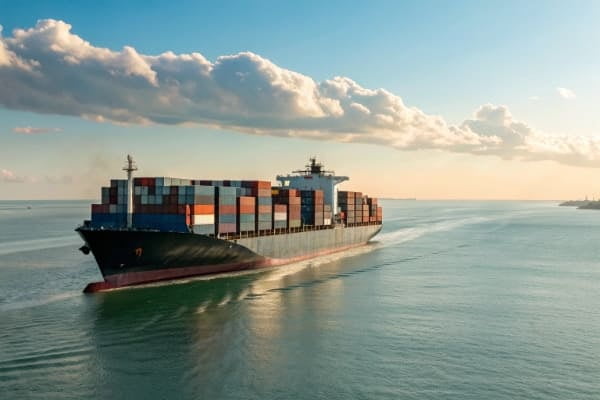
Shipping goods across continents seems like a huge task, but it doesn't have to be. For years, I've helped businesses just like yours navigate this process. We've turned complex supply chains into simple, predictable operations. The key is understanding each step. Let's walk through it together, so you can import from China to Germany with confidence and avoid any costly surprises.
How Does Sea Freight from China to Germany Work?
Don't know the exact steps for sea freight? Missing one small detail can cause major delays and add unexpected costs to your shipment, hurting your bottom line.
Sea freight works in a sequence: booking space, trucking goods to the port in China, clearing export customs, ocean transit4, clearing import customs5 in Germany, and final delivery. A good partner like us manages all these steps for you, offering a true door-to-door service6.
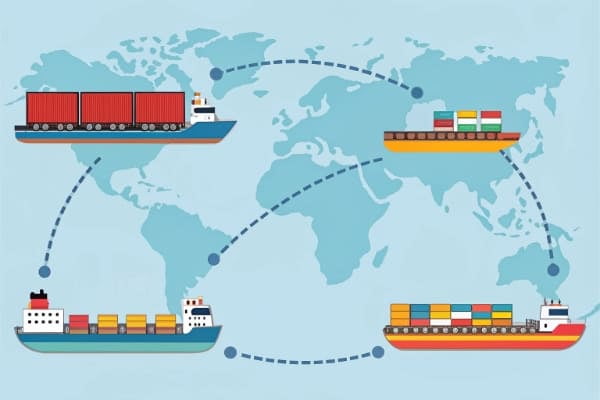
When a client first comes to us, they're often overwhelmed by the logistics. They have a great product ready at a factory in China but no clear path to get it to their warehouse in Germany. I always tell them to think of it as a relay race. We take the baton at each stage to ensure a smooth handover. First, we book space on a vessel sailing from a major Chinese port like Shanghai or Ningbo. Then, we arrange for a truck to pick up the goods from the factory and bring them to the port. Our team on the ground handles all the Chinese export paperwork. Once the ship is on the water, we track it and prepare for its arrival in Germany. In ports like Hamburg or Bremerhaven, our partners manage the import customs5s clearance. Finally, we arrange for a truck to deliver the goods right to your door.
Here is a simple breakdown of the process:
| Step | Action | Key Detail |
|---|---|---|
| 1 | Booking & Pickup | We book container space and arrange trucking from the factory. |
| 2 | Port & Export Customs | We handle terminal charges and clear Chinese export customs. |
| 3 | Ocean Transit | The container is loaded and sails from China to Germany. |
| 4 | Import Customs | We manage customs clearance7 and duty/VAT payments in Germany. |
| 5 | Final Delivery | Your goods are trucked from the German port to your final address. |
This end-to-end management is what gives our clients peace of mind. They don't have to juggle multiple contacts for trucking, shipping, and customs. We are their single point of contact for the entire journey.
What Documents Are Required for Shipping to Germany by Sea?
Are you worried about getting the customs paperwork right? One wrong document or a simple mistake can get your entire shipment stuck at the port for weeks, costing you time and money.
The most important documents are the Commercial Invoice8, Packing List9, and Bill of Lading (B/L)10. You may also need a Certificate of Origin11 and specific compliance certificates12 for your product type. Getting these documents right is essential for smooth customs clearance7 in Germany.

I remember a client shipping electronic gadgets to Germany for the first time. They had their Commercial Invoice8 and Packing List9 ready, but they didn't know they needed CE certificates and WEEE registration. The shipment arrived in Hamburg and was immediately held by customs. It took us over two weeks to sort out the missing paperwork, and the client faced storage fees and a delayed product launch. Since then, we've made it a standard part of our service to review all required documentation before the goods even leave the factory. This proactive check saves our clients from major headaches. Accurate paperwork is not just a formality; it's the passport for your goods.
Here are the key documents and why they matter:
| Document | Purpose | Our Tip |
|---|---|---|
| Commercial Invoice8 | States the value of the goods for customs to calculate duties and VAT. | Ensure the value is accurate. Undervaluing goods can lead to fines. |
| Packing List9 | Details the contents of your shipment, including quantity, weight, and dimensions. | This must match the Commercial Invoice8 and the actual cargo perfectly. |
| Bill of Lading (B/L)10 | Acts as a contract, receipt, and title to the goods. You need it to claim your cargo. | For LCL, you'll get a House B/L. For FCL, an Original B/L or Telex Release. |
| Certificate of Origin11 | Verifies the country where the goods were manufactured. | Sometimes required for specific products or to qualify for trade agreements. |
| Compliance Docs | Proof that products meet EU standards (e.g., CE, RoHS, REACH). | Check requirements for your specific product type to avoid customs hold13s. |
Getting these documents organized is a critical step. We work directly with your suppliers to gather and verify everything, ensuring a smooth and predictable customs process when your shipment arrives in Germany.
How Long Does Sea Freight from China to Germany Take?
Do you need to plan your inventory and sales schedule? Unpredictable shipping times can disrupt your entire business plan, causing stockouts or missed launch dates.
Sea freight from China to Germany1 typically takes 28 to 40 days from port to port. For example, a direct route from Shanghai to Hamburg is about 30-35 days. LCL shipments3 might take a bit longer, around 30-45 days, because of consolidation and deconsolidation.
The transit time you see quoted is usually "port-to-port," which is just the time on the water. But you need to plan for the "door-to-door" time. This includes trucking in China, waiting at the port, and customs and delivery in Germany. This can add another 7-14 days to the total journey. I always advise clients to add a two-week buffer to their timeline, especially if they have a strict deadline. A few years ago, we had a shipment of promotional items for a trade show in Berlin. The port-to-port time was 32 days, but unexpected port congestion in Hamburg added a week. Because we had planned for a buffer, the goods still arrived in time for the event. Planning for the worst-case scenario is just good business.
Here are some typical port-to-port transit times:
| From (China) | To (Germany) | Estimated Transit Time |
|---|---|---|
| Shanghai | Hamburg | 30-35 Days |
| Ningbo | Bremerhaven | 32-36 Days |
| Shenzhen | Hamburg | 28-33 Days |
| Guangzhou | Bremerhaven | 30-35 Days |
These times are for direct services. Some cheaper options involve transshipment14, where your container is moved to another vessel at a midway port like Singapore or Dubai. This can add 7-10 days to the journey. We always clarify with our clients whether speed or cost is the priority so we can choose the right shipping route for their needs.
How Much Does It Cost to Ship a Container from China to Germany?
Are you confused by complex shipping quotes15? Hidden fees and surprise surcharges can completely destroy your profit margins, turning a profitable order into a loss.
A 20-foot container (FCL) from China to Germany typically costs between $1,755 and $3,800. A larger 40-foot container ranges from $2,790 to $6,200. These rates fluctuate based on the season, fuel prices, and available vessel space.
The price on a shipping quote is often just the beginning. I've seen many importers get a low "ocean freight" rate only to be hit with hundreds or even thousands of dollars in extra charges at the destination. That's why we always recommend a DDP (Delivered Duty Paid) service. It gives you a single, all-inclusive price that covers everything from the factory in China to your warehouse in Germany. This includes trucking, port fees, customs duties, and final delivery. There are no surprises. A client shipping branded water bottles to Germany was quoted a very low sea freight rate by another agent. But when the goods arrived, they were billed for terminal handling, customs inspection fees, and expensive inland trucking. Their total cost was almost double the original quote. With our DDP quote, that never happens.
Here’s a look at what goes into the total cost:
| Cost Component | What It Covers |
|---|---|
| Ocean Freight | The base cost to transport the container from port to port. |
| Surcharges | Fees for fuel (BAF), peak season (PSS), and other operational costs. |
| Origin Charges | Trucking to the port, export customs clearance7, and terminal handling in China. |
| Destination Charges | Terminal handling, customs brokerage, and port fees in Germany. |
| Duties & VAT16 | Taxes charged by German customs based on your product's value. |
| Inland Delivery | Trucking from the German port to your final destination. |
Understanding these components helps you see the true cost. When comparing quotes, make sure you are comparing apples to apples. A cheap sea freight quote might be missing many of these other essential fees.
FCL vs LCL17: Which Shipping Option Is Better for Germany?
Not sure whether to choose a full container (FCL) or a shared container (LCL)? Picking the wrong one can be a costly mistake, either by overpaying for space or by experiencing long delays.
Choose FCL (Full Container Load) if your cargo is more than 15 cubic meters (CBM). It's faster and more secure since the container is exclusively yours. For smaller shipments, choose LCL (Less than Container Load), as you only pay for the space you use.
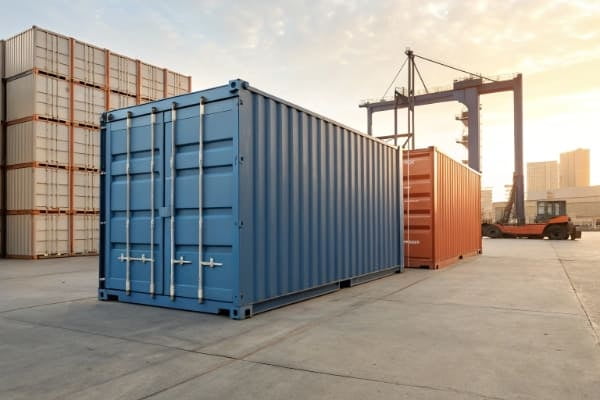
The decision between FCL and LCL depends on your volume, budget, and timeline. As a general rule, if your shipment is around 15 CBM or more, FCL is usually more cost-effective. You pay a flat rate for the whole container, and it goes directly from the origin port to the destination port without being opened. This also means it's faster and there's less risk of damage. For smaller shipments, LCL is the way to go. You share container space with other importers, so you only pay for your portion. However, LCL has its downsides. It takes longer because the freight forwarder has to consolidate cargo from multiple shippers in China and then deconsolidate it in Germany. I had a client with a 12 CBM shipment who was on a tight deadline. Even though LCL was slightly cheaper, we recommended they pay a little extra for a 20ft FCL container. The shipment arrived a week earlier, which was crucial for their business.
Here's a simple comparison to help you decide:
| Feature | FCL (Full Container Load) | LCL (Less than Container Load) |
|---|---|---|
| Best For | Shipments over 15 CBM. | Shipments between 1-15 CBM. |
| Cost Structure | Flat rate per container. | Per cubic meter (CBM) or per ton. |
| Speed | Faster. Direct port-to-port transit. | Slower. Requires consolidation & deconsolidation. |
| Security | More secure. Container is sealed at the factory. | Higher risk of damage or loss due to more handling. |
| Our Advice | Ideal for large, time-sensitive, or high-value orders. | Good for small businesses, samples, or test orders. |
Ultimately, the right choice is about balancing cost and speed. We help our clients analyze their specific needs to make the smartest financial and logistical decision for every shipment.
Common Customs, VAT & Import Issues in German?
Are you afraid of dealing with German customs? A customs hold13 can be incredibly frustrating and expensive, causing delays that put your business plans on hold.
Common issues include using incorrect HS codes18, undervaluing invoices, and not meeting EU product regulations (like CE marks). German customs will charge VAT (usually 19%) and duties based on your product's value and classification. Accurate paperwork is your best defense.
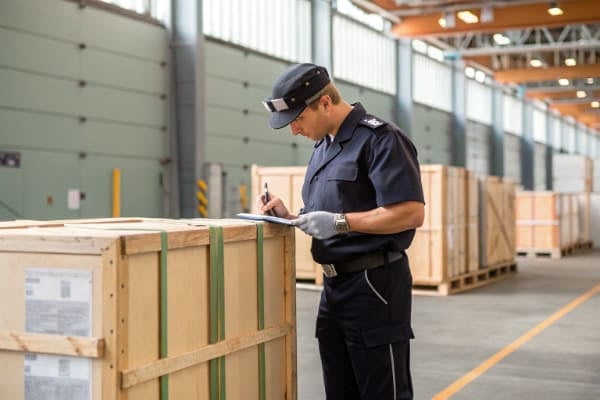
German customs are known for being very thorough. You can't cut corners. One of the biggest mistakes we see is importers using the wrong HS code. An HS code is a number that classifies your product for customs. A wrong code can lead to paying the wrong duty rate, or worse, an inspection and fine. Another major issue is product compliance. Germany is very strict about EU standards. If you are importing electronics, they must have a CE mark. If you are importing toys, they need to meet specific safety standards. We recently helped a client who was importing reusable coffee cups. They were not aware of Germany's Packaging Act (VerpackG)19, which requires registration. Their shipment was held until we could complete the registration for them. This is why we always perform a compliance check as part of our service. We make sure your products and packaging meet all German regulations before they are even shipped.
Here are some key things to watch out for:
- HS Codes: Double-check that you are using the correct HS code for your product. An incorrect code is a red flag for customs.
- Valuation: Declare the true value of your goods on the commercial invoice. Trying to undervalue them to save on duty is illegal and can lead to severe penalties.
- VAT (Einfuhrumsatzsteuer): Be prepared to pay the standard 19% VAT on the total value of your goods plus shipping and duty.
- Product Compliance: Ensure your products have the necessary certifications, like CE, RoHS, or REACH.
- Packaging Laws (VerpackG): If you are selling to German consumers, you must register your packaging in the LUCID registry.
Navigating these rules is our expertise. We act as your local team on the ground, ensuring every detail is correct so your goods clear customs without any trouble.
Conclusion
Shipping by sea to Germany is a clear, manageable process with the right planning. Understanding the costs, timelines, and required documents is key to ensuring your goods arrive safely and on budget.
Explore this resource to understand the entire sea freight process and avoid common pitfalls. ↩
Learn about the costs associated with FCL shipping to budget effectively for your imports. ↩
Discover the benefits of LCL shipments and how they can save you money on smaller cargo. ↩
Learn about ocean transit times to better plan your shipping schedules. ↩
This resource will help you navigate the import customs process smoothly. ↩
Explore the advantages of door-to-door service for hassle-free shipping. ↩
Understanding customs clearance is crucial; this resource will guide you through the requirements. ↩
Learn why the Commercial Invoice is essential for customs and how to prepare it correctly. ↩
Get insights on creating an accurate Packing List to avoid customs delays. ↩
Explore the significance of the Bill of Lading in shipping and how it protects your cargo. ↩
Find out when you need a Certificate of Origin and how it affects your shipment. ↩
Ensure your products meet EU standards by understanding necessary compliance certificates. ↩
Discover common reasons for customs holds and how to prevent them. ↩
Learn about transshipment to make informed decisions about your shipping routes. ↩
Get tips on comparing shipping quotes to ensure you get the best deal. ↩
Understand the financial implications of duties and VAT to avoid unexpected costs. ↩
Explore the pros and cons of FCL and LCL to choose the best option for your needs. ↩
Learn about HS codes to ensure compliance and avoid customs issues. ↩
Understand the implications of the Packaging Act to ensure compliance when shipping. ↩