
Are you struggling with the complexities of shipping from China to Australia1? Hidden costs, confusing customs, and long delays can hurt your business. This guide makes it simple and predictable.
The best way to ship from China to Australia depends on your needs. Sea freight2 is the cheapest for bulk goods (13–35 days). Air freight3 is faster but pricier (3–12 days). Express couriers4 are quickest for small parcels (1–7 days), but also the most expensive.
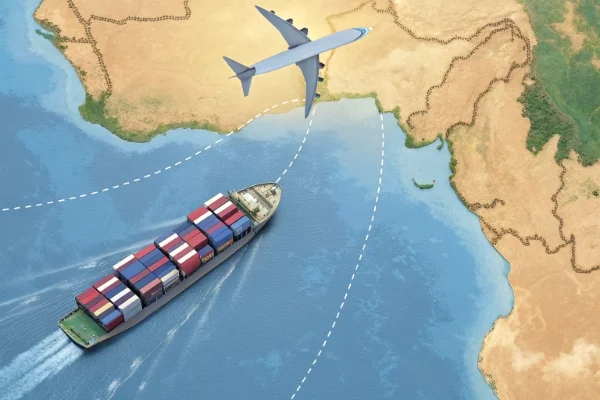
As someone who manages supply chain5s for businesses like yours every day, I know how crucial shipping is. Getting it right means your products arrive on time and on budget. Getting it wrong can cripple your cash flow and damage your brand's reputation. Let's walk through everything you need to know to make shipping from China to Australia1 a strength for your business, not a weakness.
How Long Does Shipping From China to Australia Take?
Worried that unpredictable shipping times will delay your product launch? Long transit times mean missed sales and unhappy customers. Let's break down the realistic timelines for each shipping method.
Sea freight2 from China to Australia takes about 13–35 days port-to-port. Air freight3 is much faster, taking 3–12 days. For the quickest delivery, express couriers like DHL6 or FedEx can get your package there in 1–7 days. Door-to-door times will be longer.

Understanding the total transit time is more than just the time on the water or in the air. You have to account for the entire door-to-door journey. This includes ground transport from the factory to the port in China, customs clearance7 in both countries, and final delivery to your warehouse in Australia. For example, I once helped a client who only looked at the 15-day sea transit time. They didn't factor in the week it took for customs and local delivery, which made them miss a key sales event. To avoid this, you need to plan for the full picture.
Here’s a breakdown of what influences the total time:
| Factor | Sea Freight Impact | Air Freight Impact |
|---|---|---|
| Port-to-Port/Airport-to-Airport | 13-35 days | 3-12 days |
| Origin & Destination Ports | Major ports (Shanghai to Sydney) are faster | Major airports have more frequent flights |
| Customs Clearance | 1-3 days (if paperwork is correct) | 1-2 days (often faster) |
| Peak Seasons | Can add 1-2 weeks of delay | Can add a few days of delay |
| Last-Mile Delivery | 2-7 days depending on location in Australia | 1-3 days |
How Much Does It Cost to Ship From China to Australia?
Are you tired of hidden fees8 blowing up your shipping budget9? Unexpected charges can completely erase your profit margins. Let's uncover how to calculate your true, all-in shipping cost.
Sea freight2 is cheapest for large shipments. Air freight3 is more expensive and billed by chargeable weight. Express is the costliest per kilogram. Remember, for goods over AUD 1,000, you must also pay customs duty and a 10% GST on the total value.
Many importers make the mistake of only comparing freight quotes. But the freight rate is just one piece of the puzzle. The most important number is your "landed cost10"—the total cost to get the product from the factory floor in China to your door in Australia. This includes the product cost, shipping, insurance, customs duties11, GST, and any local handling fees. For shipments valued over AUD 1,000, you must file an import declaration12 and pay duty (which varies by product) plus a 10% GST. This GST is calculated on the value of the goods plus the cost of shipping, insurance, and the duty itself. Ignoring these taxes is a common and costly mistake. A good freight forwarder13 will give you a transparent, all-in quote so there are no surprises.
Here's how to think about it:
Key Cost Components
- Product Cost: What you pay the factory.
- Freight Cost14: The charge for sea or air transport.
- Insurance: Protects against loss or damage.
- Customs Duty: A percentage based on the product's HS code.
- GST: 10% on the total customs value.
- Local Fees: Port charges, customs clearance7 fees, and final delivery.
What Are the Main Shipping Methods From China to Australia?
Choosing the wrong shipping method is an expensive mistake. You might overpay for speed you don't need or wait too long for products that are in high demand. Let's clarify the three main options.
The main shipping methods15 are Sea Freight, Air Freight, and Express Courier. Sea freight2 is for large, non-urgent orders. Air freight3 is for valuable or time-sensitive goods. Express couriers4 are perfect for small, urgent parcels like samples or direct-to-consumer orders.
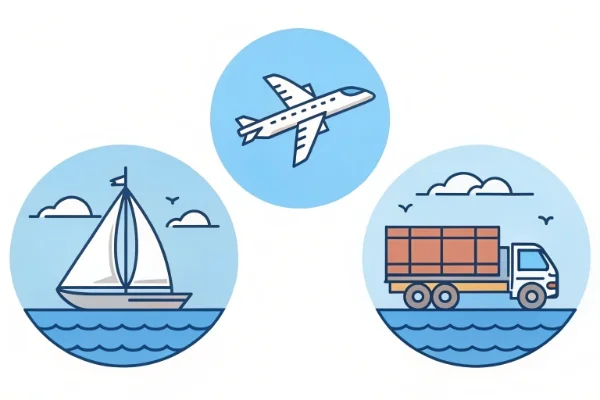
Each shipping method serves a different purpose, and the right choice depends on your shipment's size, weight, value, and urgency. I often advise my clients to use a mix of methods depending on their goals.
1. Sea Freight
This is the backbone of global trade and the most cost-effective option for bulk goods. You can ship via a Full Container Load (FCL), where you rent an entire container, or Less than Container Load (LCL), where you share container space with other importers. LCL is great for smaller shipments that are too big for air freight but not big enough for a full container.
2. Air Freight
When speed is more important than cost, air freight is the answer. It’s ideal for high-value, low-volume goods like electronics or for fulfilling an urgent backorder. While the base rate is higher, it can sometimes be cheaper than LCL for small shipments once all terminal handling fees are included.
3. Express Courier
Services like DHL6, FedEx, and UPS offer the fastest, simplest door-to-door service. They handle customs clearance7 and are perfect for product samples, important documents, or small e-commerce orders. However, they are the most expensive option per kilogram for larger shipments.
How to Choose the Right Freight Forwarder From China to Australia?
A bad freight forwarder13 can turn your shipment into a disaster. They can cause delays, damage your goods, and surprise you with hidden fees8. Here’s how you can pick a reliable partner.
Choose a forwarder with proven experience on the China-Australia route. Look for transparent all-in pricing, excellent communication, and a strong local presence in China. A great partner, like us at Toncentlink, will manage the entire process for you, from factory to your door.

Your freight forwarder13 is more than just a shipping company; they are your boots on the ground in China. They are your partner in navigating the complexities of logistics and customs. A good one saves you time, money, and headaches. A bad one creates them. When I started in this business, I learned quickly that the cheapest quote is rarely the best. Reliability is far more valuable. You need a partner who can provide a complete solution, including quality control, warehousing, and consolidation. This is especially true when dealing with multiple suppliers. A forwarder who can consolidate your orders into a single shipment can save you thousands in shipping and customs fees.
Here's a checklist for vetting a forwarder:
| Criteria | Why It Matters |
|---|---|
| China-Australia Experience | They understand the specific customs rules and port operations. |
| Transparent Pricing | They provide a single "landed cost10" quote with no hidden fees8. |
| End-to-End Services | They offer sourcing, QC, consolidation, and DDP shipping. |
| Communication | They are responsive, speak English clearly, and provide updates. |
| Local Presence | They have offices in key Chinese hubs like Yiwu, Guangzhou, or Shenzhen. |
What Documents Are Required for Shipping From China to Australia?
Is the fear of incorrect paperwork keeping you up at night? One small error can get your entire shipment stuck at the border, leading to expensive delays and storage fees.
The essential documents are the Commercial Invoice, Packing List, and a Bill of Lading (for sea) or Air Waybill (for air). You might also need a Certificate of Origin16 to qualify for reduced tariffs under the China-Australia Free Trade Agreement (ChAFTA).
Getting your documentation right is non-negotiable for smooth customs clearance7. The Australian Border Force is strict, and any inconsistencies between your documents can trigger an inspection, causing delays and extra costs. I always tell my clients that accuracy is everything. The value on your commercial invoice must match what you paid, and the contents on your packing list must match what's inside the cartons. This is not the place to cut corners. A professional freight forwarder13 or customs broker will review all your documents before the shipment even leaves China to catch any potential issues. This simple check can save you a world of trouble down the line.
Here's a breakdown of the key documents:
Core Shipping Documents
- Commercial Invoice: Details the buyer, seller, product descriptions, quantities, and value of the goods. This is used by customs to determine duties.
- Packing List: A detailed list of the shipment's contents, including weights, dimensions, and number of cartons. It's used by customs to verify the cargo.
- Bill of Lading (B/L) or Air Waybill (AWB): The contract between you and the carrier. It acts as a receipt for the goods and a title document.
What Is the Best Shipping Method for Businesses Importing From China?
There is no single "best" way to ship. Choosing the wrong one for your situation can mean paying too much for speed or waiting too long for inventory. The best method is the one that fits your specific needs.
For large, planned inventory orders, sea freight is the most cost-effective. For urgent product launches or high-value items, air freight is best. For samples and small D2C orders, express couriers are ideal. Smart businesses use a blended strategy.
The smartest importers don't stick to just one shipping method. They use a flexible, blended strategy that adapts to each situation. For instance, when launching a new product, I often advise clients to air freight the first 10-20% of their inventory. This allows them to get to market fast and start generating sales and reviews. The remaining 80-90% can follow by sea freight at a much lower cost. This approach balances speed and cost-effectiveness perfectly. Your supply chain5 partner should be able to help you analyze your needs for each shipment and recommend the optimal method, rather than pushing a one-size-fits-all solution.
Here are some common business scenarios:
| Scenario | Best Shipping Method | Why? |
|---|---|---|
| Stocking up on bulky furniture | Sea Freight (FCL) | Lowest cost per cubic meter for large, heavy items. |
| Launching a new electronic gadget | Air Freight | Speed to market is critical to capture initial demand. |
| Sending product samples to a buyer | Express Courier | Fastest door-to-door service with simple tracking. |
| Urgent restock of a bestseller | Air Freight or Express | Minimizes stock-out duration and lost sales. |
Conclusion
Shipping from China to Australia is straightforward with the right knowledge and partner. Focus on the total landed cost10, choose the right method for each shipment, and let experts handle the details.
Explore comprehensive guides that simplify the shipping process and help you avoid common pitfalls. ↩
Learn about the most cost-effective shipping method for bulk goods and how to optimize your logistics. ↩
Discover the benefits of air freight for urgent shipments and how it can save you time. ↩
Find out which express couriers offer the fastest and most reliable service for small parcels. ↩
Learn effective strategies to optimize your supply chain and improve efficiency. ↩
Explore DHL's offerings to find the best solutions for your shipping needs. ↩
Get tips on navigating customs regulations to avoid delays and extra costs. ↩
Discover strategies to identify and eliminate hidden costs in your shipping budget. ↩
Get insights on how to effectively manage your shipping costs and improve profitability. ↩
Understand the total cost of shipping to avoid unexpected fees and maximize your budget. ↩
Understand how customs duties are assessed to avoid surprises in your shipping costs. ↩
Understand the importance of filing an import declaration to comply with customs regulations. ↩
Learn how to select a freight forwarder that meets your shipping needs and ensures smooth delivery. ↩
Get insights into how freight costs are calculated and how to minimize them. ↩
Explore various shipping methods to find the best fit for your business needs. ↩
Learn how this document can help you qualify for reduced tariffs under trade agreements. ↩