
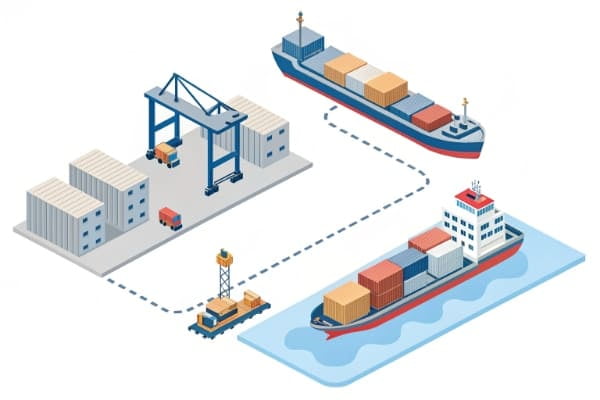
Confused about shipping from China to Australia? The costs and process can seem complex, leading to expensive mistakes. Sea freight is your most cost-effective solution when planned correctly.
Sea shipping from China to Australia1 is the most economical way to move goods. It typically takes 18-35 days. You can choose between Full Container Load (FCL)2 for large shipments or Less than Container Load (LCL)3 for smaller volumes, balancing cost and speed.
Getting your products from a factory in China to a warehouse in Australia involves more than just loading a container. I've seen many clients get lost in the details of customs, documentation, and hidden fees4. But don't worry, I'm here to walk you through every step. In this guide, we'll break down the entire process so you can ship with confidence and clarity.
What Is Sea Shipping from China to Australia?
Unsure what sea shipping really involves? It's easy to get lost in terms like FCL and LCL. We'll clarify everything so you can choose the right option.
Sea shipping involves transporting goods5 via cargo ships. You can book a Full Container Load (FCL)2 for your exclusive use or a Less than Container Load (LCL)3 where you share container space. FCL is faster and safer, while LCL is cheaper for smaller shipments.
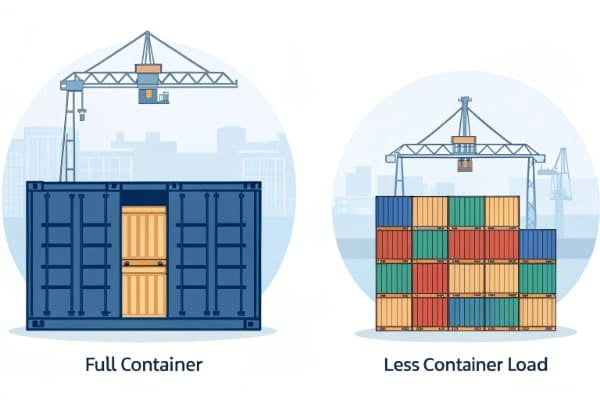
When you ship by sea, you have two main choices: FCL and LCL. Choosing the right one depends on your cargo volume and budget. I always tell my clients to think of it this way: FCL is like renting a whole truck for your move, while LCL is like sharing that truck with others.
FCL (Full Container Load)
With FCL, you pay for an entire container (usually 20ft or 40ft). It's best for larger shipments, typically over 15 cubic meters (CBM). The container is sealed at your supplier's factory and only opened at your destination. This makes it more secure and slightly faster because it doesn't need to be consolidated with other cargo at the port.
LCL (Less than Container Load)
If your shipment is smaller, LCL is the way to go. You only pay for the space you use inside a shared container. It's cost-effective for low-volume goods, but it takes longer. Your cargo has to be grouped with others at the origin port and then separated at the destination port, adding a few extra days to the total transit time.
| Feature | FCL (Full Container Load) | LCL (Less than Container Load) |
|---|---|---|
| Best For | Shipments over 15 CBM | Shipments under 15 CBM |
| Cost | Higher flat rate, lower per CBM | Lower total cost, higher per CBM |
| Security | High (sealed container) | Moderate (shared space) |
| Speed | Faster transit | Slower due to consolidation |
When Should You Use Sea Freight Instead of Air Freight?
Paying too much for air freight? Airplanes are fast but can destroy your profit margins. Sea freight is the answer for bulky or non-urgent orders, saving you money.
Use sea freight for shipments over 150 kg, bulky items, or non-urgent orders. It's significantly cheaper than air freight, especially for large volumes. Air freight is best for small, high-value, or time-sensitive goods where speed is more important than cost.
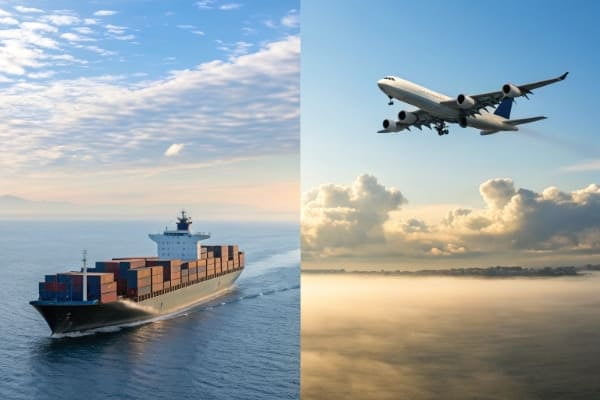
The decision between sea and air freight is one of the first we make with a client. It almost always comes down to a trade-off between cost and speed. A new e-commerce client once wanted to air ship 500 backpacks. The cost was astronomical. We switched them to sea freight, and the savings funded their next production run. It's all about planning your inventory cycles correctly. Air freight is great for urgent samples or last-minute stock refills, but for your main inventory, sea freight is the smart choice. The general rule is simple: if your shipment is heavy, bulky, or not needed tomorrow, choose the sea. Your budget will thank you.
Here is a simple breakdown to help you decide:
| Factor | Sea Freight | Air Freight |
|---|---|---|
| Cost | Low | High |
| Speed | Slow (18-35 days) | Fast (3-7 days) |
| Volume/Weight | Ideal for large, heavy goods | Best for small, light goods (<150kg) |
| Reliability | Can be affected by weather | Generally very reliable |
| Use Case | Bulk inventory, non-urgent goods | Samples, urgent orders, high-value items |
What Are the Step-by-Step Procedures to Ship by Sea?
Overwhelmed by the shipping process6? Missing a step can cause major delays and fees. I'll outline the exact procedure to ensure your shipment goes smoothly from start to finish.
The process involves booking with a freight forwarder7, trucking goods to the port, clearing China customs, ocean transit8, clearing Australian customs, and final delivery. A good partner like us manages every step, from factory pickup to your door (DDP).
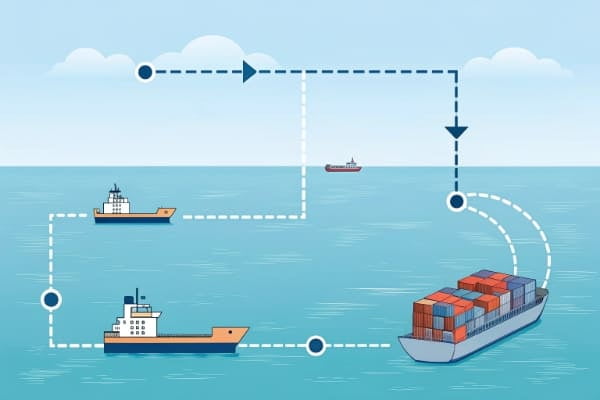
The sea shipping process6 can look complicated from the outside, but it follows a clear path. As a sourcing partner, our job is to make this path invisible to you. We handle all the coordination so you can focus on your business. Here is what happens behind the scenes after you place an order.
Step 1: Booking and Cargo Pickup
First, we book space on a vessel with a shipping line. We then arrange for a truck to pick up your finished goods from the factory and transport them to the port of departure, like Shanghai or Shenzhen.
Step 2: China Customs Clearance
Before the container can be loaded onto the ship, it must clear Chinese customs. We prepare and submit all the necessary export documents to prove the goods are eligible to leave the country.
Step 3: Ocean Transit
Once cleared, the container is loaded onto the cargo ship. The vessel then sails from the Chinese port to the destination port in Australia, such as Sydney, Melbourne, or Brisbane.
Step 4: Arrival and Australian Customs
Upon arrival, the container is unloaded. We then handle the import customs clearance9 process in Australia. This involves submitting import documents and paying any applicable duties and GST.
Step 5: Final Delivery
After clearing customs, we arrange for another truck to pick up your cargo from the port and deliver it directly to your warehouse or specified address.
What Documents Are Required for Sea Shipping?
Worried about customs rejecting your shipment? Incorrect paperwork is a common and costly mistake. I’ll list the essential documents you need to avoid any customs headaches.
You need a Commercial Invoice, Packing List, and Bill of Lading (B/L)10. Depending on the goods, you might also need a Certificate of Origin11 or import permits. Accurate information on these documents is crucial for smooth customs clearance9 in Australia.
Paperwork is the single most common reason for shipping delays. I can’t stress this enough. We once had a shipment held for two weeks because a client's commercial invoice didn't match the packing list. A small typo cost them thousands in storage fees. That’s why we have a dedicated team that triple-checks every document before it's submitted. Getting these right is not just a formality; it's essential for a smooth supply chain. For any shipment to Australia, you will always need the "big three" documents. Other paperwork might be needed depending on what you're shipping, but these are non-negotiable.
Here’s a look at the most critical documents and what they are for:
| Document | Purpose | Key Information Required |
|---|---|---|
| Commercial Invoice | A bill from seller to buyer. Used by customs to determine duties. | Seller/buyer info, product descriptions, HS codes, value, Incoterms12. |
| Packing List | Details the contents of the shipment. Used to identify goods. | Carton count, dimensions, net weight, gross weight, packing details. |
| Bill of Lading (B/L)10 | The contract between you and the carrier. Acts as a receipt and title to the goods. | Shipper, consignee, vessel name, ports, container number, description of goods. |
| Certificate of Origin11 | Certifies the country where the goods were made. Can be used for preferential tariff rates. | Manufacturer details, product information, country of origin. |
How Long Does Sea Shipping from China to Australia Take and How Much Does It Cost?
Can't get a clear answer on shipping time13 and cost? Vague estimates make budgeting impossible. I'll give you real numbers so you can plan your inventory and finances.
Sea shipping from China to Australia1 takes 18-35 days. LCL costs around $40-$60 per cubic meter. A 20ft FCL container costs $1,200-$2,000, and a 40ft FCL costs $1,800-$2,800. Prices vary by season, port, and carrier.
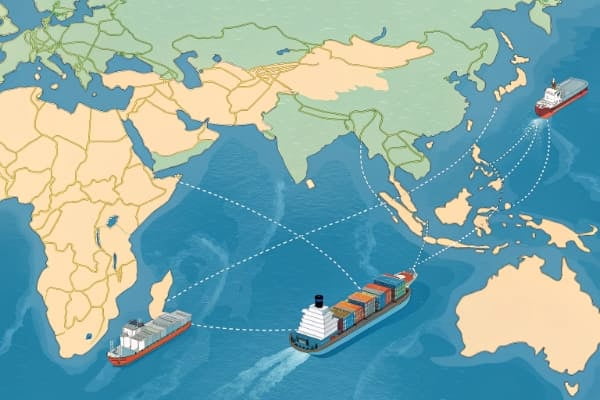
These numbers are what every client wants to know first. It's important to understand that these are estimates. The final price and time depend on many factors. Port-to-port transit time is just one part of the journey. You also have to account for ground transport, customs clearance9, and potential port congestion. Rates can also change weekly based on demand, fuel costs, and carrier capacity. Peak seasons, like before Chinese New Year, can drive prices up by 50%. We always provide our clients with a transparent, all-inclusive DDP (Delivered Duty Paid) quote that covers everything from the factory floor to their front door. This way, there are no surprises.
Estimated Transit Times (Port-to-Port)
| From (China) | To (Australia) | Average Transit Time |
|---|---|---|
| Shanghai | Sydney | 18-25 days |
| Shenzhen | Melbourne | 20-28 days |
| Ningbo | Brisbane | 22-30 days |
| Guangzhou | Fremantle | 25-35 days |
Estimated Sea Freight Costs
| Shipment Type | Typical Cost Range (USD) |
|---|---|
| LCL (per CBM) | $40 - $60 |
| 20' FCL Container | $1,200 - $2,000 |
| 40' FCL Container | $1,800 - $2,800 |
What Should You Know Before Shipping to Australia by Sea?
Afraid of hidden fees4 and unexpected problems? Shipping to Australia has specific rules that can trip you up. I’ll share key tips to help you avoid common pitfalls.
Know your Incoterms12 to define responsibility. Be aware of Australia's strict biosecurity rules14. Understand container weight limits15 (SOLAS) to avoid fines. And always factor in peak seasons16 like Chinese New Year, which cause price hikes and delays.
Shipping is more than just logistics; it's about navigating rules and regulations. Australia, in particular, has very strict standards. We had a client who learned about biosecurity the hard way. Their shipment was held and fumigated at a huge cost because of untreated wooden crates. Now, we manage this for all our clients to prevent such surprises. Being proactive about these details is what separates a smooth shipment from a disastrous one.
Understand Incoterms12
Incoterms12 are trade terms that define the responsibilities of the seller and buyer. For example, FOB (Free On Board) means your supplier is responsible for getting goods to the Chinese port. DDP (Delivered Duty Paid) means your partner (like us) handles everything to your final destination. For most importers, DDP is the simplest and safest option.
Comply with Australian Biosecurity
Australia has some of the world's strictest biosecurity laws to protect its environment. All shipments are inspected. Any wood packaging, like pallets or crates, must be treated and stamped according to ISPM 15 standards to prevent pests. Failure to comply leads to treatment, re-export, or destruction of the cargo at your expense.
Plan Around Peak Seasons
Shipping demand and prices spike during certain times of the year. The biggest is before Chinese New Year (Jan/Feb). Others include Golden Week (October) and the pre-Christmas rush (Aug-Nov). During these periods, book your shipment at least 4-6 weeks in advance to secure space and avoid premium rates.
Conclusion
Shipping from China to Australia is simple with the right partner. By understanding the process, costs, and key rules, you can make sea freight a powerful part of your supply chain.
Explore the advantages of sea shipping, including cost savings and efficiency for your logistics. ↩
Learn about FCL shipping and how it can provide faster and more secure transport for large shipments. ↩
Discover how LCL shipping can be a cost-effective solution for smaller shipments. ↩
Learn about potential hidden fees in shipping to avoid unexpected costs. ↩
Discover best practices for international shipping to enhance your logistics strategy. ↩
Follow a clear outline of the shipping process to ensure a smooth experience. ↩
Learn how a freight forwarder can simplify your shipping experience and manage logistics. ↩
Understand the ocean transit phase and its importance in the shipping process. ↩
Understand the customs clearance process to avoid delays and ensure smooth shipping. ↩
Explore the importance of the Bill of Lading and its role in the shipping process. ↩
Understand the significance of the Certificate of Origin for customs and tariffs. ↩
Discover how Incoterms define responsibilities in shipping and can impact your costs. ↩
Find out the typical shipping times to better plan your inventory and logistics. ↩
Learn about Australia's strict biosecurity regulations to ensure compliance and avoid issues. ↩
Understand the SOLAS container weight limits to avoid fines and ensure compliance. ↩
Learn about peak shipping seasons to plan your shipments and avoid delays. ↩