

Struggling with high shipping costs1 and delays from China? You worry about complex customs. I'll show you how to find a reliable, affordable method for your business.
The best shipping methods from China to Australia2 are sea freight3, air freight4, and express courier5. Sea freight offers the lowest cost for bulk orders6. Air freight is the fastest for urgent goods. Express couriers are ideal for small, door-to-door shipments.
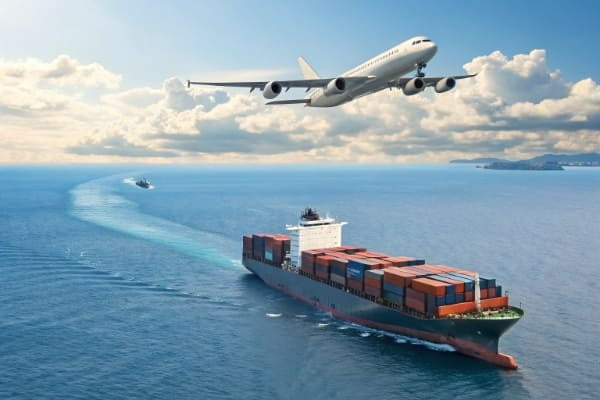
Choosing the right shipping method is a huge part of a successful import business. I’ve worked with hundreds of clients, from small e-commerce sellers to large corporations, and this choice always comes up. It’s not just about cost or speed; it’s about what works best for your specific products and business goals. Let me walk you through the options so you can ship your goods from China to Australia with confidence.
What Are the Main Shipping Options?
Confused by shipping terms like FCL7, LCL8, and air cargo? It's hard to know which is right for your business. I'll break down the three main options simply.
The main options are sea freight3, air freight4, and express courier5s. Sea freight is for large, non-urgent goods. Air freight is for fast delivery of valuable items. Couriers are best for small, quick shipments.
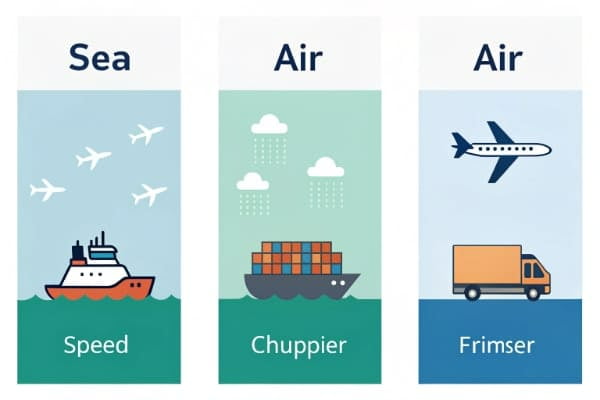
When I first started helping clients ship goods, the choices seemed overwhelming. But I quickly learned it all comes down to balancing three things: cost, speed, and volume. Think of it as a triangle. You can usually pick two, but it's hard to get all three. For example, you can get it fast and for a large volume, but it won't be cheap. Or you can get it cheap for a large volume, but it won't be fast. Understanding this simple trade-off is the first step. Let's look at each option more closely.
Comparing Your Choices
Each shipping method serves a different purpose. Your decision will depend on your specific needs. Here's a simple breakdown to help you compare them.
| Shipping Method | Best For | Speed | Cost | Typical Volume |
|---|---|---|---|---|
| Sea Freight | Bulk goods, non-urgent items | Slow (12-33 days) | Low | Over 2 CBM |
| Air Freight | Urgent, high-value, lightweight goods | Fast (3-8 days) | High | Over 100 kg |
| Express Courier | Samples, small packages, documents | Very Fast (2-5 days) | Very High | Under 100 kg |
As a sourcing partner9, we always ask our clients about their deadlines and budget first. A client like David, who runs a promotional products10 company in the US, often uses a mix. He uses sea freight3 for his big, planned orders of branded drinkware and bags. But if he has a last-minute event, he'll use air freight4 to make sure the giveaways arrive on time.
When Should You Choose Air Freight?
Need your products in Australia fast? Worried that sea freight3 will miss your marketing deadline? Air freight can solve this problem, but the high cost can be scary.
Choose air freight4 for urgent, high-value, or lightweight goods. It's ideal for product launches, samples, or replenishing stock quickly. The speed justifies the higher cost when time is critical for your business.
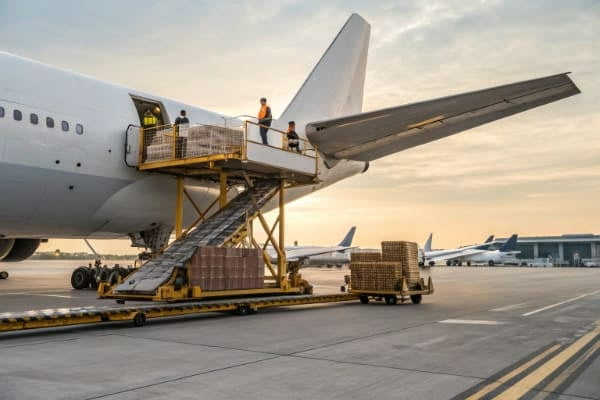
I remember a client who needed 500 custom tech accessories for a major trade show in Sydney. Their event was in three weeks. Sea freight was out of the question, as it can take up to 33 days. They were worried they would have nothing to show their potential customers. We arranged for air freight4, and the products arrived in just five days. They were relieved and the event was a huge success. This is a perfect example of when air freight4 is the right choice. It costs more, but the cost of missing the opportunity would have been much higher.
Understanding Air Freight
Air freight is all about speed and reliability. When your timeline is tight, it's often the only viable option.
- Speed: This is the main advantage. Transit time from a major Chinese airport to an Australian one is typically 3-8 days, including customs clearance11. This speed allows you to respond quickly to market demand.
- Security: Air shipments are handled less frequently than sea shipments and are stored in more secure airport facilities. This reduces the risk of damage or theft, making it great for high-value items12 like electronics.
- Cost Calculation: The cost is based on "chargeable weight." The carrier will charge for whichever is greater: the actual weight of the shipment or its volumetric weight. This is why it's best for dense or lightweight, high-value goods. Heavy, bulky items can become extremely expensive to ship by air. We always help our clients calculate this to avoid any pricing surprises.
How Does Sea Freight (FCL7 vs LCL8) Work?
Want the cheapest shipping rate for your bulk order? Sea freight is the answer, but the terms FCL7 and LCL8 are confusing. Choosing the wrong one can cost you money.
Sea freight moves goods in containers. Choose Full Container Load (FCL7) if you can fill a whole container. Choose Less than Container Load (LCL8) to share container space and cost with others for smaller shipments.
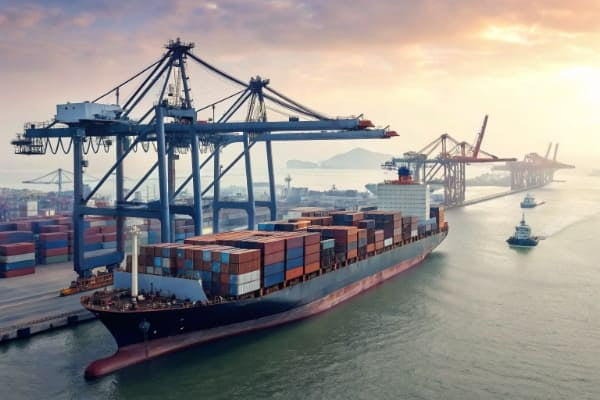
Sea freight is the backbone of global trade, and it's what most of our clients use for their main inventory orders. The key is to understand the two ways to book space on a container ship: FCL7 and LCL8. I often explain it to my clients like this: FCL7 is like chartering a private bus for your group, while LCL8 is like buying a single ticket on a public bus. One gives you exclusive use and is faster, while the other is cheaper for a small group but involves more stops.
FCL7 vs. LCL8: Which is for You?
Choosing between FCL7 and LCL8 depends almost entirely on the volume of your shipment.
- FCL7 (Full Container Load): You pay for an entire container (usually 20ft or 40ft). Your goods are the only ones inside. Once it's loaded and sealed at the factory, it isn't opened again until it reaches you or your destination warehouse in Australia. This makes it faster and more secure than LCL8. If your shipment volume is over 15 cubic meters (CBM), FCL7 is almost always the cheaper and better option.
- LCL8 (Less than Container Load): If your shipment is smaller (typically 2-15 CBM), you can use LCL8. Your goods are grouped, or "consolidated," with other people's goods to fill a container. This is cost-effective for smaller volumes. However, it takes longer because of the extra handling at both the origin and destination ports for consolidation and deconsolidation. There's also a slightly higher risk of damage because your goods are handled more. We always advise clients to use extra-sturdy packaging for LCL8 shipments.
| Feature | FCL7 (Full Container Load) | LCL8 (Less than Container Load) |
|---|---|---|
| Best For | Large shipments (>15 CBM) | Small shipments (2-15 CBM) |
| Cost | Cheaper per CBM for large volumes | Cheaper for small volumes |
| Speed | Faster (less handling) | Slower (consolidation/deconsolidation) |
| Security | Higher (sealed container) | Lower (shared container, more handling) |
Is Courier Shipping Right for Small Shipments?
Just need to ship a few samples or a small order? Worried about the complexity of freight? You need a simple, door-to-door solution without the hassle of customs paperwork.
Yes, express courier5 services like DHL, FedEx, or UPS are perfect for small, lightweight shipments, usually under 100kg. They offer fast, all-inclusive door-to-door delivery13 with easy tracking, though they are the most expensive option per kilogram.

Couriers are the simplest way to ship. It’s the method we use most often to send pre-production samples to our clients for approval. For example, before we start a large order of 10,000 custom tote bags for a client in Melbourne, we will send them one finished bag via DHL. It gets there in 3-5 days, and they can see and feel the final product. This simple step avoids any misunderstandings and ensures the client is 100% happy before we produce the full quantity. It’s an essential part of our quality control process.
When to Use a Courier
Couriers are all about convenience. They handle almost everything for you.
- Simplicity: This is an all-in-one service. They pick up from the factory in China and deliver to your doorstep in Australia. They also handle the basic customs clearance11 process for you, which is a huge benefit for people new to importing.
- Speed: It's the fastest option, with delivery times often between 2-5 business days.
- Australian Customs: For goods valued under AUD 1,000, the process is very simple. For goods over this amount, you will need to file a formal import declaration14 and pay Goods and Services Tax (GST)15. A good partner can manage this for you. We often ship DDP (Delivered Duty Paid), which means we take care of all duties and taxes. The price you are quoted is the final price you pay, with no surprise fees upon arrival. This gives our clients peace of mind.
- Insurance: No matter which method you choose, always get freight insurance16. It’s a small cost that protects you against the risk of loss or damage during transit. We include it in all our quotes.
Conclusion
Choosing the right shipping method from China to Australia is simple. Use sea freight3 for cost savings, air freight4 for speed, and couriers for small packages. A good partner makes it easy.
Discover strategies to minimize shipping costs and improve your import business's profitability. ↩
Explore this resource to understand various shipping methods and their benefits for your business. ↩
Learn about sea freight, the most cost-effective shipping method for bulk orders, and its advantages. ↩
Discover why air freight is the fastest option for urgent shipments and how it can benefit your business. ↩
Find out how express courier services can simplify shipping for small packages and ensure quick delivery. ↩
Learn about the benefits of bulk orders and how they can save you money on shipping. ↩
Understand Full Container Load (FCL) shipping and when it is the best choice for your shipments. ↩
Learn about Less than Container Load (LCL) shipping and its cost-effective benefits for smaller shipments. ↩
Learn about the role of a sourcing partner and how they can assist in your shipping needs. ↩
Discover the best practices for shipping promotional products to ensure timely delivery. ↩
Explore the customs clearance process to ensure smooth shipping and avoid delays. ↩
Find out the best practices for shipping high-value items to ensure their safety during transit. ↩
Learn about the convenience of door-to-door delivery services and their benefits for small shipments. ↩
Discover when an import declaration is necessary and how to file it correctly. ↩
Learn about Goods and Services Tax (GST) and its implications for importing goods into Australia. ↩
Understand the importance of freight insurance to protect your shipments from loss or damage. ↩