
Sourcing from China feels complex. Unclear timelines cause major delays and stress. This guide breaks down each step so you can plan your project with confidence and avoid surprises.
Sourcing products from China1 typically takes 3 to 6 months from your initial idea to final delivery. This timeline includes defining product specifications2, finding and vetting suppliers3 (2-4 weeks), sampling4 (2-4 weeks), mass production5 (30-90 days), quality control6, and international shipping7 (5-45 days).
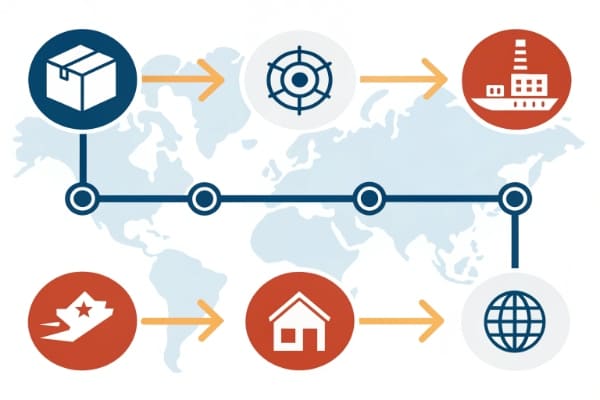
I get this question all the time from my clients. Everyone wants to know exactly how long it will take to get their branded merchandise in hand. The truth is, it depends. But you can make a very good estimate if you understand the process. Let's break down the entire journey so you can plan your next project like a pro.
What Are the Key Steps in Sourcing Products from China?
You have a great product idea but don't know the process. If you miss a critical step, your entire project could fail. Here are the essential stages you must follow.
The main steps are defining product specifications2, finding and vetting suppliers3, approving samples, mass production5, quality control6, and finally, logistics and shipping8. Each stage has its own timeline and is absolutely critical for a successful outcome. Skipping any step is a big risk.
When you source products, you are really managing a project with many moving parts. I always tell my clients to think of it as a journey with clear milestones. If you try to rush or skip a stage, you will almost always pay for it later with delays or quality problems. We manage this entire process for our clients to make sure nothing is missed. It’s the only way to guarantee a smooth experience. A simple mistake in the beginning can have a huge impact at the end. For example, bad specifications will lead to bad samples, which wastes weeks. A poor supplier choice can ruin the entire order. That's why we follow a strict, proven process for every single project, no matter how big or small.
The Sourcing Journey: Step by Step
Here is a simple breakdown of the sourcing journey and a typical timeline for each part.
| Stage | Description | Typical Timeline |
|---|---|---|
| 1. Product Development | Creating detailed specifications and designs. | 1-2 weeks |
| 2. Supplier Sourcing | Finding, contacting, and shortlisting factories. | 1-2 weeks |
| 3. Supplier Vetting | Audits, background checks, and final selection. | 1-2 weeks |
| 4. Sampling | Producing and shipping samples for approval. | 2-4 weeks |
| 5. Mass Production | Manufacturing your full order. | 4-12 weeks |
| 6. Quality Control | Inspecting goods before they leave the factory. | 1-3 days |
| 7. Logistics & Shipping | Transporting goods from China to your door. | 1-6 weeks |
How Do Product Specifications Impact the Sourcing Timeline?
You think a simple product idea is enough to start. But vague instructions lead to the wrong samples and weeks of delays. A detailed specification sheet is your best tool.
Clear product specifications2 are the most important factor for a fast timeline. A detailed document with materials, dimensions, Pantone colors9, and branding requirements can save weeks. Ambiguity just creates endless questions and delays your project from the very beginning.
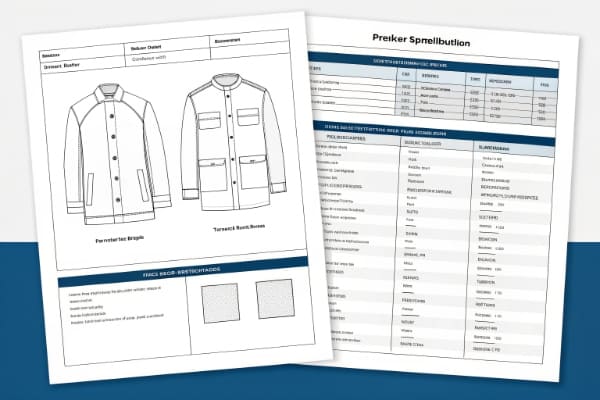
Nothing slows down a project more than a bad brief. I remember a client who just asked for "a blue promotional bag." The factory sent us five different shades of blue, and none of them were what the client wanted. That mistake added three weeks to the project just to get the color right. Now, we always ask for an exact Pantone color code before we even request a quote. The more detail you provide upfront, the fewer questions the factory will have. Fewer questions mean a faster and more accurate quote, faster sample production, and a final product that matches your vision. Your goal is to leave no room for guessing.
What to Include in Your Spec Sheet
A good spec sheet, sometimes called a "tech pack10," should answer every possible question a factory might have.
- Product Dimensions: Provide exact measurements for height, width, and depth.
- Materials: Be specific. Don't just say "metal," say "304 stainless steel."
- Colors: Use Pantone (PMS) color codes for all colors on the product and logo.
- Logo & Branding: Provide high-resolution vector files (like .AI or .EPS) and specify the printing method (e.g., silk screen, laser engraving).
- Packaging: Describe the type of packaging you need, from a simple polybag to a custom-printed retail box.
- Compliance: List any required certifications, like FDA or CE.
How Much Time Does It Take to Find and Vet Suppliers in China?
Finding a factory on a website like Alibaba seems easy. But the wrong partner can deliver poor quality or just disappear with your money. Proper vetting takes time but saves you from disaster.
Finding and fully vetting suppliers in China usually takes 2 to 4 weeks. This includes initial research, requesting quotes, and then verifying the best candidates through factory audits, checking business licenses11, and reviewing their production history12. It's a crucial investment of time.

This is one area where you should never cut corners. A cheap price from an unverified supplier is often a trap. We spend a lot of time building our network of trusted factories. This means we have already done the hard work of vetting for our clients. For a new client or a new product, we still follow a strict process. We look for suppliers who specialize in the product category, have good communication, and have a proven track record. We check their business licenses11 to make sure they are a real manufacturer, not just a trading company pretending to be a factory. A quick factory audit, even a virtual one, can tell you a lot about their quality standards and production capacity. This process protects your investment and ensures your brand's reputation is in good hands.
The 4-Week Vetting Process
- Week 1: Research & Shortlisting: We start with a broad search and create a list of 10-15 potential suppliers. We send them a Request for Quotation (RFQ) with our detailed product specifications2.
- Week 2: Communication & Analysis: We analyze the quotes we receive. We look at more than just price. We also evaluate their response time, professionalism, and understanding of our requirements. We narrow the list down to the top 3-5 candidates.
- Week 3: Deep Verification: For the top candidates, we dig deeper. We ask for their business license, quality certifications, and photos or videos of their factory. We might schedule a video call to talk to the manager.
- Week 4: Final Selection & Audit: We make our final choice. For larger or more complex orders, we will arrange an on-site factory audit to inspect their facilities and quality control6 systems in person.
How Long Should You Expect to Wait for Samples from Chinese Factories?
You need a physical sample fast to approve production. But waiting for that sample to arrive can feel like it takes forever. You need to understand the factors that affect sample time.
You should expect to wait 2 to 4 weeks for a sample to be produced and delivered. This timeline typically includes 7-14 days for the factory to make the sample and another 5-10 days for international express shipping via couriers like DHL or FedEx.
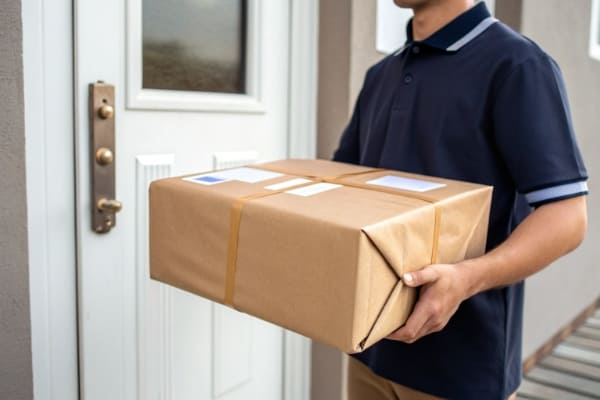
Getting the sample right is one of the most important milestones in the sourcing process. This is your chance to see, touch, and test the product before you commit to a large production run. The time it takes can vary. A simple product using stock materials might be ready in a week. But a product that requires a custom color or a new mold will take much longer. Factories are busy, and they have to fit sample production in between their large orders. Once the sample is ready, we always use an express courier for shipping. It costs more than regular post, but it's reliable and provides tracking, which is essential. Waiting an extra week for a slow shipment is not worth the small savings. This is the moment you confirm quality, so it’s worth doing right.
Factors That Influence Sample Timelines
- Product Complexity: A printed t-shirt is faster to sample than a custom-shaped electronic device.
- Material Availability: If the factory needs to order special materials, this will add time.
- Molds & Tooling: If your product requires a new injection mold, creating the mold alone can take 3-4 weeks before a sample can even be made.
- Factory Schedule: A busy factory may have a longer queue for sample production.
- Shipping Method: Express shipping (DHL, FedEx) is fast (5-10 days). Standard mail is slow and unreliable.
How Do Production Lead Times Vary for Different Products?
You assume all products are made quickly. But your marketing campaign is already scheduled, and a production delay can ruin everything. You need to know the typical lead times for your product.
Mass production lead times can vary from 30 to 90 days, depending on the product. Simple promotional items13 might take 30 days. Products that need custom molds14, complex assembly, or special materials can easily take 60 days or more, especially for large quantities.
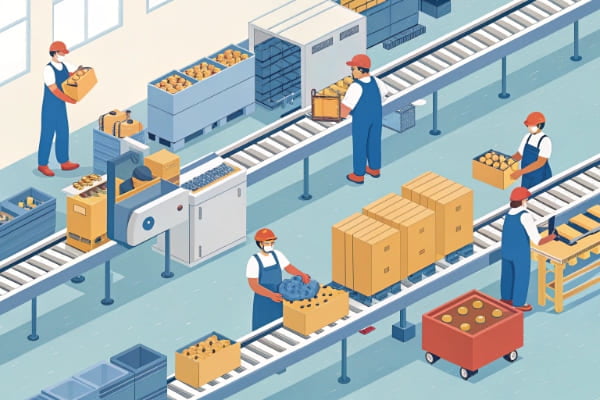
Once you approve the pre-production sample, the factory can start mass production5. This is usually the longest phase of the sourcing process. The "lead time" is the time from when you pay the deposit until the goods are finished and ready to ship. This timeline is influenced by many things. The factory needs to order raw materials, schedule time on their production lines, manufacture the components, assemble the final product, print your logo, and package everything. For popular promotional products, factories often keep raw materials in stock, which speeds things up. But for a fully custom item, they have to start from scratch. It is also very important to plan around major Chinese holidays, especially Chinese New Year, which can shut down factories for 3-4 weeks.
Estimated Production Lead Times
| Product Category | Typical Lead Time | Key Factors |
|---|---|---|
| Simple Promotional Items | 25-30 days | Stock materials, simple printing. |
| Custom Apparel (T-Shirts) | 30-45 days | Fabric dyeing, cutting, sewing, printing. |
| Bags & Totes | 35-50 days | Material sourcing, multiple assembly steps. |
| Electronics & Tech Gadgets | 45-60 days | Component sourcing, assembly, testing. |
| Custom Molded Products | 60-90+ days | Includes time for mold creation and testing. |
How Long Does It Take to Ship Products from China to the US?
Your products are finally finished, but you have no idea when they will arrive. Shipping delays can destroy your profit margins and upset your customers. Choosing the right shipping method is key.
Shipping from China to the US typically takes 5-10 days by air freight15 or 30-45 days by sea freight16. This full timeline includes transit time, customs clearance17 in both China and the US, and final delivery to your warehouse. Sea freight is much cheaper but also much slower.
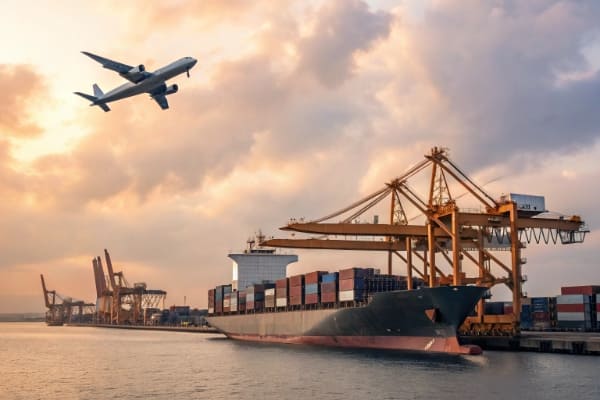
The final step is getting your products from the factory in China to your door. You have two main choices: air or sea. Air freight is very fast and great for small, lightweight, or high-value goods. If you have an urgent deadline for an event, air freight15 is your only option. Sea freight is the most common method for larger shipments because it is much more affordable. However, it is a lot slower and the timeline can be less predictable due to weather, port congestion, and customs delays. We help our clients choose the best method based on their budget and deadline. We also handle all the paperwork for customs clearance17. This is a complex part of the process, and a small mistake on a form can leave your products stuck at the port for weeks.
Comparing Air Freight vs. Sea Freight
| Factor | Air Freight | Sea Freight |
|---|---|---|
| Total Door-to-Door Time | 5-10 days | 30-45 days |
| Cost | High (approx. $5-10 per kg) | Low (approx. $0.50-$1 per kg) |
| Best For | Urgent, high-value, lightweight shipments. | Large, heavy, non-urgent shipments. |
| Reliability | Very reliable schedules. | Can be affected by weather and port congestion. |
Conclusion
Sourcing from China requires careful planning and patience. Understanding the timeline for each step, from creating specifications to final shipping, is the key to a successful and stress-free import process.
Explore effective strategies and tips for successful sourcing from China. ↩
Learn how detailed product specifications can streamline your sourcing process. ↩
Discover the essential steps to ensure you choose reliable suppliers. ↩
Understand why obtaining samples is crucial before mass production. ↩
Get insights into typical lead times for various product categories. ↩
Find out how to ensure product quality during the manufacturing process. ↩
Learn about the pros and cons of different shipping options. ↩
Explore key logistics factors that can impact your sourcing timeline. ↩
Discover how Pantone colors ensure brand consistency and product accuracy. ↩
Learn how to create a comprehensive tech pack for your products. ↩
Understand how business licenses protect your investment in sourcing. ↩
Learn why a supplier's track record is crucial for successful sourcing. ↩
Get insights into the production timelines for promotional products. ↩
Find out how custom molds can impact your production schedule. ↩
Learn why air freight might be the best option for urgent shipments. ↩
Discover the cost-effectiveness of sea freight for larger shipments. ↩
Explore the complexities of customs clearance and how to navigate them. ↩