
Struggling with shipping delays and surprise costs from China? This uncertainty can hurt your business. Finding a reliable freight forwarder1 is the only way to ensure smooth, predictable deliveries.
A reliable freight forwarder1 for the UK has official licenses, positive reviews, and deep expertise in UK customs2, especially post-Brexit3. They provide transparent, all-inclusive pricing, real-time tracking4, and comprehensive services like DDP shipping5 to get your goods delivered without any hidden surprises.
Knowing what to look for is the first step, but it’s not enough. You need to understand the details that separate a great partner from a risky one. Let's break down exactly what you need to check to protect your business and keep your supply chain moving.
What Makes a Freight Forwarder Reliable for China–UK Shipping?
Choosing the wrong shipping partner6 can lead to customs nightmares7. Your goods get delayed, unexpected costs pile up, and your customers are left waiting. A truly reliable forwarder prevents these problems.
Reliability comes from having official licenses (like FIATA or IATA), a strong network of carriers, and proven experience with UK customs2. They offer transparent pricing, excellent English communication, and a full range of services, including consolidation and door-to-door delivery.

When I talk to clients, they often ask what "reliable" really means in practice. It's more than just moving a box from point A to point B. It’s about trust, transparency, and expertise. A reliable partner acts as an extension of your own team, managing the complexities so you don't have to.
Key Pillars of a Reliable Forwarder
To break it down further, I focus on three core areas:
-
Credentials and Reputation: A legitimate forwarder8 isn't afraid to show their credentials. Look for registrations with international bodies like FIATA (International Federation of Freight Forwarders Associations) or IATA (International Air Transport Association). These aren't just logos; they prove the company meets industry standards. Check online reviews and ask for references from other UK-based importers. A good reputation is built on consistent, successful deliveries.
-
Route-Specific Expertise: The China to UK route has its own unique challenges, especially after Brexit. A reliable forwarder must understand these details inside and out. They need a strong network of customs brokers in the UK who can handle clearance smoothly.
-
Comprehensive Service Offering: A reliable partner does more than just book space on a ship. They offer a complete solution.
| Service Feature | Why It Matters for Reliability |
|---|---|
| DDP Shipping | All costs are included upfront. No surprise fees for customs or taxes. |
| Order Consolidation | They can combine shipments from multiple suppliers to save you money. |
| Real-Time Tracking | You always know where your shipment is, reducing anxiety and uncertainty. |
| Cargo Insurance | They offer clear options to protect your goods against loss or damage. |
What Should a Freight Forwarder Know About Shipping to the UK?
UK customs2 can be complicated, especially with post-Brexit3 rules. If your forwarder doesn't know the specific requirements, your shipment can get stuck, costing you time and money.
An expert freight forwarder1 must know UK import regulations, VAT, and duty calculations. They need to understand EORI numbers9, commodity codes10, and current post-Brexit3 documentation. This knowledge prevents your shipment from getting stuck at the border.
I remember a client who came to us after their previous forwarder failed to prepare the correct paperwork. Their goods were held at Felixstowe for two weeks, and they had to pay extra storage fees. This is a common story, and it's completely avoidable with the right partner. A competent forwarder should be proactive, not reactive, when it comes to UK customs2. They should guide you through the process, not just expect you to know everything. Their job is to make it easy for you.
Essential UK Import Knowledge
Here’s a breakdown of what your forwarder must be an expert in:
- Customs Documentation: There's no room for error here. The forwarder must ensure all documents are accurate and complete before the shipment even leaves China.
- Post-Brexit Rules: The trading relationship between the UK and other countries has changed. A knowledgeable forwarder will be up-to-date on all new tariffs, rules of origin, and compliance checks required for goods entering the UK.
- VAT & Duties: This is where many importers get hit with unexpected costs. A good forwarder will help you classify your products with the correct HS (Harmonized System) codes to ensure you pay the right amount of tax.
Here is a quick checklist of the key documents and information they must handle:
| Item | Purpose |
|---|---|
| Commercial Invoice | Details the transaction and value of the goods for customs. |
| Packing List | Lists the contents, weight, and dimensions of each package. |
| Bill of Lading/Air Waybill | The contract between the shipper and the carrier. |
| EORI Number | An essential ID number for businesses importing into the UK. |
| Commodity Codes (HS Codes) | Determines the rate of duty and VAT applied to your goods. |
How Can You Tell If a Freight Forwarder Is Legit or a Scam?
Scammers often promise incredibly low prices, but they can disappear with your money or hit you with massive hidden fees11. It’s a huge fear for importers. Knowing the red flags is critical.
A legitimate forwarder8 has a professional website, a registered business address, and verifiable credentials. They offer clear contracts and accept secure payment methods. Scammers often use personal email addresses, demand wire transfers only, and have no real online presence.

I once had a potential client show me a quote that was 50% lower than anyone else's. It seemed too good to be true, and it was. The "company" had no physical address, used a Gmail account for communication, and demanded 100% payment upfront via wire transfer. These are giant red flags. A professional company invests in its infrastructure, from a proper domain name to secure payment systems. They are transparent because they plan to build a long-term relationship, not make a quick profit and run.
Legit vs. Scam: A Quick Comparison
Use this table to quickly spot the difference between a professional partner and a potential scam.
| Feature | Legit Freight Forwarder | Potential Scam |
|---|---|---|
| Website & Email | Professional website and company email (e.g., [email protected]). | Poorly designed website or no website. Uses generic email (e.g., @gmail.com). |
| Physical Address | A verifiable office address listed on their website and documents. | No physical address, or the address is a residential or fake location. |
| Quotes | Detailed and transparent. Explains all charges. | Unbelievably low price with vague terms. "Too good to be true." |
| Payment Terms | Offers multiple secure options (e.g., credit card, PayPal, bank transfer). | Demands 100% payment upfront, usually only via irreversible wire transfer. |
| Credentials | Can provide a business license and industry registration numbers (FIATA, etc.). | Cannot provide any verifiable credentials or licenses. |
| Communication | Professional, clear, and responsive. Answers all questions thoroughly. | Evasive, unprofessional, and creates a sense of high pressure or urgency. |
Always do your due diligence. A few minutes of research can save you thousands of dollars and a massive headache.
What Questions Should You Ask Before Choosing a Freight Forwarder?
You have a few quotes, but they all look similar. How do you pick the absolute best one for your business? Asking the right questions will reveal who is truly capable and trustworthy.
Ask about their specific experience on the China-UK route and request case studies. Inquire about their UK customs2 broker network. Confirm if their quote is all-inclusive (DDP) and ask about cargo insurance12, real-time tracking4, and their process for handling delays.

Don't be shy when interviewing a potential forwarder. You are entrusting them with a critical part of your business. I appreciate it when clients ask detailed questions because it shows they are serious about their supply chain. A good forwarder will have confident, clear answers. If they are evasive or can't provide specifics, it's a sign that they may lack the experience or systems to handle your shipment properly. Think of it as a job interview—you are hiring them to be your logistics partner.
The Essential Checklist of Questions
I recommend grouping your questions into three categories to cover all bases:
1. Experience and Credentials
- "How many shipments do you manage from China to the UK per month?"
- "Can you provide your business license and any industry certifications like FIATA or IATA?"
- "Can you share a case study or reference from a UK-based company you work with?"
- "Who are your customs brokers in the UK? Are they in-house or a partner?"
2. Pricing and Services
- "Is this quote fully all-inclusive (DDP)? What, if anything, is excluded?"
- "What are my cargo insurance12 options, and what is the cost?"
- "Do you offer consolidation services if I buy from multiple suppliers?"
- "What are your payment terms13?"
3. Operations and Communication
- "How will I be able to track my shipment in real-time?"
- "Who will be my single point of contact?"
- "What is your standard procedure if there is a customs delay or my shipment is damaged?"
- "What is your average transit time14 from [port in China] to my door in the UK?"
China-Based vs UK-Based Freight Forwarder: Which Is Better?
You're not sure who to trust. A UK company feels familiar, but a China-based one is right there with your supplier. Making the wrong choice can create communication gaps and costly delays.
A China-based forwarder is often better. They are in the same time zone as your factory, can easily manage pickups, and can consolidate goods from different suppliers. This gives you more control and better pricing at the crucial origin stage of your shipment.
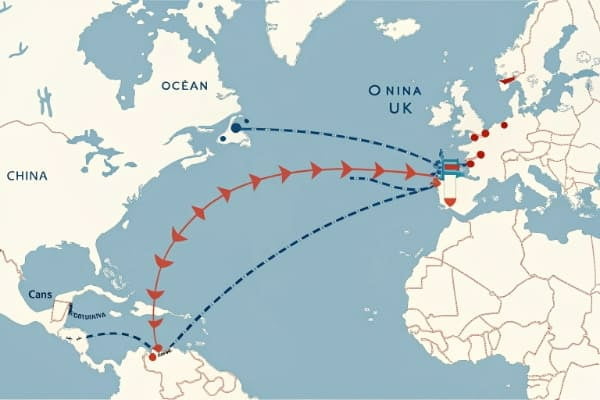
Many of my clients in the UK initially thought a local forwarder was the safer choice. However, they soon realized that a UK-based forwarder is just hiring an unknown agent in China to handle the first half of the journey. This adds another layer of communication, cost, and potential risk. With a China-based partner like us, you have a team on the ground that can talk to your factory directly, inspect goods, and solve problems before they even leave the country. We provide excellent English communication, so you get the benefit of local presence without any language barrier.
A Head-to-Head Comparison
Here's a simple breakdown of the pros and cons to help you decide.
| Aspect | China-Based Forwarder | UK-Based Forwarder |
|---|---|---|
| Supplier Coordination | Pro: Same time zone and language as factories. Can solve issues quickly. | Con: Relies on a third-party agent in China, causing communication delays. |
| Consolidation | Pro: Easy to combine goods from multiple suppliers into one shipment. | Con: More complex and expensive to coordinate consolidation from afar. |
| Origin Costs | Pro: Direct relationships with local trucking and customs, often leading to lower costs. | Con: Costs may be higher due to the agent's markup. |
| Importer Communication | Con: Potential for time zone differences with you. | Pro: Same time zone as you, making communication during your business hours easy. |
| Control | Pro: You have direct oversight of the most critical part of the shipping process. | Con: Less control over what happens at the origin. |
Ultimately, a strong China-based forwarder with a professional, English-speaking team offers the most control and efficiency.
How Much Does It Cost to Ship from China to the UK?
Shipping costs are a major part of your product budget. Unpredictable fees can quickly erase your profit margins. You need a clear understanding of what you are actually paying for.
The cost depends on your shipment's weight and volume, the shipping method (air or sea), and the service level (Incoterms like DDP). Air freight is faster but costs more, while sea freight is cheaper for larger shipments. Always get an all-inclusive quote.
The biggest mistake I see importers make is comparing quotes based only on the base freight rate. One quote might look cheap, but it could exclude destination port fees, customs clearance, duties, and final delivery charges. These can add up to thousands of dollars. That's why I always recommend asking for a DDP (Delivered Duty Paid) quote. This price includes every single cost to get the goods from the factory in China to your doorstep in the UK. It is the most transparent and reliable way to budget for your shipping.
Breaking Down the Costs
Several factors influence the final price. Here are the main ones:
- Mode of Transport: Air freight is priced based on chargeable weight (a combination of actual weight and volume). Sea freight is usually priced per cubic meter (for LCL) or per container (for FCL).
- Incoterms: The terms you agree on with your supplier determine who pays for what. EXW means you pay for everything from the factory door. FOB means the supplier pays to get it to the Chinese port. DDP means the forwarder handles everything to your door.
- Shipment Size & Weight: Larger and heavier shipments cost more overall, but the cost per unit often decreases.
Here’s a look at the typical cost components in a DDP quote:
| Cost Component | Description |
|---|---|
| Origin Charges | Trucking from the factory, customs export clearance, port/terminal fees in China. |
| Main Freight | The cost for sea or air transport from China to the UK. |
| Destination Charges | Port/terminal fees in the UK, customs import clearance. |
| UK Duties & VAT | Taxes calculated based on the value and type of your goods. |
| Final Delivery | Trucking from the UK port or airport to your final address. |
Conclusion
Finding the right freight forwarder is about verifying experience, asking tough questions, and demanding transparency. This ensures your China-UK supply chain becomes a reliable asset for your business's growth.
Explore this link to understand the key qualities that make a freight forwarder reliable for your shipping needs. ↩
Learn about UK customs regulations to avoid delays and unexpected costs when importing. ↩
Stay informed about post-Brexit regulations that affect your shipping and customs. ↩
Find out how real-time tracking can enhance your shipping experience and reduce anxiety. ↩
Discover how DDP shipping can simplify your import process and eliminate surprise fees. ↩
Get tips on selecting a reliable shipping partner to ensure smooth deliveries. ↩
Explore common customs issues to better prepare for your shipping process. ↩
Learn the signs of a legitimate freight forwarder to protect your business from scams. ↩
Learn about EORI numbers and their importance for businesses importing into the UK. ↩
Discover how commodity codes impact your duties and taxes when importing goods. ↩
Find out how to identify and avoid hidden fees that can impact your shipping costs. ↩
Understand the importance of cargo insurance to protect your goods during transit. ↩
Understand the different payment terms to ensure secure transactions with your forwarder. ↩
Get insights on transit times to plan your shipments effectively. ↩