
Struggling to get your products from China to New Zealand? A bad forwarder can cause costly delays and damage your goods, turning your import plans into a logistical nightmare.
To find a reliable freight forwarder1 for New Zealand, you must verify their credentials like a FIATA membership2, check their performance history for on-time delivery3, and confirm their expertise in New Zealand's strict biosecurity and customs rules. A trustworthy partner will provide transparent, itemized quotes4.
Getting your goods across the world seems complicated, but it doesn't have to be. The key is finding the right partner to manage the journey for you. In this guide, I'll walk you through everything you need to know to choose a freight forwarder1 you can trust, ensuring your shipments arrive safely and on time. Let's break down how to secure a great logistics partner.
What does a freight forwarder1 do for shipping from China to New Zealand?
You have products ready in China, but getting them to New Zealand feels overwhelming. The paperwork, customs, and transport can be a confusing mess, risking your entire shipment schedule.
A freight forwarder1 manages the entire shipping process from China to New Zealand. This includes booking cargo space, handling customs clearance5 in both countries, preparing all necessary documentation, and arranging final delivery. They act as your all-in-one logistics expert6, simplifying the whole operation for you.
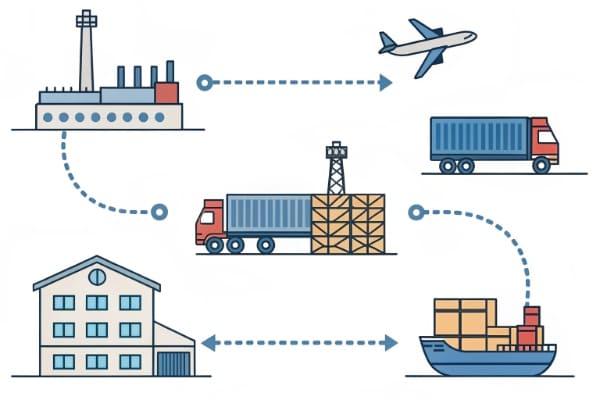
A great freight forwarder1 is like the director of a movie—they coordinate every moving part behind the scenes to make sure your cargo's journey is smooth and successful. When I first started importing, I thought I could handle the logistics myself. I quickly learned that managing export declarations in China and biosecurity inspections in New Zealand required specialized knowledge I just didn't have. A forwarder takes on these complex tasks. They don't own the ships or planes, but they have strong relationships with the carriers, allowing them to negotiate better rates and secure space for your goods. They are your single point of contact, translating complex shipping jargon7 into clear updates.
Here are the core functions they handle:
| Service | Description | Why It's Important for NZ Shipments |
|---|---|---|
| Cargo Booking | Securing space on a vessel (sea freight) or aircraft (air freight). | Ensures your goods leave on time and don't get stuck at the port. |
| Documentation | Preparing the Commercial Invoice, Packing List, and Bill of Lading. | Correct paperwork is critical for avoiding delays at NZ customs. |
| Customs Clearance | Managing export procedures in China and import clearance in New Zealand. | A forwarder with NZ experience will navigate biosecurity (MPI) rules seamlessly. |
| Consolidation | Combining your smaller shipment with others to save on costs (LCL). | Perfect for smaller businesses that don't need a full container. |
| Door-to-Door Delivery | Arranging transport from the factory in China to your warehouse in NZ. | Provides a complete, hands-off solution for ultimate convenience. |
How can you tell if a freight forwarder1 is reliable?
Many freight forwarder1s promise the world with low prices. But how do you really know who to trust with your valuable cargo before it’s too late?
A reliable forwarder provides clear proof of their performance. You should look for high on-time delivery3 rates (ideally above 98%), quick communication response times, positive client reviews, and a high reorder rate. Their specific experience with the China-to-New Zealand route is essential for smooth shipping.
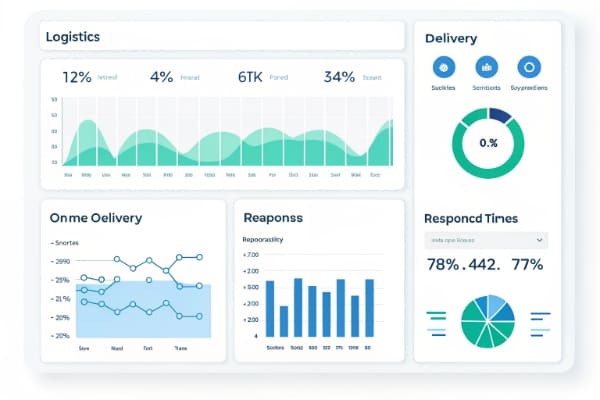
Reliability isn't just about a good price; it's about predictability and trust. A forwarder who can prove their success is one you can depend on. I always ask potential partners for their performance metrics8. A company proud of its service will have this data ready. For example, an on-time delivery3 rate of 98% or higher shows they consistently meet their deadlines. A fast response time—under 4 hours during business hours—means they are attentive and ready to solve problems quickly. Beyond numbers, look for social proof. Ask for references from other New Zealand-based businesses. A high reorder rate is one of the best indicators of client satisfaction. If customers keep coming back, the forwarder is clearly doing something right. Finally, their transparency is key. A reliable partner will provide a detailed, itemized quote that explains every charge, so there are no surprises later.
Here are the key checkpoints for reliability:
| Reliability Check | What to Look For | Why It Matters |
|---|---|---|
| Performance Metrics | On-time delivery rate >98%, response time <4 hours. | Shows they are efficient and value your time. |
| Client References | Testimonials or contacts from similar businesses in NZ. | Real-world proof that they deliver on their promises. |
| Transparent Quoting | Itemized quotes with no hidden fees. | Builds trust and helps you budget accurately. |
| Route Experience | Specific examples of successful shipments to NZ ports. | Confirms they understand NZ customs and biosecurity. |
| Proactive Service | They offer solutions before problems arise. | Shows they are invested in your success, not just the transaction. |
What certifications should a China–New Zealand freight forwarder1 have?
You want to work with a true professional, not a risky, fly-by-night operator. Using an uncertified forwarder can lead to compliance issues, seized goods, and major financial losses.
A trustworthy freight forwarder1 should have industry-recognized credentials. Look for memberships in global networks like FIATA or an IATA certification for air freight. In China, a "Class-A" forwarder license is also a strong indicator of legitimacy. These prove they meet high professional standards.

Certifications are more than just fancy logos on a website; they are proof that a forwarder is legitimate, financially stable, and committed to industry best practices. When I'm vetting a new logistics partner, checking their credentials is one of my first steps. For example, being a member of FIATA (International Federation of Freight Forwarders Associations) means they adhere to a global code of conduct and professionalism. If you're shipping by air, an IATA (International Air Transport Association) certification is crucial, as it shows they are authorized to handle air cargo and understand complex aviation regulations. Within China, a "Class-A" Forwarder License is issued by the government and signifies a higher level of credibility and financial security. These certifications protect you as the shipper, as they often come with requirements for liability insurance and ethical business practices. Don't be afraid to ask for proof of these memberships.
Here are some key certifications and what they mean for you:
| Certification | What It Is | Why It's Important |
|---|---|---|
| FIATA Member | A global standard for freight forwarding professionalism. | Indicates the forwarder follows international best practices and ethics. |
| IATA Certified | An accreditation for handling air freight. | Essential for any forwarder moving goods by air, ensuring compliance and safety. |
| Class-A License (China) | A top-tier license from the Chinese Ministry of Commerce. | Shows the company is well-established and financially sound. |
| NVOCC License | A license to operate as a Non-Vessel Owning Common Carrier. | Allows them to issue their own Bill of Lading for sea freight. |
What red flags9 should you avoid when choosing a forwarder?
A surprisingly low price from a freight forwarder1 can be very tempting. However, hidden costs, poor service, and unexpected delays can quickly destroy your budget and your deadlines.
Avoid forwarders who provide vague, non-itemized quotes4, as they often use them to hide extra fees. Other major red flags9 include poor or slow communication, no verifiable physical address, a lack of client references10, and an inability to explain New Zealand's specific customs requirements.
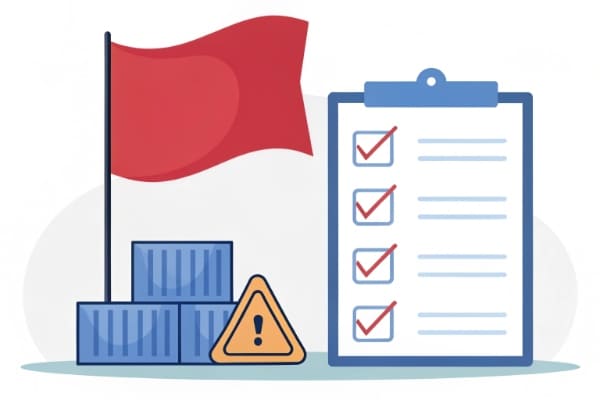
I learned the hard way that a cheap quote often costs more in the end. One of my first shipments was delayed for two weeks because the forwarder didn't prepare the correct biosecurity documents for New Zealand. The initial "savings" were wiped out by storage fees and the cost of rushing the goods to my customer. The biggest red flag is a price that seems too good to be true. It usually is. A professional forwarder will give you a detailed quote listing all costs, including origin fees, freight, destination fees, and customs clearance5. Another warning sign is poor communication. If they take days to reply to your emails before you've even hired them, imagine how slow they'll be when there's a problem with your shipment. You should also be wary of any company without a professional website or a physical address listed.
Here’s a quick guide to what to watch out for versus what to look for:
| Red Flags (Avoid) | Green Flags (Look For) |
|---|---|
| Vague, all-in price with no breakdown. | Detailed, itemized quote showing all potential charges. |
| Slow, inconsistent, or unprofessional communication. | Fast, clear, and proactive communication. |
| No physical address or professional website. | Verifiable office address and a professional online presence. |
| Cannot discuss NZ customs or biosecurity rules11. | Deep knowledge of NZ's MPI requirements and processes. |
| No offer of cargo insurance. | A clear discussion and offer of cargo insurance options. |
| Pressure for 100% upfront payment. | Flexible and standard payment terms. |
Should you choose a China-based or New Zealand-based freight forwarder1?
You know you need a logistics partner, but where should they be located? Choosing a forwarder in the wrong country can create communication gaps, higher costs, and logistical headaches.
For shipping from China, a China-based forwarder12 is almost always the better choice. They have direct access to your suppliers, can manage local logistics and consolidation13 efficiently, and negotiate better rates with local carriers. They become your boots on the ground in China.
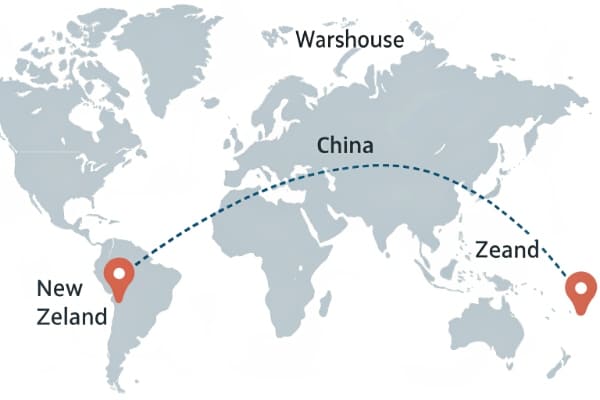
This might seem counterintuitive at first. You might think having a forwarder in your own country, New Zealand, is easier. However, the most complex part of the shipping process happens at the origin—in China. A China-based forwarder12 can coordinate directly with your factory to arrange pickup. If you're sourcing from multiple suppliers, they can consolidate all your goods into one shipment at their warehouse, which saves you a huge amount on shipping costs. They are in the same time zone as your suppliers and speak the language, which eliminates communication barriers. A New Zealand-based forwarder14 will just hire a partner agent in China to do this work anyway, adding another layer of communication and cost. The best solution is a professional China-based forwarder12 who has a strong, reliable network of agents in New Zealand to handle the final customs and delivery. This gives you the best of both worlds—control at the source and a smooth process at the destination.
| Aspect | China-Based Forwarder | New Zealand-Based Forwarder |
|---|---|---|
| Supplier Coordination | Excellent. Direct communication with factories. | Poor. Relies on a third-party agent in China. |
| Consolidation | Excellent. Can collect goods from multiple suppliers. | Not possible. Cannot manage warehousing in China. |
| Cost | More competitive. Better rates with local carriers. | Higher. Adds a margin on top of their China agent's fees. |
| Control at Origin | High. Can oversee pickup and export process. | Low. No direct control over what happens in China. |
| Destination Handling | Good. Works with a trusted NZ agent partner. | Excellent. Strong local knowledge for final delivery. |
What is the easiest way to find a trusted freight forwarder1 today?
Searching for a good freight forwarder1 can feel like finding a needle in a haystack. You can spend weeks requesting quotes and vetting different companies, which takes you away from running your business.
The easiest way is to work with an end-to-end supply chain partner15 like us at Toncentlink. We integrate freight forwarding directly into our sourcing, quality control, and consolidation13 services. This eliminates the need for you to find and manage a separate logistics company, saving you time, money, and risk.
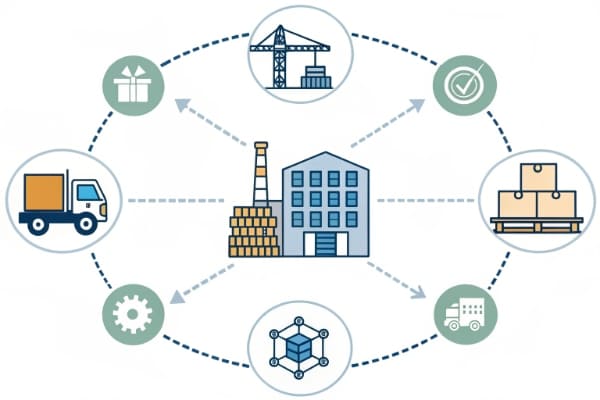
Instead of juggling a supplier, a quality control agent, and a freight forwarder1, you can have one partner manage everything. This is the modern, streamlined way to import. When you work with an integrated partner, freight forwarding is no longer a separate, stressful task. It's simply the final step in a smooth, managed process. For our clients, we handle everything from finding the right factory to ensuring the product quality is perfect. Then, because we already have the goods at our consolidation13 warehouse, arranging the shipment to New Zealand is seamless. We have long-term relationships with reliable carriers, so we get preferential rates and treatment. We handle all the documentation and customs requirements, including New Zealand's tough biosecurity rules11. We offer a DDP (Delivered Duty Paid) shipping solution, which means our quote includes all costs to get the goods to your door. There are no surprise fees. This integrated approach gives you a single point of contact and complete peace of mind.
Conclusion
Finding a reliable freight forwarder1 for New Zealand means checking their credentials, experience, and transparency. The simplest way to ensure smooth shipping is by choosing an integrated partner who manages everything.
Understanding the role of a freight forwarder can help you choose the right partner for your shipping needs. ↩
Learn about FIATA membership to ensure your forwarder adheres to international standards. ↩
Discover how to assess a forwarder's reliability through their delivery performance. ↩
Itemized quotes help you avoid hidden fees and build trust with your logistics partner. ↩
Familiarize yourself with customs clearance to ensure your goods arrive without delays. ↩
Identifying key qualities can help you choose a knowledgeable freight forwarder. ↩
Familiarizing yourself with shipping terms can improve communication with your forwarder. ↩
Identifying key metrics can help you choose a reliable logistics partner. ↩
Identifying red flags can prevent costly mistakes in selecting a logistics partner. ↩
Client references provide real-world proof of a forwarder's reliability and service. ↩
Understanding biosecurity rules is crucial for smooth customs clearance in New Zealand. ↩
Explore the benefits of having a forwarder located in China for your shipments. ↩
Learn how consolidation can reduce shipping costs for smaller shipments. ↩
Understanding the differences can help you make an informed choice. ↩
Learn how an integrated partner can simplify your logistics and shipping process. ↩