
Your goods are stuck at a port, and the delays are costing you money. Finding the right freight forwarder1 is the key to unlocking a smooth supply chain.
To find a reliable freight forwarder1 from China to Canada2, you must focus on partners with proven experience3 on this specific route. Verify their licenses, demand transparent all-inclusive pricing4, check their local presence5 in both countries, and test their responsiveness6 before committing to anything.
Shipping goods across the world sounds complicated, and honestly, it can be. I've seen too many business owners get bogged down by logistics when they should be focused on growing their brand. The right partner can make all the difference, turning a potential headache into a simple, predictable process. Let's break down exactly what you need to look for so you can ship your products from China to Canada2 with confidence and avoid costly mistakes.
What does a freight forwarder1 do in international shipping?
Are you confused about what a freight forwarder1 actually does? You might be paying for services you don't understand, which makes it hard to see their true value.
A freight forwarder1 acts as your logistics project manager7. They arrange and oversee the entire shipping process, from booking cargo space and preparing documents to clearing customs and arranging final delivery, ensuring your goods move smoothly from the factory to your door.
Think of a freight forwarder1 as the conductor of an orchestra. Your products are the music, and the forwarder makes sure every instrument—the truck, the ship, the customs officer, the warehouse—plays its part at the right time. When I first started helping clients, one tried to manage shipping himself to save money. He ended up with a pallet of goods stuck at the Port of Vancouver for three weeks because of one missing document. That mistake cost him more in storage fees and lost sales than a forwarder would have charged for the entire shipment. A good forwarder is your expert on the ground, handling all the complex details you don't have time for. They are not just moving boxes; they are managing risk and information.
Here’s a simple breakdown of their core tasks:
| Service | What It Means for You |
|---|---|
| Booking Cargo Space | They find space for your goods on a ship or plane at a competitive rate. |
| Documentation | They prepare the bill of lading, commercial invoice, and other required paperwork. |
| Customs Brokerage | They handle customs clearance8 in both China and Canada to avoid delays. |
| Inland Transportation | They arrange for trucks to pick up goods from the factory and deliver to your final address. |
| Consolidation | They can combine your small shipment with others to reduce your costs. |
How can you tell if a freight forwarder1 is reliable?
Are you worried about picking a forwarder who seems great but ends up being a nightmare? It’s a valid fear that can put your entire business operation at risk.
A reliable forwarder has a proven track record on the China-Canada route, offers transparent all-inclusive pricing4, and provides verifiable references. Their responsiveness6 and strong local presence5 in both countries are also key signs of their dependability and professionalism.
Price is important, but it should never be the only factor. I remember a client who chose a forwarder based on the lowest quote he could find. The company was a ghost—hard to reach and slow to respond. His container of branded mugs missed a major holiday promotion because it was held up at customs for weeks due to incorrect paperwork. The initial savings were completely wiped out by lost revenue and storage fees. Reliability means they answer your questions quickly, provide clear and complete quotes, and have real, physical offices you can verify. They should be able to prove they have successfully shipped products like yours to Canada before. Ask for references from other Canadian importers and actually call them. A trustworthy partner will be happy to connect you with satisfied customers.
Key Reliability Indicators
- Experience: Do they specialize in the China-Canada lane?
- Transparency: Is their pricing all-inclusive with no hidden fees?
- Responsiveness: Do they answer emails and calls promptly and thoroughly?
- Presence: Do they have teams on the ground in both China and Canada?
- References: Can they provide contacts for other Canadian clients?
What certifications should a legitimate freight forwarder1 have?
Are you unsure if your forwarder is even legitimate? Using an unlicensed operator can lead to huge fines, major delays, and even the seizure of your valuable goods by customs.
A legitimate freight forwarder1 must have a valid business license in China and be recognized by Canadian authorities like the Canada Border Services Agency9 (CBSA). Credentials from global bodies like FIATA10 or IATA also signal compliance and a high level of professionalism.
Certifications are not just fancy badges; they are proof that a company meets industry standards and is held accountable. In China, they need a license to operate as a freight forwarder1. For Canada, being a CBSA-recognized customs broker is critical for smooth entry. When we vet logistics partners for our clients, we check these things first. It’s a non-negotiable step. Think of it like hiring an electrician; you wouldn't let someone rewire your house without a license, so don't trust your inventory to an uncertified forwarder. These credentials show that the forwarder has the financial stability and operational knowledge to handle international shipments properly. They also provide a path for recourse if something goes wrong. An unlicensed operator offers no such protection, leaving you completely exposed to risk.
Here are some key credentials to look for:
| Certification | What It Means | Why It Matters |
|---|---|---|
| China Business License11 | Legal authority to operate as a forwarder in China. | Ensures they are a legitimate, registered company. |
| NVOCC License12 | Allows them to issue their own bills of lading. | Gives them more control and flexibility over shipments. |
| CBSA Recognition | Authorized to transact with the Canada Border Services Agency9. | Essential for clearing your goods through Canadian customs. |
| FIATA10/IATA Membership | Adherence to global standards for freight forwarding. | Signals professionalism and a commitment to best practices. |
What red flags13 should you avoid when choosing a forwarder?
Are you attracted by a price that seems too good to be true? It probably is, and it could be hiding massive problems that will cost you much more later on.
You should avoid forwarders that provide vague, non-inclusive quotes or have poor communication. No physical office address, a lack of verifiable references, and pressuring you for full upfront payment are also major red flags13 that signal potential trouble ahead.

I've reviewed hundreds of shipping quotes14 for my clients. The most dangerous ones are always the cheapest and vaguest. A new importer once showed me a quote that was 50% lower than anyone else's. I pointed out that it only covered the ocean freight from port to port. It didn't include trucking in China, export fees, customs clearance8 in Canada, duties, taxes, or final delivery. The final bill would have been double the "cheap" quote. A professional forwarder gives you an all-inclusive or clearly itemized quote. They don't hide costs. Other red flags13 include a generic email address (like @gmail.com), no company website, or an inability to answer detailed questions about Canadian import regulations. If they can't tell you about CBSA requirements for your specific product, they are not the right partner.
Red Flag Checklist
- [ ] Vague Pricing: The quote is missing key cost components.
- [ ] Poor Communication: They take days to respond or give unclear answers.
- [ ] No Physical Address: You can't verify their office location in China or Canada.
- [ ] 100% Upfront Payment: Legitimate forwarders typically have more flexible payment terms.
- [ ] No Specialization: They claim to ship everything everywhere, with no focus on Canada.
Should you choose a China-based or Canada-based forwarder?
Are you torn between using a local Canadian forwarder and one based in China? Making the wrong choice can create communication gaps15, delays, and unexpected costs at either end.
For sourcing from China, a China-based forwarder with a strong Canadian network is often the best choice. They have direct access to your factories, can manage consolidation16 at the source, and can resolve issues on the ground in China before they escalate.
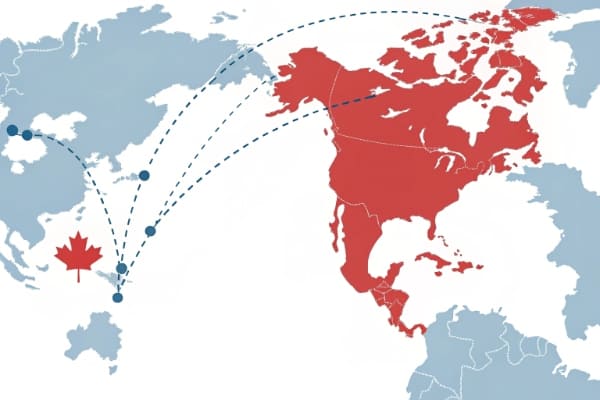
This is a question I get all the time. A Canada-based forwarder understands the destination market well, but they rely on an agent in China to handle everything at the origin. This adds a layer of communication and can lead to delays if problems arise at the factory. A China-based forwarder, on the other hand, can be your eyes and ears on the ground. They can coordinate directly with your supplier, inspect cargo before it ships, and manage the consolidation16 of orders from multiple factories. I had a client shipping from three different suppliers in China. A China-based partner consolidated everything into one container at their warehouse near the port, saving the client thousands in shipping costs. The key is that this China-based forwarder must also have a robust, proven network in Canada to handle customs and final delivery seamlessly. The ideal solution is a partner with strong teams in BOTH locations.
| Aspect | China-Based Forwarder | Canada-Based Forwarder |
|---|---|---|
| Factory Communication | Direct and in the same time zone. | Indirect, through an agent. |
| Consolidation | Easy to manage from multiple suppliers. | Difficult and costly. |
| Problem Solving (Origin) | Fast, on-the-ground resolution. | Slow, relies on communication with agent. |
| Customs (Destination) | Relies on a strong Canadian partner. | Usually a core strength. |
What is the easiest way to find a trusted freight forwarder1 today?
Are you tired of the endless searching, vetting, and worrying about freight forwarder1s? The process can be exhausting and full of risk, taking you away from your real job.
The easiest and safest way is to partner with an all-in-one sourcing and supply chain company17. They have already vetted a network of reliable freight forwarder1s and can manage your entire process, from production and branding to final delivery in Canada.

Instead of you trying to become a logistics expert, you can leverage a partner who already is one. At Toncentlink, this is exactly what we do. We are not a freight forwarder1, but we manage them for you as part of our complete service. We have a network of trusted, pre-vetted logistics partners who specialize in the China-to-Canada route. Because we provide them with consistent volume from all our clients, we get preferential rates and better service, which we pass on to you. We handle everything: sourcing your custom products, performing quality control18 at the factory, consolidating your orders, and then selecting the best forwarder for your specific needs and budget. You get one point of contact and one simple, transparent invoice. This eliminates the risk and frees you to focus on selling your products, not worrying about how they’ll get there.
| Your Task | DIY Method | Using an All-in-One Partner (like us) |
|---|---|---|
| Find Suppliers | Hours of searching and vetting. | We connect you with our trusted factory network. |
| Find a Forwarder | More hours of searching and vetting. | We select the best pre-vetted forwarder for you. |
| Manage Quality | Fly to China or hope for the best. | Our team inspects your goods on-site. |
| Coordinate Logistics | Juggle factory, trucker, and forwarder. | We manage the entire end-to-end process. |
Conclusion
Finding a reliable China-to-Canada forwarder requires careful vetting of their experience, licenses, and pricing. Or, you can partner with us to manage it all, ensuring your goods arrive safely.
Understanding the role of a freight forwarder can help you streamline your shipping process. ↩
Discovering top-rated freight forwarders can save you time and money on your shipments. ↩
Verifying experience ensures you choose a reliable partner for your shipping needs. ↩
Understanding pricing structures can help you avoid hidden fees and unexpected costs. ↩
A local presence can enhance communication and efficiency in shipping operations. ↩
Quick responses are crucial for resolving issues and ensuring smooth logistics. ↩
Learning about their role can clarify how they facilitate your shipping process. ↩
Understanding customs clearance can help you avoid delays and fines. ↩
Knowing CBSA's role can help you navigate customs regulations effectively. ↩
FIATA membership indicates a forwarder's commitment to industry standards. ↩
Understanding this license is essential for ensuring your forwarder is legitimate. ↩
This license allows forwarders to issue bills of lading, enhancing their service. ↩
Identifying red flags can prevent costly mistakes in selecting a forwarder. ↩
Evaluating quotes carefully can help you avoid unexpected costs. ↩
Understanding the impact of communication can help you choose the right partner. ↩
Consolidation can significantly reduce shipping costs for small shipments. ↩
These companies can simplify your logistics by managing vetted forwarders. ↩
Quality control ensures that your products meet standards before shipping. ↩