
Struggling with shipping delays and surprise costs from China? This uncertainty hurts your business and your bottom line. Finding a truly reliable freight forwarder1 is the only way forward.
A reliable freight forwarder1 for China-Australia shipping has verified credentials2, transparent all-inclusive pricing, and proven expertise in Australian customs3. They should offer DDP services4, real-time tracking5, and responsive support, ensuring a smooth, predictable process from the factory floor to your door.
Finding the right shipping partner6 can feel like a huge challenge. I've worked with hundreds of clients, and I've seen firsthand how a bad forwarder can turn a profitable order into a costly nightmare. But I've also seen how the right partner can make global shipping feel simple and secure. Let's break down exactly what you need to look for to ensure your goods get from China to Australia without any headaches, so you can focus on growing your business.
What Makes a Freight Forwarder Reliable for China–Australia Shipping?
You found a forwarder with a cheap quote, but now your shipment is delayed. This unpredictability eats into your profits and damages your brand's reputation. True reliability is about more than just price.
Reliability comes from a combination of verified credentials2 like FIATA membership, positive public reviews, and completely transparent pricing7. A reliable partner has proven experience with the China-Australia route, offers cargo insurance8, and maintains clear, responsive communication throughout the entire process.
When I talk about reliability, I'm talking about a partner who removes risk from your supply chain. It's not just about moving a box from point A to point B. It’s about trust and predictability. A reliable forwarder is an extension of your team, proactively managing logistics so you don't have to. They should have a public track record of success and the credentials to back it up. For example, membership in certain associations shows they meet industry standards for professionalism and financial stability. This foundation of trust is what separates a simple shipping agent from a true logistics partner9. I always tell my clients that paying a little more for a forwarder with a solid reputation is an investment that pays for itself by avoiding costly delays and errors down the line.
Key Indicators of Reliability
| Indicator | Why It Matters |
|---|---|
| Verified Credentials | Membership in groups like FIATA (International Federation of Freight Forwarders Associations) or AIFFA (Australian International Freight Forwarders Association) proves they adhere to global and local standards. |
| Transparent Pricing | They provide all-inclusive quote10s (DDP is best) with no hidden fees. You know your exact landed cost upfront. |
| Cargo Insurance | They offer comprehensive insurance to protect your investment against damage or loss during transit. This is non-negotiable. |
| Responsive Support | You get a dedicated, English-speaking contact who provides regular updates and answers questions quickly. |
| Real-Time Tracking | A modern tracking portal gives you 24/7 visibility of your shipment's location and status. |
What Should a Freight Forwarder Know About Shipping from China to Australia?
Your shipment has arrived in Australia, but it's stuck in customs. Now you're facing unexpected fines and frustrating delays. This happens when your forwarder lacks specific knowledge of Australian import rules.
A competent freight forwarder1 must have deep knowledge of Australian customs3, including the Australian Border Force (ABF) and biosecurity (BICON) regulations. They need to manage HS codes11, duty/GST calculations, and all required documentation perfectly to prevent any hold-ups or penalties.
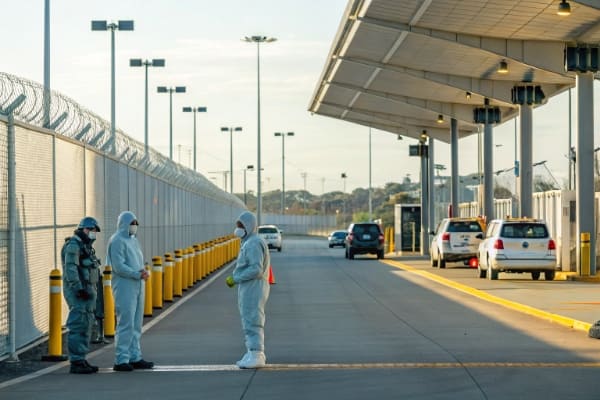
Australia has some of the strictest import regulations in the world, especially concerning biosecurity. I once had a client who tried to ship products in untreated wooden crates with another agent. Their entire container was flagged by the Department of Agriculture, Water and the Environment (DAWE) and held for weeks, costing them thousands in fees and lost sales. A knowledgeable forwarder would have ensured the wood was fumigated and certified before it even left China. This is not just about filling out forms; it's about proactively managing risk. Your forwarder needs to be an expert on everything from product classification (HS codes11) to calculating the 10% GST and any applicable duties. This expertise is what ensures a truly seamless door-to-door (DDP) delivery, where all these complexities are handled for you.
Essential Australian Import Knowledge
- Customs Clearance: Your forwarder must be able to prepare and submit a compliant Import Declaration to the Australian Border Force (ABF), accurately declaring the value, origin, and classification of your goods.
- Biosecurity (BICON): They must be experts in the Biosecurity Import Conditions system (BICON). This includes managing requirements for products with wood, plant materials, or other organic components to prevent pests and diseases from entering Australia.
- GST and Duties: They need to correctly calculate the 10% Goods and Services Tax (GST)12 and any import duties based on the specific HS code of your products. Incorrect calculations can lead to audits and fines.
- Documentation: A reliable partner knows exactly what paperwork is needed, such as the commercial invoice, packing list, bill of lading, and any special permits or certificates.
What Questions Should You Ask Before Choosing a Freight Forwarder?
You hired a forwarder without doing your homework. Now you're stuck with surprise fees, poor communication, and no idea where your shipment is. A few key questions upfront can prevent this.
Always ask about their credentials, direct experience on the China-Australia route, and if they offer DDP shipping. Request a detailed, all-inclusive quote10 and inquire about their tracking system, cargo insurance8 options, and their process for handling potential customs issues.

Before we partner with any client, I make sure we answer all their questions transparently. The initial conversation is the best time to gauge a forwarder's professionalism and expertise. Their answers (or lack thereof) will tell you everything you need to know. If they can't give you a clear breakdown of their costs or a straight answer on how they handle customs delays, they are not the right partner for you. A great forwarder will welcome these questions because it shows you are a serious importer, and it gives them a chance to demonstrate their value. Think of it as an interview for a critical role on your team. I've compiled a list of the exact questions you should ask to vet any potential forwarder effectively.
Your Freight Forwarder Vetting Checklist
| Category | Key Question to Ask |
|---|---|
| Experience & Credentials | "Are you a member of FIATA or another recognized association? How many shipments do you manage from China to Australia each month?" |
| Pricing & Quotes | "Can you provide an all-inclusive DDP quote to my final address? Does this price include all duties, GST, and local handling fees?" |
| Services & Capabilities | "Do you offer cargo insurance8, and what does it cover? Can you consolidate goods from multiple suppliers in China?" |
| Process & Communication | "What does your tracking system look like? Who will be my dedicated point of contact, and what are their working hours?" |
| Contingency Planning | "What is your standard procedure if my shipment is selected for a customs inspection13 or faces a delay?" |
What Are the Most Common Mistakes When Choosing a Freight Forwarder for Australia?
Choosing the cheapest forwarder seems like a smart business move. But this decision often leads to the costliest mistakes, including delays and massive hidden fees. You can protect your business by avoiding these common traps.
The biggest mistake is choosing a forwarder based on the lowest price alone. Other critical errors include failing to verify their expertise in Australian customs3, not getting a detailed all-inclusive quote10, ignoring customer reviews, and completely overlooking the need for cargo insurance8.

I can't tell you how many new clients come to us after getting burned by a "cheap" forwarder. They get a quote that seems too good to be true, and it always is. The forwarder leaves out Australian port charges, customs fees, GST, and final-mile delivery costs. By the time the goods arrive, the final bill is double the original quote. Another huge mistake is assuming any forwarder can handle Australian biosecurity. They can't. Without that specific expertise, you risk having your goods fumigated, treated, or even destroyed at your own expense. These mistakes are completely avoidable if you prioritize reliability over a low initial price. A good partner is transparent from the start and has the specific knowledge needed for a complex market like Australia.
Top 3 Mistakes to Avoid
- Chasing the Lowest Quote: A rock-bottom price is a major red flag. It almost always means essential costs are excluded. A reliable forwarder's quote might look higher initially, but it's honest and complete. Always compare all-inclusive DDP quotes, not just the base freight cost.
- Underestimating Australian Biosecurity: Australia's rules are no joke. Using a forwarder who isn't an expert on BICON requirements for things like wooden pallets, packaging, or certain raw materials is a recipe for disaster. This is one area where you cannot afford to cut corners.
- Skipping Cargo Insurance: Many importers mistakenly believe the forwarder is automatically responsible for lost or damaged goods. They are not. Without purchasing specific cargo insurance8 for your shipment, your financial risk is enormous. It's a small price to pay for complete peace of mind.
China-Based vs Australia-Based Freight Forwarder: Which Is Better?
Should you hire a freight forwarder1 based in China or one in Australia? It's a common question, and making the wrong choice can lead to major communication gaps and logistical headaches.
A China-based freight forwarder14r](https://www.ton-cent.com/Blog_details/1928270256936493056.html)%%%FOOTNOTE_REF_1%%% is almost always better for managing shipments from China. They are on the ground to coordinate factory pickups, inspect goods, and handle export consolidation and customs directly. The ideal solution is a China-based partner with a strong, established network in Australia.
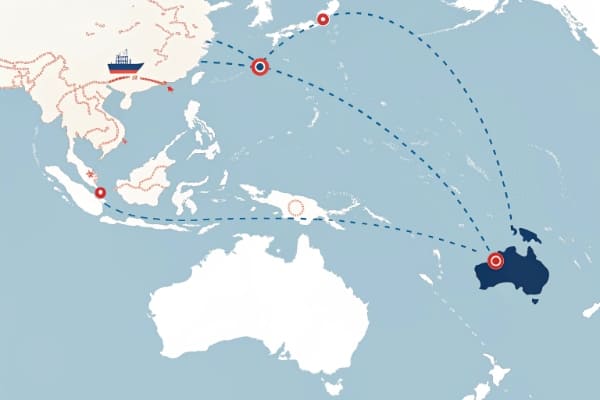
Being based in China gives us a huge advantage. We are in the same time zone as your suppliers. We can go to the factory, manage quality control, and consolidate products from different manufacturers into a single shipment to save you money. This level of control at the source is impossible for an Australia-based forwarder. They are simply too far away to solve problems before they start. While they might be experts on Australian import rules, a top-tier China-based forwarder (like us) will have equally expert partners in Australia to handle the final leg. This hybrid model gives you the best of both worlds: hands-on management at the origin and expert handling at the destination. It streamlines the entire process under one point of contact, which is exactly what you need.
Comparing Forwarder Locations
| Feature | China-Based Forwarder | Australia-Based Forwarder |
|---|---|---|
| Supplier Coordination | Excellent. In the same time zone, can visit factories. | Poor. Relies on email and phone across time zones. |
| Order Consolidation | Excellent. Can easily receive and combine goods at their local warehouse. | Difficult. Cannot manage multi-supplier consolidation effectively. |
| Export Process | Excellent. Manages local trucking and export customs directly. | Fair. Relies on a third-party agent in China. |
| Cost-Effectiveness | Good. Better negotiation power for local services in China. | Fair. May have higher costs due to using agents in China. |
| Import Process | Good. Works with a vetted Australian partner for seamless clearance. | Excellent. Direct expertise in local customs and delivery. |
How Much Does It Cost to Ship from China to Australia with a Reliable Freight Forwarder?
You need to budget for your shipping, but vague quotes make it impossible to plan your finances. To get an accurate landed cost, you have to understand the factors that determine your final price.
Shipping costs vary widely based on your shipment's weight and volume, the shipping method (air vs. sea), and the service level (e.g., DDP). A reliable forwarder will provide a detailed, all-inclusive quote10 covering freight, customs, duties, GST, and final delivery.

The final cost to ship your goods is made up of many different components. That's why simply asking for a "price per kilo" is not enough. For example, sea freight is priced per cubic meter (CBM), while air freight is based on chargeable weight (a comparison of actual weight and volumetric weight). On top of the freight cost, you have fees at both the origin and destination ports, customs duties, taxes (like the 10% GST in Australia), and the final delivery to your warehouse. This is why I always recommend getting a DDP (Delivered Duty Paid) quote. A DDP quote bundles all these variable costs into a single, predictable price. This is the only way to know your true landed cost per unit and ensure your project remains profitable. Always compare at least three DDP quotes to make sure you're getting a fair market rate.
Key Cost Factors for China-Australia Shipping
- Freight Charges: The primary cost of moving goods. Air freight is faster but more expensive, while sea freight is more economical for larger shipments.
- Origin & Destination Fees: These include local trucking in China, port handling charges, documentation fees, and terminal handling charges in Australia.
- Australian Duties & GST: All imports into Australia are subject to a 10% GST. Depending on the product's HS code, additional import duties may also apply.
- Final-Mile Delivery: The cost of trucking your goods from the Australian port or airport to your final business address or warehouse.
- Additional Services: Costs for cargo insurance, warehousing, customs inspections, or special handling will also be factored into your final bill.
Conclusion
A reliable forwarder offers much more than just shipping. They provide the expertise, transparency, and peace of mind you need to build a resilient and profitable China-to-Australia supply chain.
Explore this link to find trusted freight forwarders that ensure smooth shipping processes. ↩
Learn about the credentials that ensure your freight forwarder is reliable and trustworthy. ↩
Get insights into Australian customs regulations to avoid delays and fines. ↩
Discover the benefits of DDP services for hassle-free shipping and cost predictability. ↩
Find out how real-time tracking can provide peace of mind during your shipping process. ↩
Explore tips for selecting a reliable shipping partner to enhance your supply chain. ↩
Learn how transparent pricing can save you from unexpected costs and enhance your shipping experience. ↩
Understand the importance of cargo insurance to protect your investment during transit. ↩
Find out what to look for in a logistics partner to ensure smooth shipping operations. ↩
Learn why all-inclusive quotes are crucial for budgeting your shipping costs accurately. ↩
Learn how HS codes affect duties and taxes for your shipments. ↩
Get clarity on GST calculations to avoid unexpected costs in your shipping. ↩
Explore the customs inspection process to better prepare for potential delays. ↩
Explore the benefits of working with a China-based forwarder for better logistics management. ↩