
Worried your shipment from China will get lost, delayed, or hit with surprise fees? Unreliable forwarders can destroy your profit margins and ruin your deadlines. Finding the right partner is key.
To find a reliable freight forwarder1 for Canada, you must verify their credentials. Check for a valid business license2, NVOCC registration3, and positive online reviews4. Prioritize forwarders with proven experience on the China-to-Canada route5 and demand a transparent, all-inclusive price quote to avoid hidden costs.
Finding a good freight forwarder1 seems difficult, but it's not if you know what to look for. You need a partner who can navigate the entire process, from the factory floor in China to your doorstep in Canada, without any drama. Let's break down exactly how you can find a forwarder you can trust, so you can focus on growing your business instead of worrying about logistics.
What Does a Reliable Freight Forwarder from China to Canada Do?
Confused about what a freight forwarder1 actually does? You just want your products delivered, not a lesson in global logistics. We completely understand that feeling.
A reliable freight forwarder1 acts as your project manager for shipping. They handle everything from booking space on a ship or plane to managing all the paperwork, clearing customs, and arranging final delivery. They are your single point of contact for the entire process.
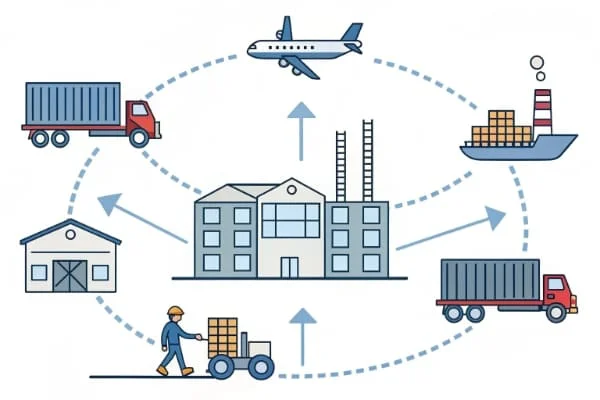
A great freight forwarder1 does more than just move boxes. They become an extension of your team, your logistics department on the ground in China. Their job is to make a very complex process feel simple for you. We manage these steps every day for our clients, ensuring a smooth flow of goods.
Core Responsibilities
The main job is to organize the entire shipment. This starts with picking up goods from your factory in cities like Shenzhen or Yiwu. They then book space with an airline or shipping line, making sure you get a competitive rate and a reliable schedule.
Documentation and Coordination
They also handle all the critical paperwork. This includes the Bill of Lading6, commercial invoice, and packing list7. They coordinate between your supplier, the shipping line, and customs officials in both countries. This prevents small mistakes that can cause huge delays.
Here is a simplified look at the journey they manage:
| Step | Action |
|---|---|
| 1. Cargo Pickup | Collects goods from the factory in China. |
| 2. Port/Airport Handling | Manages export customs and loading at the port. |
| 3. Freight Transport | Moves goods via sea or air to Canada. |
| 4. Customs Clearance | Handles all CBSA import requirements in Canada. |
| 5. Final Delivery | Transports goods from the port to your warehouse. |
Essentially, they take on all the stress so you don't have to.
What Should a Freight Forwarder Know About Shipping to Canada?
Shipping to Canada isn't like shipping anywhere else. A forwarder who doesn't know the specific rules can get your shipment stuck at the border, costing you time and money.
A forwarder shipping to Canada must have deep knowledge of the Canada Border Services Agency8 (CBSA). They need to understand specific documentation, tariff classifications, and import regulations for your products. Expertise in major Canadian ports like Vancouver or Toronto is essential.
When we handle shipments to Canada, we focus on compliance from the very beginning. We've seen firsthand how a missing document or incorrect code can bring a shipment to a halt for weeks. A forwarder’s expertise in Canadian regulations is not just a bonus—it’s a necessity for smooth, predictable delivery.
CBSA Compliance
The most important area of knowledge is CBSA regulations. Canada has its own set of rules for what can be imported, how it must be declared, and what duties and taxes apply. A good forwarder knows how to correctly classify your goods with the right HS code9 to ensure you pay the correct amount of duty. They should also be familiar with programs like CARM (CBSA Assessment and Revenue Management).
Key Documentation
Certain documents are non-negotiable for Canadian customs. Your forwarder must be an expert in preparing and submitting them correctly.
| Document | Purpose |
|---|---|
| Canada Customs Invoice10 (CCI) | A detailed invoice required for most shipments. |
| Bill of Lading6 (B/L) | The contract between the shipper and the carrier. |
| Packing List | Details the contents, weight, and dimensions of each box. |
| B3 Form | The customs coding form used to account for imported goods. |
Port-Specific Knowledge
Finally, they should know the operational details of major Canadian entry points like the Port of Vancouver, Port of Montreal, and Toronto Pearson International Airport. Each port has its own procedures, peak times, and potential bottlenecks. This local knowledge helps them create a more efficient delivery plan.
How Can You Tell If a Freight Forwarder Is Legit or a Scam?
Scammers often promise impossibly low rates to lure you in. Don't let a fake forwarder take your money or, even worse, your valuable inventory. It's a painful lesson to learn.
A legitimate forwarder has a professional website, a physical address, and official credentials like an NVOCC registration3 or CIFFA membership. They provide detailed quotes, have verifiable client testimonials, and communicate professionally. Scammers often use personal email addresses and demand unusual payment methods.

Before we partner with any logistics provider, we run them through a strict verification process. It's a crucial step to protect our clients' investments. You should do the same. The initial excitement of a cheap quote can quickly turn into a nightmare if the company isn't real.
Check Their Credentials
First, ask for their business license2 and any industry certifications. In China, a reliable company will have a registered business license2 you can verify. For international shipments, check if they are a registered NVOCC (Non-Vessel Operating Common Carrier). For Canada, a membership with CIFFA (Canadian International Freight Forwarders Association) is a strong sign of legitimacy.
Analyze Their Online Presence
Look at their website. Is it professional and detailed, or does it look like it was made in five minutes? Do they have a company email address (e.g., [email protected]) or a free one (e.g., @gmail.com)? Search for online reviews and testimonials on neutral platforms.
Red Flags to Watch For
Be cautious if you see any of these warning signs. A single red flag might be explainable, but several together are a major cause for concern.
| Legit Forwarder | Potential Scam |
|---|---|
| Professional website & email | Poorly made site, Gmail/Hotmail address |
| Verifiable business address | No physical address listed |
| Detailed, itemized quote11s | Vague quote with an "unbelievably" low price |
| Standard payment terms | Demands full payment upfront via wire to a personal account |
| Provides references & license | Avoids questions about credentials |
Trust your gut. If something feels off, it probably is.
What Questions Should You Ask Before Choosing a Freight Forwarder?
Don't sign a contract or send a deposit without doing your homework. Asking the right questions upfront prevents expensive misunderstandings and problems down the road. It's your best defense.
Before committing, ask about their specific experience on the China-Canada route. Inquire about their insurance coverage, how they handle delays, and for a complete breakdown of all costs. Also, ask for references from other Canadian importers who use their service.

I always tell my clients to treat hiring a forwarder like hiring a key employee. You need to interview them thoroughly to ensure they are the right fit for your business. The answers they give—and how they give them—will tell you a lot about the service you can expect. Don't be shy about asking tough questions; a professional forwarder will welcome them.
Questions About Experience and Network
These questions help you confirm they have the right expertise.
- "How many shipments do you manage from China to Canada each month?"
- "Can you provide references from two or three of your current Canadian clients?"
- "Which ports in China and Canada do you have the strongest presence in?"
Questions About Pricing and Contracts
This is where you uncover hidden fees and clarify liability.
- "Is this quote fully DDP (Delivered Duty Paid)? What charges are not included?"
- "What is your liability coverage if my cargo is damaged or lost?"
- "What are the payment terms? Do you require a deposit?"
Key Questions Checklist
Use this table as a guide during your conversation.
| Category | Key Question to Ask |
|---|---|
| Experience | What is your experience with my specific type of product? |
| Pricing | Can you provide a detailed, line-by-line breakdown of the quote? |
| Operations | What is your process for tracking shipments and providing updates? |
| Contingency | How do you handle customs delays12 or inspections? |
| Contract | What are the terms for cancellation or changes to the shipment? |
A good partner will answer these questions clearly and confidently.
China-Based vs Canada-Based Freight Forwarder: Which Is Better?
Choosing between a forwarder in China and one in Canada is a common dilemma. Both have their advantages, and the right choice depends on your specific needs and priorities.
A China-based forwarder offers better control at the source, including factory communication, quality checks, and cargo consolidation. A Canada-based one may have stronger local customs relationships. However, a company with strong teams in both countries, like us, often provides the best of both worlds.
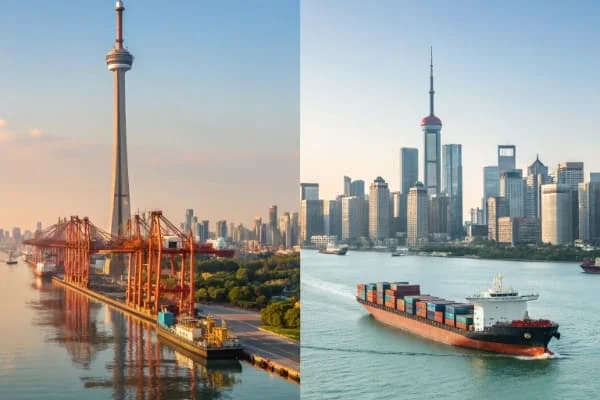
As a China-based company, we believe being close to the factories is a huge advantage. We can solve problems before the goods even leave the country. For example, if a supplier's packaging isn't right for export, we can catch it and fix it. This proactive approach prevents issues that a Canada-based forwarder would only discover upon arrival, when it's too late.
Advantages of a China-Based Forwarder
A local team in China can communicate directly with your suppliers in their own language and time zone. This is invaluable for coordinating production schedules and pickup times. They are also perfectly positioned to offer consolidation services, where they combine goods from several of your suppliers into a single shipment to save you money.
Advantages of a Canada-Based Forwarder
A forwarder in Canada will have deep relationships with local customs brokers and trucking companies. They are experts in the "last mile" of delivery and can be very effective at resolving any issues that arise at the Canadian border.
The Hybrid Solution
The ideal partner often has a strong operational presence in both countries. This model combines the benefits of both.
| Feature | China-Based Forwarder | Canada-Based Forwarder | Hybrid Model |
|---|---|---|---|
| Factory Communication | Excellent | Limited | Excellent |
| Order Consolidation | Excellent | Difficult | Excellent |
| Price Negotiation (China) | Strong | Weak | Strong |
| Canada Customs Expertise | Good | Excellent | Excellent |
| Final Mile Delivery | Relies on partners | Excellent | Excellent |
This is why we built Toncentlink the way we did—a strong China team for sourcing and prep, with expert logistics partners to ensure seamless delivery all the way to your door in Canada.
How Much Does It Cost to Ship from China to Canada?
Shipping costs can feel like a moving target. Hidden fees can quickly erase your profit margins, so you need to understand exactly what you're paying for before you agree to anything.
The cost to ship depends on the mode (sea or air), shipment size and weight, and the incoterms (e.g., FOB, DDP). Sea freight for a full container can range from $2,000-$5,000+, while air freight is much more expensive but faster.
To get a clear picture of your total landed cost, you need a quote that breaks everything down. We always provide our clients with a fully transparent, all-inclusive DDP (Delivered Duty Paid) quote. This means the price you see is the price you pay, with no surprises when the invoice arrives. It's the only way to budget effectively.
Factors Influencing Cost
Several variables determine your final bill. The main ones are the shipping method (air is fast but costly; sea is slow but cheaper), the volume and weight of your goods, and the origin and destination cities. Fuel prices and seasonal demand also cause rates to fluctuate.
Understanding Shipping Quotes
Never accept a quote that isn't itemized. A clear quote should list each charge separately so you know what you are paying for.
| Cost Component | Description |
|---|---|
| Ocean/Air Freight | The base cost to transport goods from port to port. |
| Terminal Handling Charges (THC) | Fees for handling the container at the origin and destination ports. |
| Customs Brokerage | The fee for preparing and submitting customs documents. |
| Duties and Taxes | Government charges (GST/PST/HST) based on the value of your goods. |
| Final Delivery | The cost of trucking your goods from the port to your final address. |
How to Get the Best Price
To ensure you're getting a fair price, always compare quotes from at least three different forwarders. But don't just look at the final number. Compare what's included in each quote. A cheap FOB quote might look attractive, but you'll be responsible for all the destination charges, which can add up quickly. A DDP quote gives you price certainty.
Conclusion
Finding a reliable freight forwarder1 is about verification, clear communication, and transparent pricing. This ensures your shipment from China to Canada arrives safely, on time, and within your budget.
Understanding the role of a freight forwarder can help you choose the right partner for your shipping needs. ↩
Verifying a business license is crucial to ensure you're working with a legitimate freight forwarder. ↩
Learn about NVOCC registration to understand its significance in freight forwarding. ↩
Finding trustworthy reviews can guide you in selecting a reputable freight forwarder. ↩
Explore the unique challenges of this route to better prepare for your shipping logistics. ↩
Understanding the Bill of Lading is crucial for managing shipping contracts effectively. ↩
A detailed packing list is vital for customs and ensures accurate delivery. ↩
Understanding CBSA regulations is essential for smooth shipping to Canada. ↩
Learn about HS codes to ensure proper classification and duty payment for your goods. ↩
Knowing when to use a Canada Customs Invoice can streamline your shipping process. ↩
An itemized quote provides clarity on charges, helping you make informed decisions. ↩
Learn strategies to manage customs delays and keep your shipments on track. ↩