
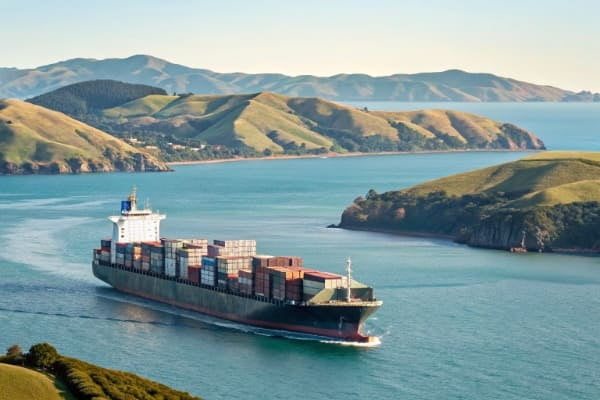
Shipping from China to New Zealand feels complex. You worry about choosing the wrong partner, facing surprise fees, or getting stuck with customs issues. It’s a real risk.
To choose the right freight forwarder1, you must verify their experience on the China-New Zealand route2, check credentials like IATA accreditation3, and ensure transparent pricing4. Prioritize partners with strong networks in both countries, excellent customer service, and deep expertise in New Zealand customs regulations5.
Choosing a shipping partner is one of the most important decisions you'll make for your business. It's about more than just moving boxes; it's about finding a team that acts as an extension of your own. This partner needs to protect your investment, meet your deadlines, and make your life easier. For years, I've helped clients navigate this process, and I've seen what separates a great forwarder from a mediocre one. Let's break down exactly what you should be looking for so you can ship your goods with complete confidence.
What Does a Freight Forwarder Do for China–New Zealand Shipping?
You know you need a freight forwarder1, but what do they actually do? For many importers, their role is a mystery, making it hard to know if you're getting good value.
A freight forwarder1 for China-New Zealand shipping manages the entire logistics process6. They arrange cargo transport, handle customs clearance, prepare documentation, and coordinate with carriers. They are your single point of contact, ensuring your goods move smoothly from the factory in China to your door in New Zealand.

Think of a freight forwarder1 as your project manager for shipping. When we work with clients, we don't just book space on a ship. We manage the entire journey. This starts with picking up the goods from the factory in China. We then handle the export customs declaration. After that, we book the shipment with a reliable airline or shipping line. Once the goods arrive in New Zealand, we manage the import customs clearance7, pay any duties on your behalf, and arrange for final delivery to your warehouse or office. A good forwarder is also an advisor, helping you choose the best shipping method8 and ensuring all your paperwork is perfect to avoid any delays at the border.
Here is a breakdown of their core responsibilities:
| Service Category | Key Responsibilities |
|---|---|
| Logistics & Transport | Booking cargo space, inland trucking, managing air or sea freight9. |
| Customs & Compliance | Preparing export/import documents, customs brokerage10, duty/tax calculation. |
| Coordination | Acting as the middleman between you, the factory, and carriers. |
| Advisory | Recommending the best shipping mode, explaining regulations, providing insurance. |
Air Freight vs Sea Freight: Which Should You Choose?
Your goods are ready in China, but you're stuck. Should you ship by air or sea to New Zealand? The wrong choice can mean paying too much or waiting too long.
Choose air freight11 for urgent, high-value, or lightweight shipments to New Zealand, as it's faster (5-10 days) but more expensive. Opt for sea freight9 for bulkier, heavier, or less time-sensitive goods, as it's significantly more cost-effective but takes longer (30-45 days).
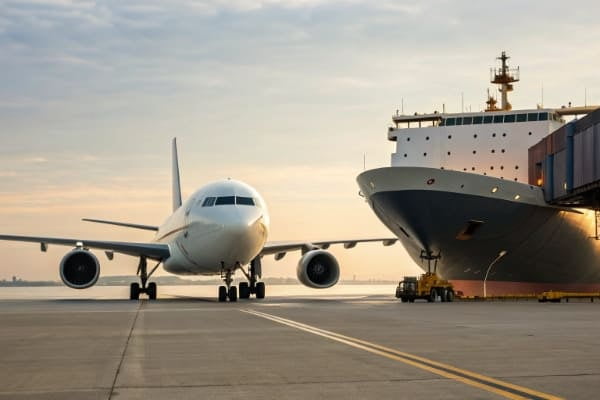
The right choice always comes down to balancing three things: speed, cost, and volume. I always ask my clients, "How quickly do you need it, and how much are you shipping?" If you're launching a new product and need it in stores next week, air freight11 is the only option. The speed justifies the higher cost. But if you're restocking a popular, heavy item like ceramic mugs and have a few months of inventory left, sea freight9 is the smart financial move. The cost savings are huge, especially for large volumes. A good partner won't just offer you one or the other; they will analyze your specific needs and help you decide. Sometimes, a hybrid approach even works, where you air freight11 a small batch to start sales while the main shipment comes by sea.
Here's a simple comparison:
| Factor | Air Freight | Sea Freight |
|---|---|---|
| Speed | Fast (5-10 days) | Slow (30-45 days) |
| Cost | High | Low |
| Best For | Urgent, high-value, lightweight goods | Bulk, heavy, non-urgent goods |
| Security | High | Moderate |
How Much Does It Cost to Ship from China to New Zealand?
You need to budget for shipping, but freight quotes12 are often confusing. Hidden fees and vague estimates can destroy your profit margins before your products even land.
Shipping costs from China to New Zealand depend on the mode (air/sea), cargo weight and volume, origin/destination, and service type (e.g., door-to-door). Expect to pay more for faster air freight11. Always request a detailed, itemized quote to see all charges clearly.
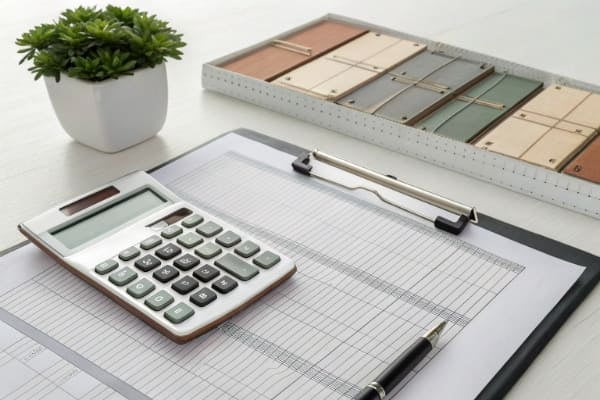
I can't give you a single price, because it changes daily based on fuel costs, demand, and carrier capacity. However, I can tell you what to look for in a quote. A trustworthy forwarder will give you a transparent, itemized breakdown. This quote should clearly list the sea or air freight11 charge, fuel surcharges, terminal handling fees in both China and New Zealand, customs clearance fees, and any local transport costs. The biggest red flag is a quote with a single, unexplained number. That's where hidden fees live. We always provide our clients with a Delivered Duty Paid (DDP) quote. This means the price you see is the final price to get the goods to your door, with all duties and taxes included. This transparency is non-negotiable for smart budgeting and protecting your margins.
How Long Does Shipping from China to New Zealand Take?
Your business runs on deadlines. You need to know exactly when your shipment from China will arrive in New Zealand to manage your inventory and keep your promises to customers.
Air freight from China to New Zealand typically takes 5 to 10 days, including customs clearance. Sea freight is much slower, usually taking between 30 and 45 days from port to port. These transit times can vary based on the specific origin, destination, and carrier schedules.
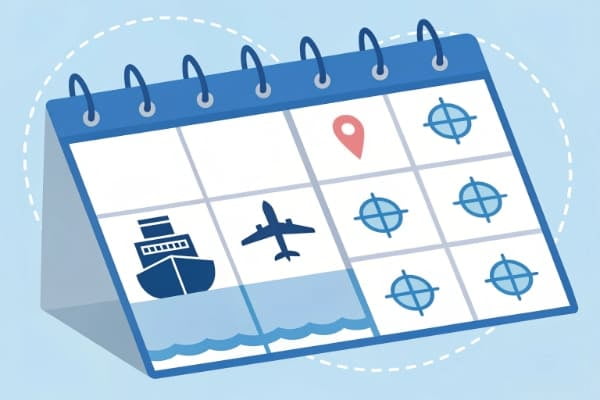
The total shipping time is more than just the days the cargo spends in the air or on the water. You have to account for the entire journey. This includes the time it takes to transport goods from the factory to the port, clear export customs in China, wait for the vessel, and then clear import customs in New Zealand before final delivery. For example, a sea shipment might have a 25-day transit time on the water, but the full door-to-door process can easily take 40 days. Factors like port congestion, holidays like Chinese New Year, or random customs inspections can add delays. A proactive freight forwarder1 monitors your shipment every step of the way, anticipates these potential delays, and communicates with you immediately so you can adjust your plans accordingly. Real-time tracking and constant communication are key.
What Documents Are Required for Importing into New Zealand?
The thought of customs paperwork is enough to give anyone a headache. One missing or incorrect document can stop your entire shipment at the border, leading to frustrating delays and fees.
Key documents for importing into New Zealand from China include a Commercial Invoice13, Packing List, and a Bill of Lading (for sea) or Air Waybill (for air). You may also need a Certificate of Origin14 to access preferential duty rates, plus any specific permits for restricted goods.

Paperwork is the number one cause of customs delays I see. It has to be perfect. Your freight forwarder1 should act as your compliance expert, not just a document filer. They must review every detail before the shipment even leaves China. The Commercial Invoice13 must have the correct value and product descriptions. The Packing List must match the actual contents of the shipment. The Bill of Lading must list the correct consignee. We also help clients get a Certificate of Origin14, which can reduce or eliminate import duties under the China-New Zealand Free Trade Agreement. This alone can save you thousands of dollars. Don't leave this to chance. Work with a forwarder who has a licensed customs broker on their team or a strong partnership with one in New Zealand. Their expertise is your best defense against customs problems.
FCL vs LCL15: Which Option Saves You More?
You're shipping by sea, but you're not sure if you need a full container or can just share one. Choosing the wrong sea freight9 option means you either pay for empty space or face delays.
FCL (Full Container Load) is more cost-effective if your cargo is over 15 cubic meters, as you pay a flat rate for the whole container. LCL (Less than Container Load) is better for smaller shipments, where you only pay for the space you use inside a shared container.
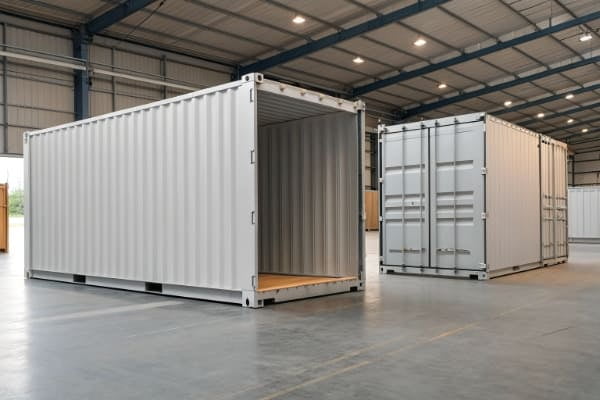
The decision between FCL and LCL is a classic volume-versus-cost calculation. If you have enough goods to fill most of a 20-foot or 40-foot container (generally around 15 cubic meters or more), FCL is almost always the better choice. You get a fixed price, it's faster because your container goes directly from port to port without extra handling, and it's more secure since it's sealed at the factory. For smaller shipments, LCL is the go-to. You share container space with other importers and only pay for your portion. However, LCL has downsides: the cost per cubic meter is higher, it takes longer because the container has to be loaded and unloaded at consolidation warehouses, and there's a slightly higher risk of damage since your goods are handled more. A good forwarder will do the math for you and advise when it becomes cheaper to book a full container, even if it's not completely full.
Door-to-Door vs Port-to-Port: Which Service Is Right for You?
Your forwarder offers different service levels like "door-to-door" and "port-to-port." Picking the wrong one can leave you responsible for arranging local transport and customs, creating unexpected work.
Door-to-door service is a complete, all-in-one solution where the forwarder manages everything from the factory in China to your address in New Zealand. Port-to-port service only covers the main transit between ports, leaving you to handle everything else.
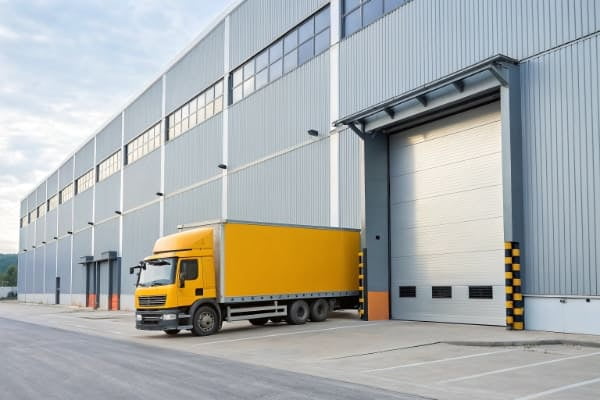
For over 95% of our clients, door-to-door shipping is the best choice. It offers peace of mind and a single point of accountability. When you choose this service, your forwarder handles everything: factory pickup, trucking to the port, customs clearance in both countries, and final delivery to your doorstep. If anything goes wrong, you have one phone number to call. Port-to-port is a much more limited service. It's cheaper upfront, but you become responsible for getting the goods to the port in China and arranging for pickup, customs clearance, and delivery in New Zealand. This option is only suitable for very experienced, large-scale importers who have their own logistics teams and customs brokers in place. For most small and medium-sized businesses, the convenience and risk reduction of a door-to-door service16 is worth every penny.
Conclusion
Choosing the right freight forwarder1 for New Zealand involves checking their experience, pricing, and services. A reliable partner simplifies customs and logistics, ensuring your goods arrive safely and on time.
Understanding the role of a freight forwarder can help you choose the right partner for your shipping needs. ↩
Explore insights on the specific challenges and solutions for shipping between these two countries. ↩
Learn about the significance of IATA accreditation in ensuring reliable shipping services. ↩
Discover tips for identifying transparent pricing to avoid hidden fees in shipping. ↩
Understanding customs regulations is crucial for smooth shipping and avoiding delays. ↩
Explore the logistics process to understand how your goods are managed during shipping. ↩
Get insights into the import customs clearance process to avoid delays. ↩
Explore various shipping methods to find the best fit for your cargo needs. ↩
Discover the cost-effectiveness of sea freight for larger shipments. ↩
Understanding customs brokerage can help you navigate the complexities of shipping. ↩
Learn why air freight might be the best option for urgent shipments. ↩
Discover how to obtain accurate freight quotes to avoid unexpected costs. ↩
Learn about the essential role of a Commercial Invoice in international shipping. ↩
Explore how a Certificate of Origin can help reduce import duties. ↩
Understanding FCL and LCL can help you choose the most cost-effective shipping option. ↩
Discover the advantages of door-to-door service for hassle-free shipping. ↩