
Struggling to find a reliable freight forwarder1 for your China-Germany shipments2? High costs, confusing paperwork, and customs delays can easily hurt your business and cause major stress.
To choose the right freight forwarder1 for Germany, you must verify their experience on this specific route. Check their expertise with EU customs3, including EORI4 and VAT5. Always compare detailed quotes for both air and sea DDP services6 to find a reliable partner with transparent pricing.
Choosing a partner to move your products from China to Germany is a huge decision. It directly affects your costs, your delivery times, and even your customer's happiness. I have seen so many businesses make costly mistakes by picking the wrong partner. It's a critical part of your supply chain that you have to get right. Let's break down exactly what you need to look for. This will help you make sure your shipping process is smooth, efficient, and predictable from start to finish.
What Does a Freight Forwarder Do for China–Germany Shipping?
Confused about what a freight forwarder1 actually does? Their role seems complex, and it can leave you unsure if you really need one for your business.
A freight forwarder1 acts as your logistics agent7. They manage the entire shipping process from China to Germany, handling booking, documentation, customs clearance8, and final delivery. They find the best route and price for you by using their extensive network of carriers.
A freight forwarder1 is your project manager for shipping. We don't own the ships or airplanes. Instead, we act as an intermediary between you and the transportation services. Our main job is to use our network and knowledge to make the shipping process simple for you. We find the best carrier, negotiate prices, and handle all the complex steps in between.
I remember a client who came to us after their first shipment got stuck in German customs for weeks. Their previous forwarder didn't prepare the right documents. It cost them thousands in lost sales and storage fees. We stepped in, fixed the paperwork, and got their goods released. Now, we handle all their shipments. This is what a good forwarder does: we solve problems before they happen.
Here is a breakdown of what we handle for you:
| Service | What It Means for You |
|---|---|
| Carrier Booking | We find and book space on a reliable ship or plane. |
| Documentation | We prepare the Bill of Lading, Commercial Invoice, and Packing List. |
| Customs Clearance | We manage export customs in China and import customs in Germany. |
| Inland Trucking | We arrange transport from the factory to the port and from the port to you. |
| Cargo Insurance | We offer insurance to protect your goods against damage or loss. |
| Warehousing | We can store your goods in China before shipping if needed. |
A good freight forwarder1 is your single point of contact. You don't have to deal with multiple companies. You just deal with us, and we take care of the rest.
Air Freight vs Sea Freight: Which Should You Choose?
Deciding between air and sea freight9 is tough. Air is fast but expensive. Sea is cheap but slow. Making the wrong choice can ruin your budget or miss your deadlines.
Choose air freight10 for high-value, lightweight, or urgent shipments that need to arrive in 3-7 days. Use sea freight9 for heavy, bulky, or non-urgent goods to save on costs, with a transit time of 30-45 days. Your choice depends on your product and deadline.
The choice between air and sea freight9 comes down to a simple balance of three things: speed, cost, and volume. You need to decide which of these is most important for each shipment. For example, we often advise clients to ship their first small batch of a new product by air. This helps them get to market quickly and test demand. Once they have steady orders, they switch to sea freight9 for their bulk inventory to maximize their profit margins. It's a strategy that works very well.
Think about your specific needs for this shipment. Are you launching a new product and need it fast? Air freight is your answer. Are you restocking a popular, heavy item and want to keep costs low? Sea freight is the way to go.
Here’s a simple table to help you decide:
| Factor | Air Freight | Sea Freight |
|---|---|---|
| Speed | Very Fast (3-7 days door-to-door) | Slow (30-45 days door-to-door) |
| Cost | High | Low |
| Best For | Urgent, high-value, or lightweight goods | Bulk, heavy, or non-urgent goods |
| Capacity | Limited by size and weight | Very high, can ship large items |
| Reliability | Very reliable schedules | Can have delays from weather or port issues |
There is no single "best" option. The right choice changes based on your business goals for that specific order.
How Much Does Shipping from China to Germany Cost?
Are you worried about unpredictable shipping costs11 from China? Hidden fees and surprise charges can completely destroy your profit margins. You need a clear picture of the total expense.
Shipping costs vary based on mode (air/sea), weight, volume, and service type. A typical LCL12 sea shipment might cost $150-$300 per cubic meter, while air freight10 can be $5-$12 per kg. Always ask your forwarder for a detailed DDP quote to avoid surprises.
The final cost of shipping is more than just the freight rate. It includes a series of charges from the factory in China to your door in Germany. Many importers get a cheap quote, only to find out later about hidden fees for things like customs, port handling, and taxes. This is why we always recommend getting a "Delivered Duty Paid" (DDP) quote. With DDP, the price you are quoted is the final price you pay. It includes everything.
These are the main costs you need to be aware of:
| Cost Component | Description |
|---|---|
| Freight Rate | The basic charge for transport from the port/airport in China to Germany. |
| Origin Charges | Fees in China, like trucking to the port and export customs clearance8. |
| Destination Charges | Fees in Germany, like terminal handling, customs clearance8, and VAT5/duties. |
| Fuel Surcharges | Extra fees that change with global fuel prices. |
| Service Fee | The forwarder's fee for managing the entire process for you. |
Costs also change with the seasons. Shipping is more expensive during peak season, which is from August to October, right before the holidays. A good forwarder will be transparent about all these costs. They should give you a single, all-inclusive price so you can budget accurately.
How Long Does Shipping from China to Germany Take?
Are shipping delays13 from China hurting your business? Unreliable transit times make it impossible to plan your inventory and meet your customer deadlines. You need predictable delivery.
Air freight from China to Germany is the fastest, typically taking 3-7 days door-to-door. Sea freight takes much longer, around 30-45 days for a full container (FCL14) and 35-50 days for a shared container (LCL12). These times include customs and local delivery.
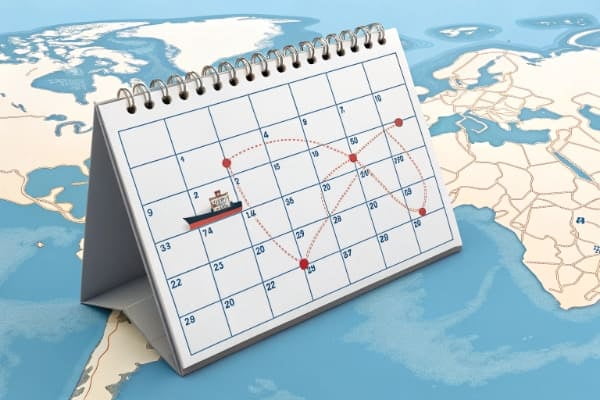
Understanding the total transit time is crucial for managing your inventory. The time isn't just the days the ship is at sea or the plane is in the air. The total door-to-door time includes trucking within China, customs processing, loading, transit, unloading, and final delivery in Germany. I always tell my clients to add a one-week buffer to their planning, especially during busy seasons. Port congestion or a customs inspection can add unexpected delays. A good forwarder plans for these things and keeps you informed.
Here is a realistic breakdown of the timeline for each method:
| Sea Freight (Door-to-Door15) | Step | Estimated Time |
|---|---|---|
| Factory to China Port | 1–3 days | |
| Export Customs & Loading | 2–4 days | |
| Sea Transit to Germany | 25–35 days | |
| Import Customs & Unloading | 3–7 days | |
| Port to Your Address | 1–3 days | |
| Total Estimated Time | 32–52 days |
| Air Freight (Door-to-Door15) | Step | Estimated Time |
|---|---|---|
| Factory to China Airport | 1 day | |
| Export Customs & Loading | 1–2 days | |
| Flight to Germany | 1–2 days | |
| Import Customs & Unloading | 1–2 days | |
| Airport to Your Address | 1 day | |
| Total Estimated Time | 5–8 days |
Remember, holidays in China (like Chinese New Year) and Germany can also affect these timelines. Plan ahead with your forwarder.
What Documents Are Required for Importing into Germany?
Are you afraid of your shipment getting stuck in German customs? Missing or incorrect paperwork is a common and very costly mistake that can hold up your goods indefinitely.
The key documents for importing into Germany16 are the Commercial Invoice, Packing List, and Bill of Lading (for sea) or Air Waybill (for air). You also need a Certificate of Origin and an EORI4 number. Your freight forwarder1 should manage all this for you.

Documentation is the most critical part of international shipping. A simple typo or an incorrect value on an invoice can trigger a full customs inspection, causing major delays and extra fees. We have a dedicated team that checks every single document before a shipment leaves China. It's a crucial step that prevents almost all of the common headaches at German customs. For certain products, like electronics or toys, you will also need a CE certificate to prove they meet EU safety standards. Your forwarder should be able to advise you on this.
Here are the essential documents and their purpose:
| Document | Purpose |
|---|---|
| Commercial Invoice | Details the transaction, seller, buyer, and value of the goods for customs. |
| Packing List | Lists all items in the shipment, with weights and dimensions. |
| Bill of Lading (B/L) | The contract for sea freight9. It acts as a receipt and title to the goods. |
| Air Waybill (AWB) | The equivalent document for air freight10. It is a contract of carriage. |
| Certificate of Origin | Certifies the country where the goods were made. |
| EORI4 Number | Your unique registration number for importing into the EU. You must have this. |
Working with a freight forwarder1 who has deep experience with German customs is non-negotiable. They will make sure your paperwork is perfect.
FCL14 vs LCL12: Which Option Is More Cost-Effective?
Choosing between FCL14 and LCL12 for your sea shipment is confusing. You want the cheapest option, but the wrong choice can lead to higher costs or unexpected delays.
Choose FCL14 (Full Container Load) if your cargo is over 15 cubic meters; you pay a flat rate for the whole container. Choose LCL12 (Less than Container Load) for smaller shipments where you share container space. LCL12 is cheaper for small volumes, but FCL14 is more cost-effective per unit for larger ones.
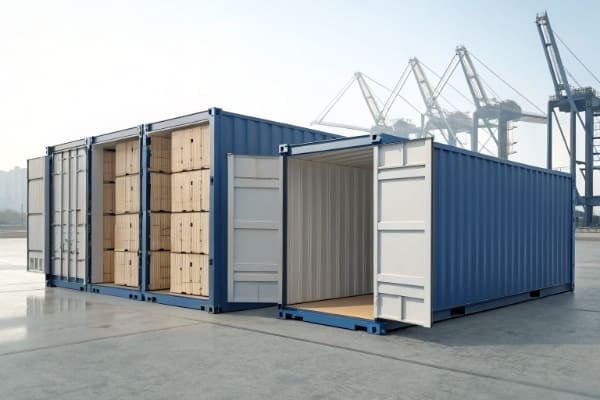
The decision between FCL14 and LCL12 depends on your shipment's volume. FCL14 means you rent an entire 20ft or 40ft container for your goods only. LCL12 means you pay for the space your goods take up inside a shared container.
A good rule of thumb is that the breakeven point is around 13-15 cubic meters (CBM). If your shipment is that large, it's often cheaper and faster to book a 20ft FCL14 container, even if it's not completely full. With FCL14, your container is sealed at the factory and not opened until it reaches you, which means less handling and lower risk of damage. LCL12 shipments have to be loaded and unloaded at consolidation warehouses at both ends, which adds time and risk.
Here’s how they compare:
| Feature | FCL14 (Full Container Load) | LCL12 (Less than Container Load) |
|---|---|---|
| Best Volume | Over 15 CBM | 1–13 CBM |
| Cost Structure | Flat rate per container | Per CBM or per ton (whichever is greater) |
| Speed | Faster. Direct from port to port. | Slower. Extra time for consolidation and deconsolidation. |
| Security | High. Container is sealed until arrival. | Lower. More handling increases risk of damage or loss. |
We always help our clients calculate the total cost for both options. Sometimes, paying a little more for an FCL14 container gives you faster transit and better security, which is worth the extra cost.
Door-to-Door15 vs Port-to-Port17: Which Service Should You Pick?
Are you confused by shipping terms like "Door-to-Door15" and "Port-to-Port17"? Choosing the wrong service can leave you with a lot of unexpected work and hidden costs.
Choose Door-to-Door15 (DDP) service for a completely hassle-free experience. Your forwarder handles everything from the China factory to your German address. Port-to-Port17 is cheaper upfront but requires you to manage customs and transport yourself, which is complex and risky.
The service level you choose determines how much work you have to do. For 99% of our clients, especially small businesses or those new to importing, we insist on a Door-to-Door15 DDP (Delivered Duty Paid) service. It eliminates risk, stress, and surprise costs. You get one invoice that covers everything, and the goods just show up at your door.
Trying to manage the process yourself after the goods arrive at the port in Germany is very difficult. You would need to find and hire a customs broker, arrange for duty and VAT5 payments, and then find a trucking company to pick up your goods. Any mistake can lead to massive delays and storage fees. It's just not worth the headache to save a few dollars on the initial freight cost.
Here’s a clear look at who does what:
| Task | Port-to-Port17 (You Handle) | Door-to-Door15 (Forwarder Handles) |
|---|---|---|
| Pickup from China Factory | No | Yes |
| Main Freight to Germany | Forwarder Handles | Yes |
| German Import Customs | You Handle | Yes |
| German Duties & VAT5 | You Handle | Yes (with DDP) |
| Trucking to Your Door | You Handle | Yes |
Unless you are a large corporation with your own logistics team in Germany, you should always choose a Door-to-Door15 DDP service. It lets you focus on your business, not on logistics.
Conclusion
Choosing the right freight forwarder is key to successful importing. Focus on a partner's experience, clear communication, and transparent, all-inclusive pricing to ensure your goods arrive safely and on time.
Explore this link to find trusted freight forwarders that can simplify your shipping process. ↩
Learn strategies for efficient shipping between China and Germany to enhance your logistics. ↩
Understanding EU customs is crucial for smooth shipping; this resource provides essential insights. ↩
Discover the significance of EORI numbers in international shipping and customs. ↩
Explore how VAT impacts your shipping expenses and learn to budget effectively. ↩
Find out how DDP services can simplify your shipping process and reduce hidden costs. ↩
Learn about the role of a logistics agent and how they facilitate shipping processes. ↩
Understanding customs clearance is vital for avoiding delays; this resource explains the process. ↩
Understand the advantages and disadvantages of sea freight to make informed shipping decisions. ↩
Discover the benefits of air freight for urgent shipments and how it can save time. ↩
Get insights on calculating shipping costs to avoid unexpected expenses. ↩
Learn about LCL shipping options and when they are the best choice for your business. ↩
Learn about common causes of shipping delays and how to mitigate them. ↩
Explore the benefits of FCL shipping for larger shipments and cost-effectiveness. ↩
Understand the advantages of Door-to-Door service for hassle-free shipping. ↩
Ensure your shipments clear customs by understanding the necessary documentation. ↩
Explore the complexities of Port-to-Port shipping and why it may not be ideal for everyone. ↩