
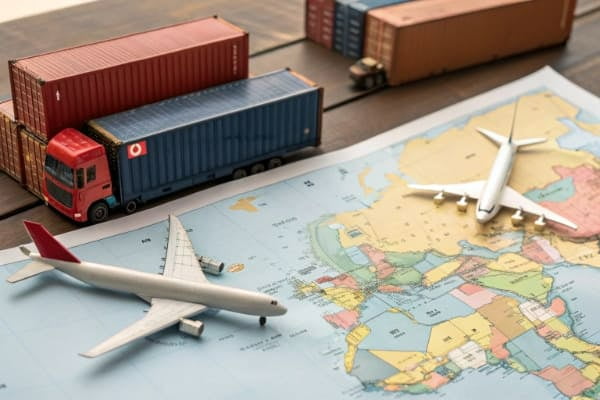
Struggling to find a reliable shipping partner1? The wrong choice can lead to delays, hidden fees, and damaged goods. You need a forwarder who makes the process simple and secure.
To choose the right freight forwarder2 for China-Canada shipping, verify their credentials, check their experience with Canadian customs3, and compare detailed quotes. Prioritize a partner who offers transparent pricing4, real-time tracking5, and comprehensive insurance6 options to protect your shipment from start to finish.
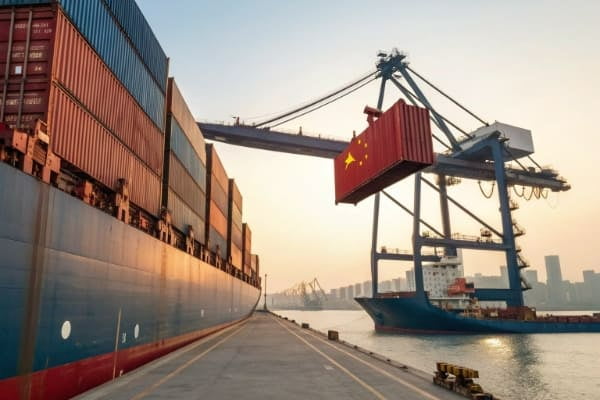
Navigating the logistics of shipping from China to Canada can feel overwhelming. With so many options, how do you pick the one that won't let you down? I've been in this business for years, helping clients just like you manage their supply chains. The key is knowing what to look for and what questions to ask. Let's break down the essential factors to ensure your goods arrive safely, on time, and on budget. This guide will walk you through everything you need to know to make a confident decision.
What Does a Freight Forwarder Do for China–Canada Shipping?
Worried about managing international logistics yourself? Coordinating with carriers, handling paperwork, and clearing customs is a full-time job. It can be complex and a huge drain on your resources.
A freight forwarder2 acts as your logistics agent7. They manage the entire shipping process, from booking cargo space with carriers to handling customs clearance and final delivery. They are your single point of contact for a smooth, hassle-free import experience from China to Canada.
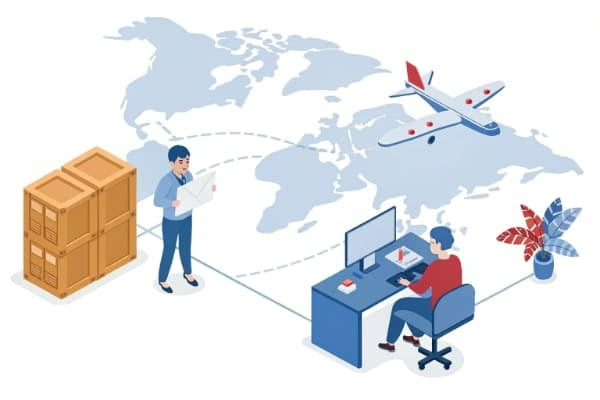
Think of a freight forwarder2 as the project manager for your shipment. When we work with clients, our role is to take all the complicated steps off their plate. Instead of you having to find and negotiate with ocean liners or airlines, we leverage our network to get the best routes and rates. We handle all the essential documentation to ensure your goods don't get stuck at the border. This is crucial because Canadian customs3 have very specific requirements. A good forwarder doesn't just move boxes; they manage information, solve problems, and provide a clear path for your products from the factory floor in China to your warehouse door in Canada.
Key Responsibilities of a Freight Forwarder:
- Carrier Booking: Securing space on ships or planes.
- Documentation: Preparing the Bill of Lading, Commercial Invoice, and Packing List.
- Customs Brokerage: Managing the customs clearance process in Canada.
- Consolidation: Combining smaller shipments (LCL8) to save costs.
- Tracking: Providing updates on your cargo's location.
Air Freight vs Sea Freight: Which Should You Choose?
Need your products from China fast but worried about the cost? Or maybe you want to save money but can't afford long delays. Choosing between air and sea freight9 is tricky.
For urgent or high-value shipments, air freight10 is the fastest option, delivering in days. For larger, heavier goods where cost is the main concern, sea freight9 is far more economical, though it takes several weeks. Your choice depends on your budget, timeline, and product type.
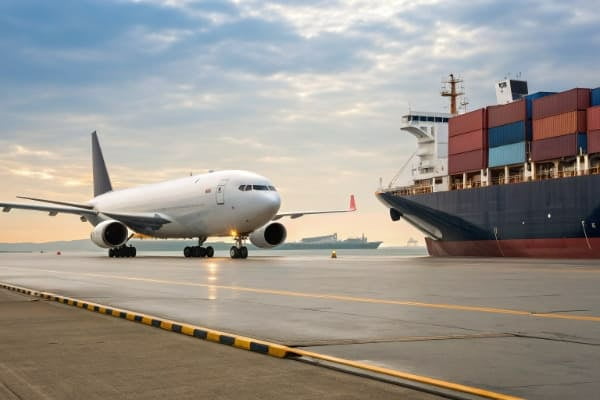
The decision between air and sea freight9 is one of the first and most important ones you'll make. It's a classic trade-off between speed and cost. I often advise new importers to carefully consider their inventory needs. If you're launching a new product and need to hit a market deadline, the extra cost of air freight10 can be a worthwhile investment. On the other hand, for restocking staple products with a predictable sales cycle, sea freight9 is the default choice for keeping costs down and margins healthy. It's not just about the price tag; it's about how the shipping method fits into your overall business strategy. We help our clients analyze this trade-off for every shipment to ensure the logistics align with their commercial goals.
Air vs. Sea Freight Comparison
| Feature | Air Freight | Sea Freight |
|---|---|---|
| Speed | Fast (3-10 days) | Slow (25-50 days) |
| Cost | High | Low |
| Best For | High-value, low-volume, time-sensitive goods | Bulk, heavy, non-urgent goods |
| Security | Higher security, less handling | More handling, higher risk of damage |
| Capacity | Limited | Virtually unlimited |
How Much Does It Cost to Ship from China to Canada?
Getting hit with unexpected shipping fees can destroy your profit margins. Vague quotes make it impossible to budget accurately, leaving you stressed and uncertain about your final costs.
Shipping costs from China to Canada depend on weight, volume, shipping method (air/sea), and service terms (e.g., DDP). A detailed quote should include freight charges, customs duties, taxes, and local fees. Always ask for a transparent, all-inclusive price to avoid surprises.
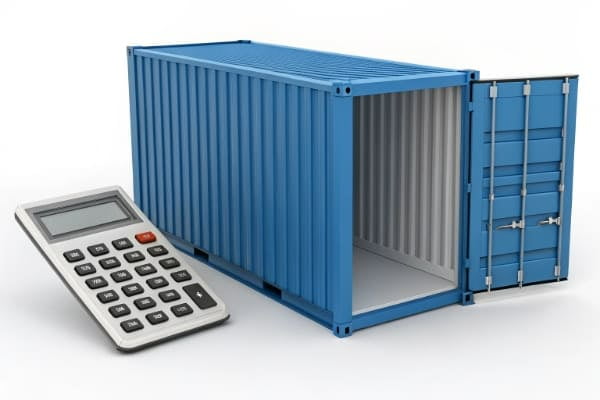
Calculating the final cost of a shipment is more complex than just the freight rate. I've seen too many importers get a low initial quote, only to be surprised by a long list of additional charges later on. These can include fuel surcharges, terminal handling fees, customs brokerage11 fees, and Goods and Services Tax (GST) in Canada. That's why we always provide a detailed cost breakdown. The total price is influenced by the "chargeable weight," which is the greater of the actual weight and the volumetric weight. Furthermore, the Incoterms12 you agree on with your supplier (like EXW, FOB, or DDP) will determine who pays for which part of the journey. A reliable forwarder will explain all these variables and give you a clear, all-in price.
Factors That Influence Shipping Costs:
- Cargo Weight & Volume: The size and weight of your shipment.
- Shipping Method: Air freight is more expensive than sea freight9.
- Origin/Destination: The specific ports and final delivery address.
- Incoterms12: The agreed-upon terms of sale (e.g., FOB, DDP).
- Time of Year: Peak seasons (like before holidays) can increase rates.
How Long Does Shipping from China to Canada Take?
Are shipment delays hurting your business? When you don't know when your products will arrive, you can't manage inventory or meet customer expectations. This uncertainty is frustrating and costly.
Shipping from China to Canada can take 3-10 days by air freight10 or 25-50 days by sea freight9. These times are for port-to-port transit and do not include production, customs clearance, or inland transportation, which can add extra time to the total delivery schedule.

When clients ask me for a timeline, I always emphasize that we need to look at the full picture. The ocean or air transit time is just one piece of the puzzle. Before the shipment even leaves China, there's time needed for factory production, quality control, and transport to the port. Once it arrives in Canada, it has to clear customs, which can take a few days, assuming all the paperwork is in order. After that, there's the final leg of the journey—trucking the goods from the port of Vancouver or Toronto to your warehouse. A good freight forwarder2 will give you a realistic door-to-door timeline, not just the port-to-port estimate, so you can plan your business operations effectively.
Estimated Transit Times
| Method | Service | Estimated Port-to-Port Time |
|---|---|---|
| Air Freight | Express | 3-5 days |
| Air Freight | Standard | 7-10 days |
| Sea Freight | FCL13 | 25-40 days |
| Sea Freight | LCL8 | 30-50 days |
What Documents Are Required for Importing into Canada?
Is the thought of customs paperwork giving you a headache? Missing or incorrect documents are the number one reason for shipment delays and fines at the Canadian border. It's a risk you can't afford.
To import into Canada, you need a Commercial Invoice, Packing List, and a Bill of Lading (for sea) or Air Waybill (for air). Depending on the goods, you may also need a Certificate of Origin or specific import permits. Your forwarder should manage this for you.
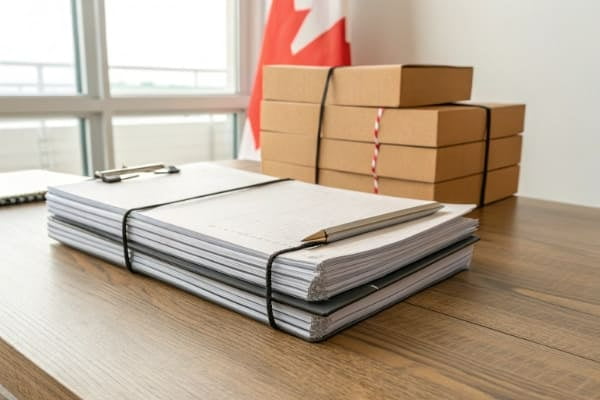
Handling customs documentation is a critical service we provide. The Canada Border Services Agency (CBSA) is very strict, and a small error can cause big problems. The Commercial Invoice, for example, must detail the seller, buyer, product descriptions, quantities, unit value, and HS codes. The Packing List must match the Commercial Invoice exactly. The Bill of Lading is the contract between you and the carrier. For some products, like certain foods or electronics, you'll need additional certificates to prove they meet Canadian safety standards. We work directly with our clients and their suppliers to ensure every document is prepared correctly before the shipment leaves China, preventing costly delays at the Canadian border.
Key Import Documents:
- Commercial Invoice: Details the transaction between the seller and buyer.
- Packing List (P/L): Lists the contents, weight, and dimensions of each package.
- Bill of Lading (B/L) or Air Waybill (AWB): The transport contract.
- Certificate of Origin (CO): Certifies the country where the goods were manufactured.
- Canada Customs Invoice (CCI): Required for shipments over a certain value.
FCL13 vs LCL8: Which Option Is More Cost-Effective?
Unsure whether to book a full container or share one? Choosing the wrong option can mean you either overpay for unused space or face delays and damage from shared shipping.
FCL13 (Full Container Load) is more cost-effective for large shipments, generally over 15 cubic meters. LCL8 (Less than Container Load) is better for smaller shipments, as you only pay for the space you use. FCL13 is also faster and more secure than LCL8.
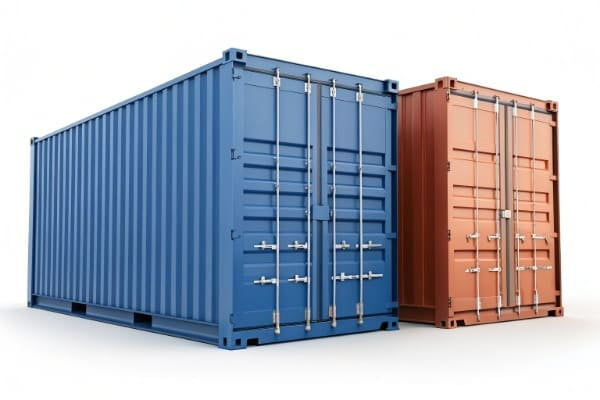
The choice between FCL13 and LCL8 shipping comes down to your shipment's volume. If you have enough cargo to fill most of a 20-foot or 40-foot container, FCL13 is almost always the better choice. You get exclusive use of the container, which means less handling of your goods and a lower risk of damage. It also moves faster because it doesn't need to be consolidated at the origin port or deconsolidated at the destination port. However, for smaller businesses or those testing a new product, LCL8 is a great option. It allows you to ship smaller quantities without paying for a full container. The trade-off is a slightly higher cost per cubic meter and a longer transit time, but the flexibility is often worth it.
FCL13 vs. LCL8 Breakdown
| Aspect | FCL13 (Full Container Load) | LCL8 (Less than Container Load) |
|---|---|---|
| Best For | Large shipments (>15 CBM) | Small shipments (<15 CBM) |
| Cost Structure | Flat rate per container | Per cubic meter (CBM) or ton |
| Speed | Faster transit time | Slower due to consolidation |
| Security | More secure (sealed container) | Higher risk of damage/loss |
Door-to-Door vs Port-to-Port: What’s the Difference?
Are you prepared to handle customs and local delivery yourself? Port-to-port shipping ends at the Canadian port, leaving you to manage the most complicated parts of the import process.
Port-to-port service only covers transport between the origin and destination ports. Door-to-door service is all-inclusive, covering pickup from the factory in China, shipping, Canadian customs3 clearance, and final delivery to your address. Door-to-door is the most convenient, hassle-free option.
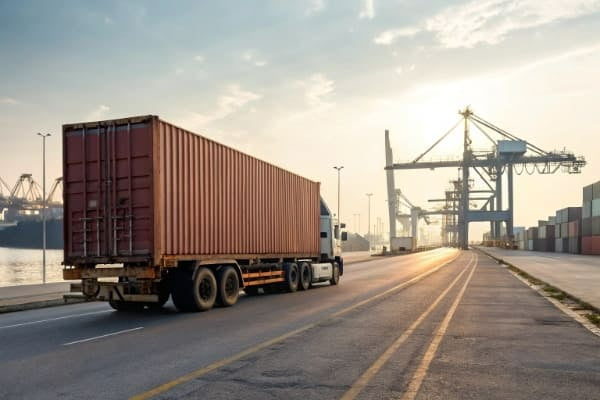
For most of our clients, especially small and medium-sized businesses, door-to-door (often under DDP Incoterms12) is the service we recommend. It offers complete peace of mind. When you choose port-to-port, you're responsible for arranging trucking from the Canadian port, hiring a customs broker, and paying all duties and taxes yourself. This can be a real challenge if you're not familiar with the process. With our door-to-door service14, we handle everything. The price we quote is the final price you pay to get the goods to your location. It simplifies budgeting and lets you focus on running your business, not on chasing down your shipment or dealing with unexpected customs issues.
Service Level Comparison
- Port-to-Port: You handle transportation to the origin port and from the destination port, plus customs.
- Door-to-Door: The freight forwarder2 manages the entire process from the supplier's warehouse to your final address.
- Port-to-Door: You get the goods to the origin port, and the forwarder handles it from there to your door.
- Door-to-Port: The forwarder picks up from the factory and delivers to the destination port, where you take over.
How to Choose a Reliable Freight Forwarder?
Tired of broken promises from unreliable forwarders? Choosing the wrong partner can lead to lost cargo, surprise fees, and communication blackouts, putting your entire business at risk.
To choose a reliable freight forwarder2, verify their licenses and experience on the China-Canada route. Check reviews, demand transparent quotes, and ensure they offer robust tracking and customer service. A great partner acts as an extension of your team, providing clear communication and support.
Finding the right partner is the most important step. A great forwarder is more than just a logistics provider; they are a strategic partner in your supply chain. We believe in building long-term relationships based on trust and transparency. You need someone who understands the specific challenges of shipping to Canada, from navigating customs regulations to understanding the local logistics network. They should be proactive, alerting you to potential issues before they become problems. I always tell my clients to look for a forwarder who is willing to answer all their questions and provides a single point of contact. This level of service is what separates a basic freight mover from a true supply chain partner.
Key Selection Criteria
Verify Credentials and Experience
First, make sure the forwarder is properly licensed for international shipping. Ask about their specific experience with the China-to-Canada lane. Have they shipped your type of product before? A forwarder familiar with Canadian import regulations can help you avoid compliance issues.
Check Reputation and Communication
Look for online reviews and ask for references from other Canadian importers. How responsive is their customer service? A reliable partner will provide prompt, clear answers and offer real-time tracking so you always know where your shipment is.
Compare Quotes and Services
Don't just look at the bottom-line price. Request detailed, itemized quotes from several forwarders. Ensure the quote includes all potential costs. Also, evaluate their insurance options. Proper cargo insurance is essential for managing risk.
Conclusion
Choosing the right freight forwarder is key to successful importing. Focus on a partner with proven experience, transparent pricing, and excellent communication to ensure your goods arrive from China safely.
Choosing the right shipping partner is crucial for avoiding delays and hidden fees in your logistics. ↩
Understanding the role of a freight forwarder can simplify your shipping process and ensure your goods arrive safely. ↩
Familiarizing yourself with Canadian customs can prevent costly delays and ensure smooth shipping. ↩
Transparent pricing helps you budget accurately and avoid unexpected shipping costs. ↩
Real-time tracking provides peace of mind by allowing you to monitor your shipment's progress. ↩
Comprehensive insurance protects your shipment from potential damages during transit. ↩
A logistics agent manages the shipping process, ensuring a smooth import experience. ↩
LCL shipping allows you to share container space, making it suitable for smaller shipments. ↩
Sea freight is more economical for larger shipments, making it a cost-effective choice. ↩
Air freight is the fastest shipping method, ideal for urgent deliveries. ↩
Customs brokerage ensures compliance with regulations, preventing delays at the border. ↩
Incoterms define responsibilities in shipping, crucial for avoiding misunderstandings. ↩
FCL shipping is ideal for large shipments, offering cost savings and faster transit. ↩
Door-to-door service simplifies logistics by managing the entire shipping process for you. ↩