
Struggling with unreliable shipping from China to Australia? Worried about hidden costs and customs delays? You need a partner who can make the process simple and predictable.
To choose the right freight forwarder1, verify they handle customs, offer both air and sea freight2, provide transparent all-inclusive quotes, and have a strong network in both China and Australia. Prioritize forwarders who can help you leverage the China-Australia Free Trade Agreement3 (ChAFTA).
Getting your products from a factory in China to your warehouse in Australia involves many steps. A good freight forwarder1 is your most important partner in this journey. But finding the right one can feel overwhelming. Let's break down exactly what you need to look for to ensure your shipping is smooth, cost-effective, and reliable.
What Does a Freight Forwarder Do for China–Australia Shipping?
Confused by what a freight forwarder1 actually does? It's more than just moving boxes. Misunderstanding their role can lead to missed steps, delays, and unexpected compliance issues.
A freight forwarder1 acts as your logistics agent4. They arrange the entire shipping process from China to Australia, including booking cargo space, managing documentation, handling customs clearance5, and coordinating final delivery. They are your single point of contact for the entire transit.
A great forwarder is like your in-house logistics department. I've seen firsthand how they simplify complex supply chains. Their core job is to get your goods from Point A (your supplier in China) to Point B (your door in Australia) efficiently. This involves much more than just transport. Their main tasks include booking transport with carriers, preparing all essential documents like the Bill of Lading6, and handling customs brokerage in both countries. A key service I always recommend is consolidation7. If you're buying from multiple suppliers, they can combine your orders into one shipment at a warehouse in China. This saves you a lot of money and administrative work. Here at Toncentlink, we integrate this service directly, so your production and shipping are managed by one team. This avoids communication gaps and ensures a seamless handover from the factory floor to the shipping container.
Air Freight vs Sea Freight: Which Should You Choose?
Can't decide between air and sea freight2? Choosing the wrong one can either blow your budget or make you miss a crucial deadline. This decision directly impacts your costs and timeline.
Choose air freight8 for small, high-value, or urgent shipments (under 2 CBM or 200 kg). It's faster but more expensive. Choose sea freight2 for larger, heavier, or less urgent cargo. It's much more cost-effective for bulk goods but takes significantly longer.
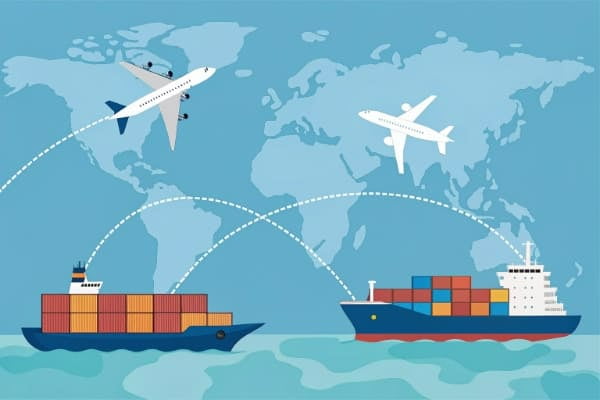
The choice between air and sea freight2 is a classic trade-off between speed and cost. I always advise clients to think about their specific needs for each order. It's not a one-size-fits-all answer. For example, if you need promotional products for an upcoming event, the speed of air freight8 is essential. But for a large stock order with a flexible delivery window, sea freight2 is the logical choice to maximize your profit margins. I often use a simple table to help clients decide.
| Feature | Air Freight | Sea Freight |
|---|---|---|
| Speed | Fast (5-10 days door-to-door) | Slow (30-50 days door-to-door) |
| Cost | High | Low |
| Best For | Urgent, high-value, small goods | Bulk, heavy, non-urgent goods |
| Volume | Ideal for shipments < 2 CBM | Ideal for shipments > 2 CBM |
Ultimately, your decision depends on balancing your budget, inventory needs, and delivery deadlines. A good partner will help you analyze this for every shipment.
How Much Does It Cost to Ship from China to Australia?
Fearing hidden fees9 in your shipping quotes? Vague pricing can destroy your profit margins. You need to understand every charge to budget accurately for your imports.
Shipping costs vary widely based on weight, volume, mode (air/sea), and Incoterms10. A 20ft container (FCL) might cost $1,500-$3,000, while LCL and air freight8 are priced per CBM or kg. Always request an all-inclusive quote covering freight, customs, duties, and local fees.

"How much does it cost?" is the first question everyone asks. The answer is always, "It depends." I've learned that transparency is key. A cheap initial quote often hides expensive charges later. A trustworthy forwarder provides a detailed breakdown of all potential costs so you are not surprised.
Key Cost Components
- Main Freight: This is the base cost for the sea or air transport from the port in China to the port in Australia.
- Origin Charges: This includes trucking from the factory, customs export paperwork, and port handling fees in China.
- Destination Charges: This covers port fees in Australia, customs clearance5, GST, import duty11, and other local handling.
- Last-Mile Delivery: This is the final trucking cost from the Australian port or airport to your warehouse or office.
When you get a quote, check if it includes all these elements. We always push for DDP (Delivered Duty Paid) quotes to give our clients a single, all-inclusive price.
How Long Does Shipping from China to Australia Take?
Are your delivery timelines constantly being missed? Unpredictable shipping durations can disrupt your business and disappoint your customers. You need realistic transit time12 estimates for better planning.
Port-to-port sea freight2 from China to Australia typically takes 12-25 days. Door-to-door can take 30-50 days. Air freight is much faster, with door-to-door delivery usually taking 5-10 days. These times do not include production lead times or potential customs delays.
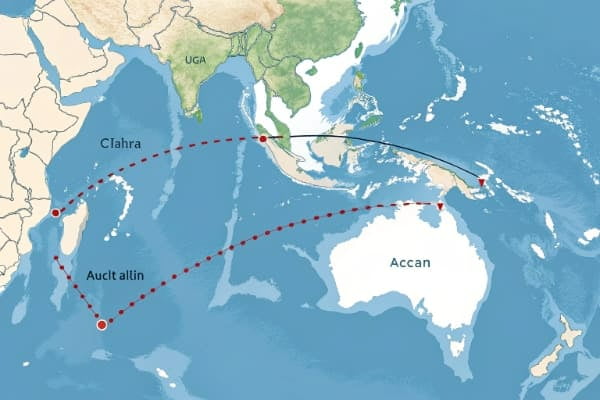
Managing client expectations on timing is crucial. I always break down the total shipping time into different stages, because "transit time12" is just one part of the puzzle. The door-to-door journey is what really matters for your schedule.
Sea Freight Timeline Breakdown
- Inland Transit & Port Handling (China): 3-9 days. This includes trucking to the port, consolidation7 if needed, and clearing export customs.
- Ocean Transit: 12-25 days. This depends on the specific ports in China and Australia. For example, Shenzhen to Sydney is faster than Ningbo to Perth.
- Customs & Delivery (Australia): 4-12 days. This includes unloading, import customs clearance5, and final truck delivery to your address.
Air freight shortens the main transit to just 1-5 days, making the total door-to-door time around 5-10 days. Remember, these are estimates. Delays can happen. A good forwarder will proactively communicate any issues.
What Documents Are Required for Importing into Australia?
Worried your shipment will get stuck in customs? Missing or incorrect paperwork is the number one cause of costly delays. You need to know exactly what's required.
The key documents for importing into Australia are the Commercial Invoice, Packing List, and Bill of Lading6 (for sea) or Air Waybill (for air). For certain goods, you may also need a Certificate of Origin13 (for ChAFTA benefits) and specific import permits.
I've seen shipments held for weeks over a simple paperwork mistake. It's a frustrating and expensive problem. Your freight forwarder1 should be an expert in this area and guide you through it, ensuring everything is correct before the shipment even leaves China.
The Essential Document Trio
- Commercial Invoice: This is the bill for your goods. It must detail the seller, buyer, product descriptions, quantities, and the value of the goods. Australian Border Force uses this to calculate the duty and GST you owe.
- Packing List: This document details the contents of your shipment, including the number of cartons, weights, and dimensions. It's used by customs to verify the cargo matches the invoice.
- Bill of Lading6 (B/L) or Air Waybill (AWB): This is the contract with your carrier. It acts as a receipt for your goods and is required to claim them upon arrival.
Your forwarder should coordinate with your supplier to prepare and check all these documents.
How Does ChAFTA Reduce Import Duty from China?
Paying too much in import duty11? You might be missing out on significant savings. The China-Australia Free Trade Agreement3 (ChAFTA) is designed to make importing cheaper.
ChAFTA eliminates or reduces import duties (tariffs) on most goods traded between China and Australia. To benefit, you must provide a valid Certificate of Origin13 (CoO) proving the goods were manufactured in China. Your forwarder can help verify and process this.
ChAFTA is a huge advantage for Australian businesses importing from China. I've helped clients save thousands of dollars by making sure they use it correctly. The key is a document called the Certificate of Origin13 (CoO).
How to Use ChAFTA
- Check Eligibility: First, confirm your products are eligible for reduced tariffs under ChAFTA. Most manufactured goods are.
- Obtain the CoO: Your supplier in China must apply for a CoO from an authorized body, like the China Council for the Promotion of International Trade (CCPIT). This document proves the goods meet the "rules of origin."
- Submit to Customs: Your freight forwarder1 submits the CoO along with your other import documents14 to the Australian Border Force.
- Receive Benefits: Customs then applies the reduced or zero tariff rate to your goods, lowering your import costs.
This is a simple step that directly boosts your profit margin. A good sourcing partner or forwarder will manage this process for you.
Door-to-Door vs Port-to-Port: What’s the Difference?
Confused by shipping terms like "port-to-port"? Choosing the wrong service can leave your goods stranded at the port with unexpected bills. You need a service that matches your needs.
Port-to-port service only covers transport between the origin and destination ports. You are responsible for everything else. Door-to-door service is all-inclusive, managing the entire process from the factory in China to your final address in Australia, including all customs and trucking.
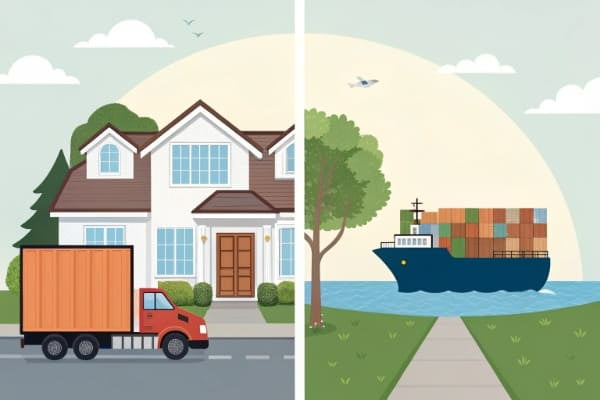
This is one of the most common points of confusion for new importers. I almost always recommend a door-to-door service15 for my clients, especially those who want a hassle-free experience without any surprises.
Comparing Service Types
- Port-to-Port (e.g., FOB, CIF): The initial quote looks cheaper. However, you are responsible for arranging and paying for local transport, customs clearance5, and port charges on both ends. This requires expertise and dealing with multiple agents, which can be stressful and costly if you're not experienced.
- Door-to-Door (e.g., DDP, DAP): The quote is higher but it's all-inclusive. Your forwarder handles everything from pickup at the factory to delivery at your doorstep. You get one bill and one point of contact.
For most businesses, the simplicity and cost certainty of a door-to-door service15 like DDP (Delivered Duty Paid) is the best option. It is the "set it and forget it" solution for international shipping.
When Should You Request a Freight Quote?
Getting quotes too late in the process? This can lead to rushed decisions, high prices, and shipping delays. Proper timing is key to securing the best rates and service.
Request a freight quote16 when you have finalized your product's specifications, packaging details, and estimated production completion date. This is typically 2-4 weeks before the goods are ready to ship. This gives the forwarder enough time to plan and book space.
I've seen clients wait until their goods are packed and ready, then panic to find a shipper. This is the worst time. You lose all your negotiating power and risk your cargo sitting at the factory while you scramble. The ideal time to engage a forwarder is when production is underway but not yet finished.
Information Needed for an Accurate Quote
- Origin & Destination: Full addresses for pickup in China and delivery in Australia.
- Cargo Details: A description of the goods, the total number of cartons, and the dimensions and weight of each carton. This is critical.
- Incoterms10: The shipping term agreed with your supplier (e.g., EXW or FOB). This tells the forwarder what they are responsible for.
- Ready Date: The estimated date your goods will be packed and ready for pickup.
Providing this information 2-4 weeks in advance allows your forwarder to secure the best rates and vessel/flight, preventing last-minute headaches.
Conclusion
Choosing the right freight forwarder1 is vital for success. Find a partner who offers transparency, handles everything from customs to delivery, and simplifies your entire China-to-Australia supply chain.
Understanding the role of a freight forwarder can streamline your shipping process and reduce costs. ↩
Explore the cost-effectiveness of sea freight for larger shipments and how it can maximize your profits. ↩
Understanding ChAFTA can help you save on import duties and enhance your profit margins. ↩
Understanding the role of a logistics agent can enhance your shipping efficiency. ↩
Learn how customs clearance affects your shipping timeline and costs, ensuring smooth delivery. ↩
Discover the importance of a Bill of Lading in ensuring your goods are delivered correctly. ↩
Learn how consolidation can reduce shipping costs when ordering from multiple suppliers. ↩
Discover why air freight might be the best option for urgent shipments and how it can save you time. ↩
Discover tips to ensure transparency in shipping quotes and avoid unexpected costs. ↩
Understanding Incoterms is crucial for clarifying responsibilities in shipping contracts. ↩
Find out strategies to minimize import duties and save money on your shipments. ↩
Get realistic expectations on shipping durations to better plan your inventory. ↩
Learn how a Certificate of Origin can help you reduce import duties under ChAFTA. ↩
Ensure your shipments clear customs smoothly by knowing the essential import documents. ↩
Explore the benefits of door-to-door service for a hassle-free shipping experience. ↩
Timing your freight quote request can lead to better rates and service for your shipments. ↩