
Choosing a hybrid inverter1 feels complicated, and a wrong choice is expensive. This guide simplifies the process, ensuring you get the right "brain" for your solar power system2.
The best hybrid solar inverter is one that is fully compatible with your solar panels and battery, is powerful enough for your home's needs, has high conversion efficiency3, and comes with strong safety certifications4 and a comprehensive warranty5. It should match your specific energy goals6, whether for savings or backup power7.
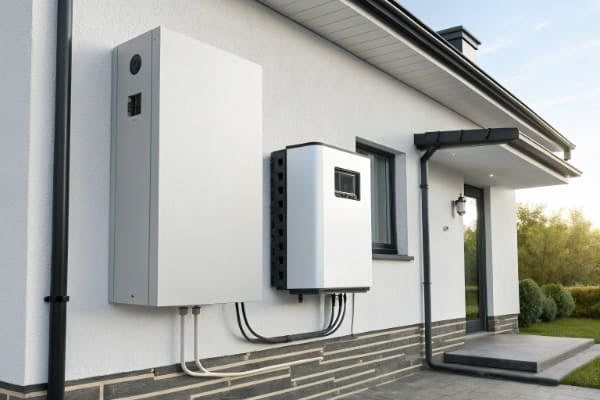
Making the right choice in a hybrid inverter1 is probably the most critical decision for your entire solar energy system. It’s the device that ties everything together—your panels, your battery, your home, and the grid. A great inverter will make your system efficient and reliable for decades, while a poor one will cause endless headaches. So, let’s break down exactly what you need to look for, step by step, so you can choose with confidence.
What Is a Hybrid Solar Inverter and How Does It Work?
Have you heard the term "hybrid inverter1" but aren't sure what it does? It’s a key piece of modern solar technology, and I'll explain it in simple terms.
A hybrid solar inverter is a single device that combines a solar inverter and a battery inverter. It converts DC electricity from solar panels to AC power for your home, charges a battery with excess solar power, and can also pull power from the battery or the grid when needed.
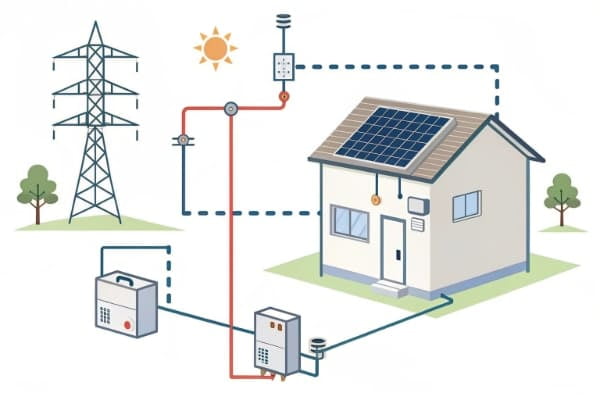
Think of a hybrid inverter1 as the traffic controller for your home's energy. It sits at the center of your solar setup and intelligently directs power where it needs to go. During the day, sunlight hits your solar panels, which generate Direct Current (DC) electricity. The hybrid inverter1 takes this DC power and converts it into Alternating Current (AC) electricity that your home appliances can use. If you’re generating more power than you’re using, the inverter doesn't let it go to waste. Instead, it directs the extra DC power to charge your home battery. Then, at night or on a cloudy day, when your panels aren’t producing, the inverter pulls DC power from the battery, converts it to AC, and powers your home. This makes it a much smarter and more integrated solution than older systems that required separate inverters for the solar panels and the battery.
Key Factors to Consider When Selecting a Hybrid Inverter?
Feeling overwhelmed by technical spec sheets? I've seen many people choose an inverter based on price alone, which is often a very expensive mistake in the long run.
Key factors are power capacity8 (continuous and peak), conversion efficiency3 (aim for ≥95%), battery compatibility9, monitoring features10 via an app, a long warranty5 (10+ years), and recognized safety certifications4 like UL or IEC. These ensure your system performs well and lasts for decades.
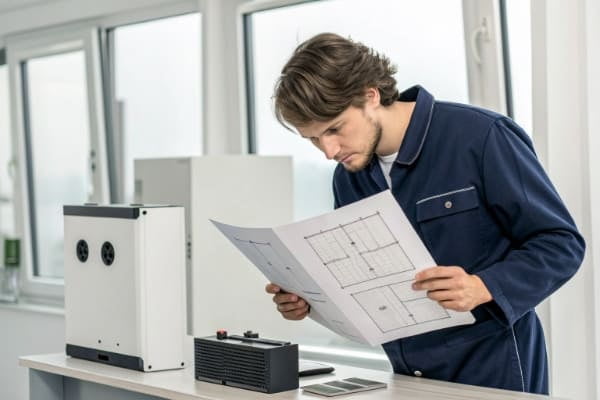
Let's dive deeper into these factors because they determine the real-world performance and value of your investment. First is Power Capacity. This has two numbers: continuous and peak. Continuous power is what the inverter can supply all day long, and it must cover your home's average usage. Peak power is a short burst it can provide to start up demanding appliances like an air conditioner or a well pump. Next, Conversion Efficiency is crucial. An inverter with 96% efficiency turns more of your free solar energy into usable electricity than one with 93% efficiency. Over 20 years, that adds up to significant savings. Also, look at the Warranty and Manufacturer Reputation. A 10-year or 12-year warranty5 shows the manufacturer is confident in their product. Finally, Monitoring & Control through a smartphone app is no longer a luxury. It allows you to see exactly how your system is performing and helps you optimize your energy use.
How to Match a Hybrid Inverter to Your Solar Panels and Battery Storage?
Mismatching components is one of the most common and costly solar installation failures I see. An incompatible inverter can underperform, damage your equipment, or simply not work at all.
You must ensure the inverter's voltage and current ratings are within the operating range of your solar panel array. For batteries, check the inverter’s official compatibility list to confirm it supports your battery's voltage, chemistry (like LiFePO4), and communicates with its BMS.
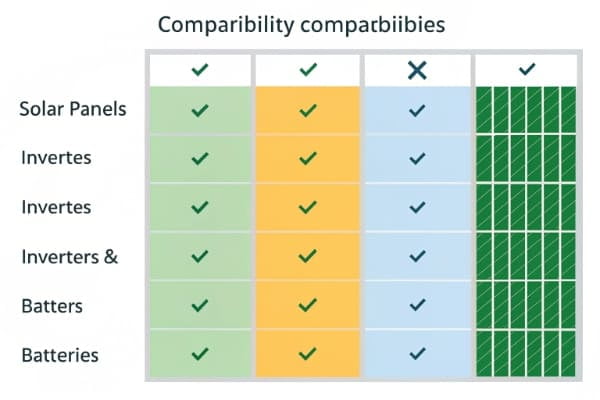
Getting the matching right is a technical but essential step. Let's break it down into two parts: panels and batteries. For your solar panels, you need to look at the inverter's MPPT (Maximum Power Point Tracking) voltage range. The total voltage of your solar panels connected in a string must fall within this range for the inverter to work efficiently. For your battery, compatibility is even more critical. The inverter must be designed for your battery's nominal voltage, which is typically 48V for modern home systems. More importantly, the inverter needs to communicate directly with the battery's own Brain, the Battery Management System (BMS). This "closed-loop" communication is vital for safety and performance, as it allows the inverter to charge and discharge the battery precisely according to the manufacturer's recommendations. Always ask for the inverter's official battery compatibility9 list before you buy.
| Component Match | Key Specification to Check | Why It's Important |
|---|---|---|
| Solar Panels | Inverter MPPT Voltage Range | If mismatched, the inverter won't efficiently convert panel power. |
| Solar Panels | Inverter Max Input Current | Exceeding this can damage the inverter. |
| Battery | Inverter Supported Voltage (e.g., 48V) | A voltage mismatch will prevent the system from working at all. |
| Battery | BMS Communication Compatibility | Ensures safe charging/discharging and maximizes battery lifespan. |
How Hybrid Inverters Help Save on Energy Bills and Provide Backup Power?
Are you still paying high electricity bills even with solar panels? Or do you worry about what happens to your family during a power outage? A hybrid inverter1 is the solution.
Hybrid inverters save you money by storing free, excess solar energy in a battery for you to use at night, drastically reducing what you buy from the grid. During a blackout, they instantly switch to battery power, keeping your essential appliances running without interruption.

The saving mechanism is simple but powerful. It's called solar self-consumption11. During the day, your home runs on solar power. Any extra energy produced charges your battery instead of being sold back to the grid for a low price. Then, in the evening when electricity rates are often highest, your home automatically switches to run on the stored battery power. You are essentially creating your own personal power station, which shields you from rising utility costs. The second major benefit is uninterrupted backup power7. When a grid outage occurs, a good hybrid inverter1 has a transfer time of less than 20 milliseconds. That’s so fast that your lights won't even flicker. The inverter creates a mini-grid within your home, pulling power from the battery to run your lights, refrigerator, internet, and other critical loads. This provides not just convenience, but true energy security and peace of mind.
Common Mistakes to Avoid When Choosing a Hybrid Solar Inverter?
I've seen people try to save a few hundred dollars on an inverter, only to face much bigger costs from poor performance, reliability issues, or even safety hazards down the line.
The biggest mistakes are undersizing the inverter for your needs, ignoring battery compatibility9, focusing only on the upfront price instead of efficiency, and overlooking the importance of warranty5, technical support12, and proper safety certifications4. Also, don't forget where it will be installed.
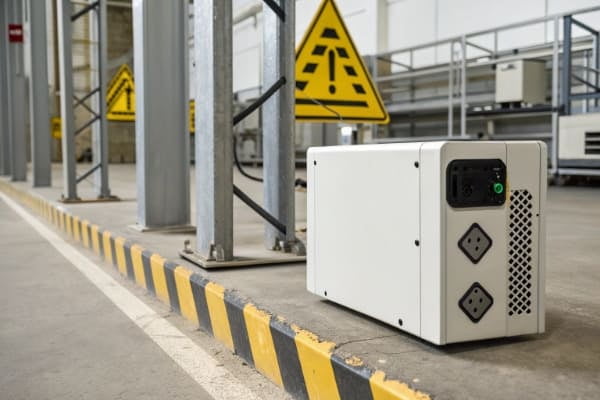
Let's make sure you don't fall into these common traps. First, don't undersize the inverter. Your energy needs will likely grow, especially if you plan to get an electric vehicle13. Choose an inverter with some headroom. Second, don't assume all batteries work with all inverters. I can't stress this enough: check the official compatibility list. An incompatible battery and inverter pairing is a fire risk. Third, don't just look at the price tag. A cheaper, less efficient inverter will waste thousands of dollars worth of energy over its lifetime. Calculate the total cost of ownership14. Fourth, don't forget the installation environment15. If the inverter is going in your garage or utility room, a model with a noisy fan might be fine. But if it's near a living space, you'll want a quieter model with passive cooling. Also, check the IP rating to ensure it's protected from dust and moisture if installed outside.
Conclusion
Choosing the right hybrid inverter1 is about matching your needs for power, efficiency, and reliability. Follow these steps to invest in a system that delivers savings and security for years.
Understanding hybrid inverters is crucial for optimizing your solar energy system. ↩
Explore how solar power systems function to maximize your energy savings. ↩
Learn about conversion efficiency to ensure you choose an effective inverter. ↩
Safety certifications ensure your inverter meets industry standards for reliability. ↩
A strong warranty indicates the manufacturer's confidence in their product. ↩
Setting clear energy goals helps you choose the right inverter for your needs. ↩
Learn how hybrid inverters ensure your home remains powered during outages. ↩
Understanding power capacity helps you select an inverter that meets your energy needs. ↩
Ensuring battery compatibility is vital for the performance of your solar system. ↩
Monitoring features can enhance your energy management and savings. ↩
Understanding solar self-consumption can help you save on energy bills. ↩
Reliable technical support can save you time and money in the long run. ↩
Learn how hybrid inverters can accommodate future energy needs like EV charging. ↩
Calculating total cost of ownership helps you make a financially sound decision. ↩
The installation environment can impact the efficiency and lifespan of your inverter. ↩