

Shipping from China to Qatar feels complicated. A bad choice can lead to lost money and major delays. But finding the right partner makes the entire process smooth and predictable.
To choose a reliable freight forwarder1, you must verify their licenses and specific experience on the China-Qatar route2. Check customer reviews3, confirm transparent pricing4, and ensure they have strong local partners for easy customs clearance5.

Finding a trustworthy logistics partner6 is one of the most important decisions you'll make when importing. I've seen firsthand how the right forwarder can save a business time and money, while the wrong one creates nightmares. This is not just about moving boxes; it's about finding a partner who protects your investment from the factory floor in China to your warehouse in Qatar. Let's break down exactly what you need to look for to make the right choice.
What Makes a Freight Forwarder Reliable for China–Qatar Shipping?
You know that not all freight forwarder1s are the same. Choosing a weak link can lead to damaged goods, missed deadlines, and endless frustration. But true reliability is built on a few key qualities.
A reliable forwarder for the China-Qatar route2 has valid licenses, proven experience in the Middle East, and strong carrier relationships. They also offer transparent pricing4, responsive communication, and good tracking technology7.

When I talk about reliability, I'm talking about a foundation of trust. You need to know that your forwarder is not only capable but also legitimate and experienced. A reliable partner acts as your eyes and ears on the ground, navigating the complexities of international shipping so you don't have to. The best forwarders I've worked with share a common set of professional standards that set them apart from the rest. They don't just offer a service; they provide peace of mind.
Core Pillars of Reliability
A truly reliable forwarder is built on more than just a good price. They have a structure that ensures your cargo is safe, compliant, and on time. First, always verify their credentials. In China, this means checking for a business license and NVOCC (Non-Vessel Operating Common Carrier) registration. This proves they are a legitimate entity authorized to handle international freight. Second, their experience is critical. You don't want a generalist; you need a specialist with a deep understanding of the China to Middle East shipping lanes. They will know the best carriers, the common pitfalls, and the specific requirements for entry into Qatar. Finally, their network is their strength. A forwarder with strong relationships with sea and air carriers gets better rates and priority space, especially during peak seasons. They also need a competent agent in Qatar to handle customs and final delivery smoothly.
| Feature | Reliable Forwarder | Unreliable Forwarder |
|---|---|---|
| Licensing | Fully licensed and bonded (e.g., NVOCC) | Unregistered or uses others' licenses |
| Experience | Proven track record on China-Qatar route2s | Generalist with little Middle East experience |
| Network | Strong ties with multiple carriers & local agents | Limited carrier options, weak local partner |
| Communication | Proactive updates and fast responses | Hard to reach, vague answers |
What Should a Freight Forwarder Know About Shipping to Qatar?
Qatar has very specific and strict import rules8. If your forwarder is not an expert on them, your shipment can get stuck in customs for weeks, costing you time and money.
Your freight forwarder1 must understand Qatar's customs regulations9, including all required documents like the Certificate of Origin10. They also need to know about prohibited items and port procedures at Hamad Port.
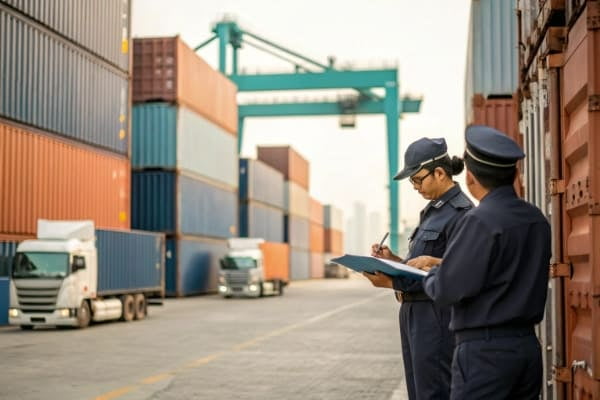
I once had a client whose shipment was held up because their previous forwarder failed to get the right conformity certificate for an electronic product. It was a simple mistake, but it caused a two-week delay and soured their relationship with their customer. This is why deep, specific knowledge is not a "nice-to-have"; it's essential. A good forwarder anticipates these requirements and prepares everything correctly before the shipment even leaves China. This proactive approach is what separates the professionals from the amateurs.
Qatar-Specific Shipping Knowledge
Shipping to Qatar is not like shipping anywhere else. A competent forwarder must be an expert in its unique documentation and regulatory landscape. They need to manage the paperwork flawlessly to avoid any issues at customs in Doha. For example, some products require a Certificate of Conformity11 (CoC) to prove they meet Qatari standards. An experienced forwarder will advise you on this during the quoting stage, not after the goods are stuck at the port. They should also be well-versed in handling customs declarations12 accurately to ensure the correct duties and taxes are paid. This knowledge prevents delays and unexpected bills. Below are some of the key documents your forwarder must be able to manage perfectly.
| Document | Purpose |
|---|---|
| Commercial Invoice | Details the transaction, value, and goods for customs valuation. |
| Packing List | Lists all items in the shipment, including weights and dimensions. |
| Bill of Lading / Air Waybill | The contract between the shipper and the carrier; acts as a receipt. |
| Certificate of Origin10 | Certifies that the goods were manufactured in China. Required by Qatar customs. |
| Certificate of Conformity11 | Required for certain regulated products to prove they meet Qatari standards. |
What Questions Should You Ask Before Choosing a Freight Forwarder?
You need to vet any potential freight forwarder1 carefully. But if you don't ask the right questions, you won't uncover their true capabilities or potential weaknesses. Here are the questions that get you the answers you need.
Ask about their direct experience with the China-Qatar lane and request client references. Get a detailed, all-inclusive quote and inquire about their tracking system, insurance options, and process for handling delays.

Think of this as a job interview. You are hiring a critical partner for your business. I always tell my clients to be direct and ask for proof. Don't just accept "yes, we can do that." Ask "how do you do that?" and "can you show me an example?" A confident, experienced forwarder will welcome these questions and have clear, direct answers. Vague responses or an unwillingness to provide details are major red flags. Your goal is to move past the sales pitch and understand how they actually operate.
Your Vetting Checklist
To make sure you're choosing the right partner, you need to dig deep with specific questions. A good forwarder will have no problem answering these. Their responses will tell you everything you need to know about their experience, transparency, and processes.
1. Questions about Experience and Specialization
- How many shipments do you manage from China to Qatar each month?
- Can you provide a case study or reference from a client who ships similar goods to Qatar?
- Who is your partner agent in Qatar, and how long have you worked with them?
2. Questions about Cost and Transparency
- Is this quote all-inclusive, or are there other potential charges (e.g., terminal handling, customs exam fees)?
- What are your payment terms?
- Can you provide a detailed breakdown of all the costs?
3. Questions about Process and Communication
- What is your process if a shipment is selected for customs inspection in Qatar?
- How will you keep me updated on my shipment's status? Do you have an online tracking portal?
- Who will be my single point of contact?
4. Questions about Insurance and Risk
- What kind of cargo insurance13 do you offer, and what does it cover?
- Are you a bonded freight forwarder1?
China-Based vs Qatar-Based Freight Forwarder: Which Is Better?
You have to decide where your partner should be located: China or Qatar? This choice directly impacts cost, communication, and your control over the most critical part of the shipping journey.
A China-based forwarder is better for managing sourcing, factory pickups, consolidation, and export procedures. They give you control at the start of the supply chain, which is where most problems can be prevented.
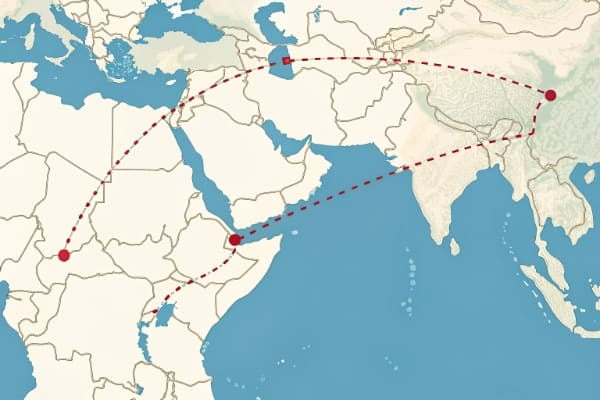
I'm based in China, so I might be biased, but I've seen the benefits firsthand. When your forwarder is here, they can consolidate goods from multiple suppliers, inspect packaging, and verify documents before anything leaves the country. This is proactive problem-solving. A forwarder in Qatar can only react to problems when the container arrives. By then, it's often too late to fix issues without causing significant delays and extra costs. Having a team on the ground in China means you have an extension of your own company managing the process from the very beginning.
Comparing Your Options
The best choice often comes down to where you need the most support. For most importers sourcing products14 from China, the most complex and risk-filled stage is at the origin. This includes coordinating with factories, consolidating cargo, and managing export customs. A China-based forwarder excels in this area. They are in the same time zone as your suppliers and can communicate in the local language, overcoming cultural and communication barriers. However, the ideal solution is a China-based forwarder that also has a strong, reliable partner agent in Qatar. This hybrid model gives you the best of both worlds: expert control at the origin and seamless clearance and delivery at the destination.
| Aspect | China-Based Forwarder | Qatar-Based Forwarder |
|---|---|---|
| Factory Coordination | Excellent. Can easily contact and visit suppliers. | Difficult. Relies on email and deals with time zone differences. |
| Consolidation | Ideal. Can receive goods from multiple suppliers at their warehouse. | Not possible. Can only handle goods once they arrive in Qatar. |
| Export Process | Full control over documentation and customs clearance5 in China. | No control. Relies on the supplier or another agent. |
| Import Process | Manages this through a local partner agent. | Excellent. Direct control over customs and delivery in Qatar. |
| Problem Solving | Proactive. Can fix issues before the shipment leaves China. | Reactive. Can only fix issues upon arrival. |
Is Door-to-Door Shipping the Best Option for Qatar Imports?
Managing logistics involves many different steps. Trying to handle each one with a different company is a recipe for headaches, miscommunication, and increased risk. Door-to-door shipping solves this by simplifying the entire process.
Yes, door-to-door (DDP) shipping is usually the best choice for importing to Qatar. It streamlines everything by having one forwarder manage the entire journey, from the factory in China to your final address.
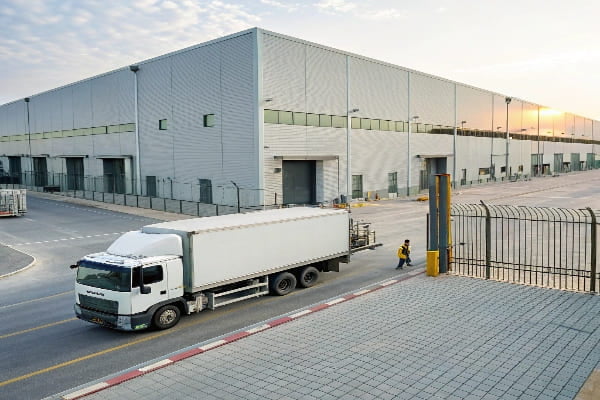
I almost always recommend door-to-door service to my clients, especially if they are new to importing or simply want to focus on their business instead of logistics. With a door-to-door shipment, you get one quote and one point of contact. Your forwarder handles pickup, trucking, export customs, ocean or air freight, import customs, duties, and final delivery. This eliminates the risk of surprise fees and the stress of coordinating multiple parties. It is the most hands-off, predictable, and secure way to get your goods from China to Qatar.
The Simplicity of a Single Solution
Door-to-door shipping, often under the Incoterm DDP (Delivered Duty Paid), is the most comprehensive service a freight forwarder1 can offer. It's an all-in-one solution designed for simplicity and peace of mind. Under DDP, the seller (or their forwarder) is responsible for everything until the goods are delivered to the buyer's doorstep. This includes all costs and risks associated with the entire journey. Contrast this with other terms like FOB (Free On Board), where the buyer becomes responsible for the goods as soon as they are loaded onto the ship in China. For most businesses, the clarity and predictability of DDP are worth it. It turns a complex, multi-stage process into a single, manageable task.
| Responsibility | DDP (Delivered Duty Paid) | FOB (Free On Board) |
|---|---|---|
| Factory Pickup | Forwarder | Buyer (or their forwarder) |
| Export Customs | Forwarder | Buyer (or their forwarder) |
| Main Freight | Forwarder | Buyer (or their forwarder) |
| Import Customs | Forwarder | Buyer (or their forwarder) |
| Duties & Taxes | Forwarder | Buyer (or their forwarder) |
| Final Delivery | Forwarder | Buyer (or their forwarder) |
How Much Does It Cost to Ship from China to Qatar?
You obviously need to budget for your shipping costs15. But prices can change quickly, and some forwarders are notorious for adding hidden fees. Understanding what drives the cost helps you get an accurate and fair quote.
The cost to ship from China to Qatar depends on the shipping mode (air vs. sea), your cargo's weight and volume, the Incoterms used, and current market rates. Air freight is fast and expensive; sea freight is slower and cheaper.

When clients ask me for a price, I always start by asking for the details of their shipment. There is no "one-size-fits-all" cost. A small, lightweight box sent by air will have a completely different cost profile than a full container sent by sea. A reliable forwarder will always ask for your cargo's dimensions, weight, and your desired timeline before giving you a quote. Be wary of any company that gives you an instant price without asking these questions. I also make it a point to provide a fully itemized quote so my clients know exactly what they are paying for. Transparency is key to building trust.
Breaking Down Shipping Costs
To get an accurate budget, you need to understand the different elements that make up a total shipping cost. A transparent freight forwarder will break these down for you in their quote. The main factors are the mode of transport and the size of your shipment. Air freight is priced based on chargeable weight (a comparison of actual weight and volumetric weight), making it best for small, high-value, or urgent shipments. Sea freight is usually priced per cubic meter (for LCL, or Less than Container Load) or per container (for FCL, or Full Container Load), making it much more economical for larger, heavier goods. Beyond the base freight rate, your quote will also include other charges.
Here are the typical components you should see in a detailed quote:
- Freight Cost: The base charge for sea or air transport.
- Origin Charges: Fees for pickup, trucking, and handling at the port/airport in China.
- Export Customs Fees: The cost to clear the goods for export from China.
- Destination Charges: Fees for handling at the port/airport in Qatar.
- Import Customs Fees: The cost for a customs broker to clear your goods in Qatar.
- Duties & Taxes: Import tariffs and VAT levied by the Qatari government.
- Final Delivery: The cost to truck the goods from the port to your final address.
Always ask for a quote that includes all of these elements to avoid surprises.
Conclusion
Choosing a reliable freight forwarder for Qatar means verifying their experience, asking tough questions, and finding a partner who can manage the entire process from China to your door.
Understanding the qualities of a reliable freight forwarder can save you time and money in shipping. ↩
Explore the unique challenges of the China-Qatar route to better prepare for your shipping needs. ↩
Customer reviews provide insights into the reliability and service quality of freight forwarders. ↩
Transparent pricing helps avoid hidden fees and builds trust with your freight forwarder. ↩
Understanding customs clearance in Qatar is crucial for smooth shipping operations. ↩
Choosing the right logistics partner can significantly impact your shipping efficiency. ↩
Effective tracking technology enhances visibility and communication during shipping. ↩
Knowing the import rules is essential for compliance and smooth customs clearance. ↩
Familiarizing yourself with customs regulations can prevent costly delays. ↩
A Certificate of Origin is essential for customs clearance and compliance. ↩
Learn about the Certificate of Conformity to ensure your products meet Qatari standards. ↩
Accurate customs declarations are crucial for ensuring compliance and avoiding fines. ↩
Understanding cargo insurance options can protect your investment during transit. ↩
Effective sourcing strategies can enhance your supply chain efficiency. ↩
Understanding the factors that influence shipping costs helps in budgeting accurately. ↩