
Are you worried about your carbon footprint1? Fossil fuels are damaging our planet, but solar energy2 offers a real, powerful solution to make a significant and positive change.
Solar energy dramatically reduces environmental impact3 by displacing fossil fuels4. This cuts CO2 emissions, eliminates air pollutants5 like smog and acid rain6, and conserves massive amounts of water. It provides clean, renewable power7 with a very small lifecycle footprint8 compared to traditional energy sources.

The benefits of solar energy2 are clear, but the scale of its positive impact can be surprising. When you look at the actual numbers, you see just how much good it does for our air, water, and climate. Let's break down the specific ways solar power helps protect our planet.
How Much CO₂ Does Solar Energy Save Each Year?
Do you want to know the real carbon savings from solar? Vague claims about being "green" are not enough. Solar's CO2 reduction is massive and you can measure it.
Annually, a single acre of solar panels9 can save between 175 and 198 metric tons of CO2 by replacing natural gas10. This is incredibly efficient—it is 208 to 236 times more effective per acre than planting trees for the purpose of capturing carbon.
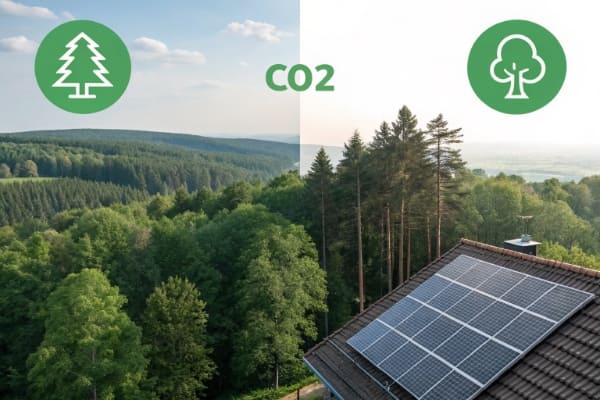
When I first explain this to clients, they are often shocked. We all love trees, but for fighting climate change, solar panels9 are a powerhouse. The data shows that while trees are essential, solar technology provides a much faster and more direct way to cut emissions from the source. A study found that increasing U.S. solar generation by just 15% would cut annual CO2 emissions by 8.54 million metric tons. The entire lifecycle of solar power, from manufacturing to decommissioning, is also much cleaner. Its total greenhouse gas emissions are 10 to 23 times lower than those from coal or natural gas10 plants. This means that for every unit of energy produced, solar is overwhelmingly the cleaner choice.
| Energy Source | Lifecycle CO₂ Emissions (grams per kWh) |
|---|---|
| Coal | 820 - 1050 |
| Natural Gas | 410 - 650 |
| Solar PV | 20 - 80 |
How Does Solar Reduce Air Pollution Levels?
Are you concerned about the quality of the air you breathe? Fossil fuel plants release harmful pollutants that cause serious health and environmental problems. Solar power generates electricity cleanly.
Solar energy reduces air pollution because it generates electricity without any burning. This completely stops the emission of sulfur dioxide (SO2) and nitrogen oxides (NOx). These chemicals cause acid rain6 and smog, so eliminating them leads to healthier air and communities.

I once worked on a project in a city with noticeable smog. It was a constant reminder of why this work matters. The pollutants from traditional power plants don't just warm the planet; they directly harm our health. Sulfur dioxide and nitrogen oxides contribute to respiratory illnesses like asthma and create acid rain6, which damages forests and lakes. Solar panels produce zero of these harmful gases during operation. When a business or home installs solar, it immediately stops contributing to that local pollution. It's a direct improvement for the neighborhood. This not only helps the environment but also strengthens a company’s reputation as a responsible member of the community. It’s a win for public health11 and a win for the planet.
How Much Water Can Solar Energy Save?
Do you worry about the growing water shortages12? Traditional power plants use billions of gallons of water to operate. Solar panels use almost no water to make electricity.
Solar energy saves a huge amount of water. Unlike thermal power plants that need millions of gallons daily for cooling, solar PV technology requires no water to generate power. A single rooftop solar system can cut a household's water footprint by 210% to 1600%.

Many people don't realize that energy and water are closely linked. Power plants that burn coal, natural gas10, or use nuclear fission all work by boiling water to create steam, which turns turbines. This process requires a massive amount of water for cooling. I explain it to my clients like this: a traditional power plant is like a giant engine that needs a constant flow of water to keep from overheating. Solar panels, on the other hand, convert sunlight directly into electricity without any moving parts or heat engines. They don't need a single drop of water to run. For our customers in dry places like Australia or the American Southwest, this is a critical benefit. They are not just reducing their carbon footprint1; they are helping to preserve their region's most precious resource.
| Energy Source | Water Consumption (Gallons per MWh) |
|---|---|
| Coal | 500 - 600 |
| Natural Gas | 190 - 200 |
| Nuclear | 600 - 700 |
| Solar PV | ~0 |
What Is the Lifecycle Impact of Solar Panels?
Do you hear claims that making solar panels9 is bad for the environment? It can be confusing when you hear different stories. The truth is that solar's total impact is very low.
The lifecycle impact of solar panels9, which includes manufacturing and disposal, is very small. Their total greenhouse gas emissions are 10 to 23 times lower than coal or natural gas10. The energy needed to make a panel is paid back within just a few years of clean operation.
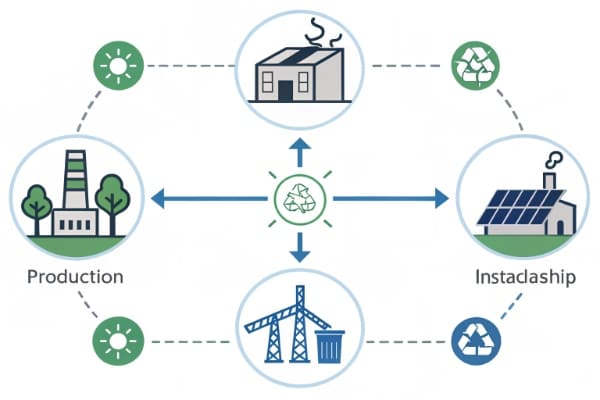
I get asked about this all the time. It is true that it takes energy and resources to make a solar panel. But we have to compare it to the alternative. The real question is: what is the impact of a solar panel over its 30-year life versus the impact of burning fossil fuels4 for 30 years to get the same amount of power? The comparison isn't even close. A solar panel's environmental cost is paid upfront, and then it produces clean energy for decades. A fossil fuel plant has an environmental cost every single second it operates. Furthermore, the solar industry is working hard on recycling. Over 90% of the materials in a panel, like glass and aluminum, can be recovered and reused.
How Fast Can Solar Offset Its Carbon Footprint?
Do you wonder how long it takes for a solar panel to become "carbon neutral13"? It seems strange that a green product starts with a carbon debt. The good news is that it pays back fast.
A solar panel typically offsets its manufacturing carbon footprint1 in just one to four years. The exact time depends on the technology and location. After that short period, it generates decades of completely carbon-free electricity, creating a huge net-positive impact.
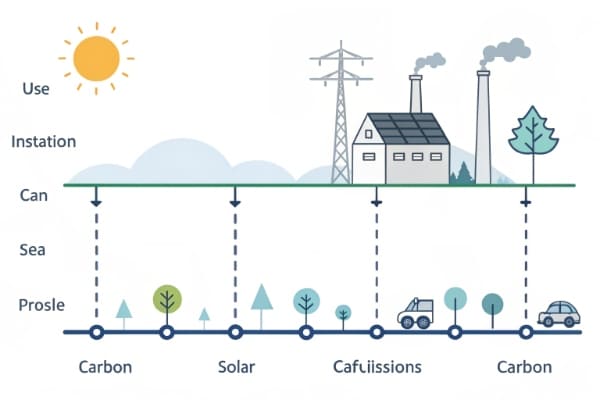
The time it takes for a panel to pay back its "carbon debt" is called the carbon payback period. This period is shorter in sunny places and a bit longer in cloudier regions. For example, a panel in Arizona might pay back its carbon footprint1 in under two years, while one in Germany might take three years. I worked with a client in California, and we calculated his system's payback time was just 18 months. For the next 28 years, his roof will be a pure source of clean energy, actively removing emissions from the grid. This is an incredible return on investment for the planet. A small, one-time carbon cost for 30 years of clean power is an unbeatable deal in our fight against climate change.
What Do Studies Say About Solar Energy?
Do you need solid proof to back up these claims? Stories are helpful, but scientific data provides the real evidence. Many studies confirm the huge environmental benefits of solar.
Studies consistently show solar energy2's powerful environmental advantages. Research confirms its lifecycle emissions are far lower than fossil fuels4, it drastically cuts air and water pollution, and it has one of the fastest energy payback time14s of any power source available today.

When we advise our clients at Toncentlink, we rely on data from decades of research from institutions all over the world. The scientific consensus is clear: shifting to solar is one of the most effective actions we can take to protect the environment. The numbers tell a powerful and consistent story. Studies confirm that solar panels9 save hundreds of tons of CO2 per acre each year. They show that solar power is a key tool for cleaning our air by eliminating SO2 and NOx. They prove that solar technology saves billions of gallons of water. The research leaves no doubt. Solar energy is not just a good idea; it is a proven, effective, and essential solution for a sustainable future15.
Conclusion
Solar energy is a powerful tool to fight climate change. It drastically cuts carbon emissions, cleans our air and water, and has a minimal lifecycle impact, making it a clear choice.
Understanding your carbon footprint is crucial for making informed decisions about reducing your environmental impact. ↩
Discover the numerous environmental benefits of solar energy and why it's a sustainable choice for the future. ↩
Explore the positive environmental impact of solar energy compared to traditional energy sources. ↩
Explore the detrimental effects of fossil fuels on our planet and why transitioning to renewable energy is essential. ↩
Understanding air pollutants helps highlight the importance of clean energy solutions like solar power. ↩
Understanding acid rain's causes and effects can emphasize the need for cleaner energy sources. ↩
Explore the advantages of renewable power sources and their role in creating a sustainable future. ↩
Understanding lifecycle footprints can help you make better choices about energy consumption and sustainability. ↩
Discover how solar panels function and the significant benefits they offer for the environment. ↩
Learn about the environmental consequences of natural gas and why alternatives like solar are necessary. ↩
Understanding the link between air quality and public health can highlight the importance of clean energy solutions. ↩
Learn how traditional energy production methods exacerbate water shortages and the benefits of solar energy. ↩
Understanding carbon neutrality is essential for making informed decisions about energy use and sustainability. ↩
Learn about the energy payback time for solar panels and why it's a crucial factor in their sustainability. ↩
Explore pathways to a sustainable future through the adoption of renewable energy sources like solar. ↩