
Budgeting for China-to-Qatar shipping1 is tricky with fluctuating rates. Hidden fees can hurt your profits. Here are the real 2025 costs to help you plan with confidence.
In 2025, sea freight2 from China to Qatar costs approximately $1,500–$3,800 per container, while air freight3 is around $4–$7 per kilogram. The final price depends on your shipping method4, cargo volume, and the time of year, making a detailed quote essential for accurate budgeting.
Getting a quote is the easy part. The real challenge is understanding what influences that price. To truly optimize your budget, you need to know the details behind sea, air, and express shipping. As a sourcing partner, I help clients navigate these choices every day. Let’s dive into the specifics to help you make the best choice for your business.
What Are the Current Shipping Costs from China to Qatar by Sea, Air, and Express?
Choosing between sea and air feels like a gamble. Pick the wrong method, and you either overpay for speed you don't need or miss critical deadlines. Let's look at the numbers.
For 2025, sea freight2 costs $1,500–$3,800 for a full container (FCL) or $80–$150 per cubic meter for smaller loads (LCL). Air freight is about $4–$7 per kilogram. Express couriers are the most expensive but offer the fastest door-to-door service.
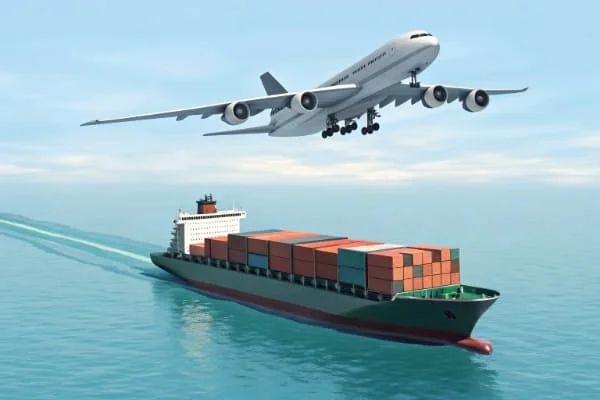
When I help clients ship to Qatar, the first question is always about cost versus speed. The best choice depends entirely on your cargo and your deadline. Here’s a simple breakdown I use to explain the options.
Sea Freight: FCL vs. LCL
Sea freight is the most common and cost-effective method for bulk goods.
- Full Container Load (FCL)5: You rent an entire 20ft or 40ft container. This is the cheapest option per unit if you have enough goods to fill it (usually over 15 cubic meters). In 2025, expect to pay between $1,500 and $3,800 per container.
- Less than Container Load (LCL)6: You share container space with other importers. It's ideal for smaller shipments, but the cost per cubic meter is higher, typically $80 to $150.
Air Freight
For urgent or high-value goods, air freight3 is the way to go. The cost is calculated by weight, usually between $4 and $7 per kilogram. However, be aware of volumetric weight. I once had a client shipping bulky but lightweight toys. The volumetric weight made air freight3 too costly. We switched them to sea freight2 and cut their shipping bill by more than half.
DDP and Express Solutions
For maximum convenience, a Delivered Duty Paid (DDP) service is perfect. We handle everything from the factory in China to your door in Qatar, including customs. This all-in-one price is usually around $5–$15 per kilogram.
| Shipping Method | Typical Cost (2025) | Best For |
|---|---|---|
| Sea Freight (FCL) | $1,500 - $3,800 per container | Bulk shipments (>15 CBM) |
| Sea Freight (LCL) | $80 - $150 per CBM | Smaller shipments (2-15 CBM) |
| Air Freight | $4 - $7 per kg | Urgent, high-value, or lightweight goods |
| DDP Service | $5 - $15 per kg | All-inclusive, hassle-free delivery |
How Long Does Shipping from China to Qatar Take in 2025?
Your cargo has left China, but its arrival is a mystery. This uncertainty hurts your planning and can cause expensive delays. Let’s review the real transit times for 2025.
In 2025, sea freight2 from China to Qatar typically takes 20–35 days. Air freight takes about 3–7 days. Express shipping is the fastest, delivering door-to-door in only 2–5 days. These times do not include potential delays from customs clearance7.

A common mistake I see is underestimating total delivery time8. A client once needed promotional items for an event in Doha. They chose sea freight2 to save money but didn't account for the 10 days needed for customs and inland transit. We had to air ship a small batch at the last minute to meet their deadline. Always add a buffer to your timeline.
Sea Freight Transit Times
The port-to-port journey for sea freight2 is about 20-35 days. However, you must plan for the entire door-to-door process. This includes trucking from the factory to the port in China and from Hamad Port to your warehouse in Qatar. FCL is generally faster than LCL because LCL shipments require extra time for consolidation and de-consolidation at both ends.
- Total Door-to-Door Time for Sea Freight: 30-50 days
Air Freight and Express Transit Times
Air freight is much quicker. The airport-to-airport transit is 3-7 days. When you factor in customs and ground handling, the total door-to-door time is usually around 5-10 days. For ultimate speed, express couriers9 like DHL or FedEx can deliver a package from a Chinese factory to your office in Doha in just 2-5 days.
| Shipping Method | Port-to-Port / Airport-to-Airport | Estimated Door-to-Door |
|---|---|---|
| Sea Freight (FCL/LCL) | 20 - 35 days | 30 - 50 days |
| Air Freight | 3 - 7 days | 5 - 10 days |
| Express Courier | N/A (inherently door-to-door) | 2 - 5 days |
What Is the Best Shipping Route from China to Qatar?
You've picked your shipping method4, but which port in China is best? Choosing the wrong one adds time and cost, directly impacting your bottom line. Let's find your best route.
The best shipping route is from major Chinese ports like Shenzhen, Guangzhou, or Shanghai direct to Hamad Port in Doha. These hubs offer competitive rates and frequent sailings. For air freight3, using airports near these cities (CAN, PVG, HKG) is most efficient.
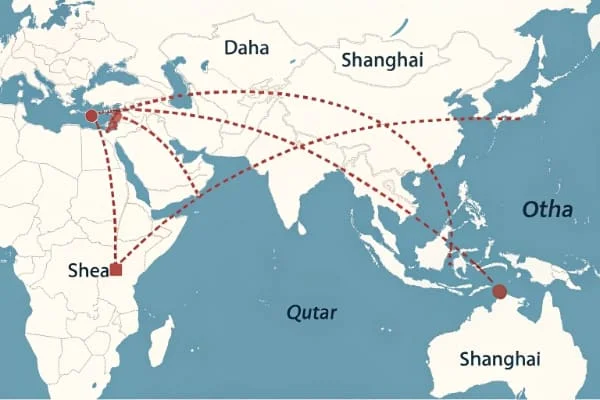
I always advise my clients to consolidate goods near a major port. For a customer shipping to the US, we sourced products from three different inland factories. Instead of shipping from three small, expensive ports, we trucked everything to Shenzhen. The consolidation and lower ocean freight from a major hub saved them almost 20% on total logistics costs10. The same logic applies perfectly when shipping to Qatar.
Key Sea Routes to Hamad Port
Your main departure ports in China should be Shenzhen (Yantian/Shekou), Guangzhou (Nansha), Shanghai, or Ningbo. These are the world's busiest ports for a reason. They have high vessel traffic, which creates competition among carriers and leads to better prices for you. They also offer direct services to Hamad Port in Doha, avoiding transshipment delays that can occur when using smaller ports.
Key Air Routes to Hamad International Airport (DOH)
For air cargo, the most efficient departure points are major international airports like Guangzhou (CAN), Shanghai (PVG), and Hong Kong (HKG). These airports have daily flights to Doha on carriers like Qatar Airways, ensuring you have plenty of capacity and flexible scheduling options for your urgent shipments.
The Importance of Inland Logistics
Don't forget to consider where your factory is located. If your supplier is in an inland city, you need to factor in the cost and time for trucking or railing the goods to a major coastal port. This is a critical part of the supply chain that we manage for our clients to ensure a smooth, cost-effective journey from the factory floor to the vessel.
What Taxes and Import Duties Apply When Shipping to Qatar?
Your shipment lands in Qatar, but you're hit with an unexpected tax bill. This can wipe out your profit and disrupt your cash flow. Let's review Qatar's import duties11 now.
Qatar generally charges a 5% customs duty on the CIF value12 (Cost, Insurance, and Freight) of most imported goods. Some products like tobacco have higher rates, while others may be exempt. A Value Added Tax (VAT)13 is planned but not yet implemented.

Paperwork is everything in customs. A client of mine was importing electronics and assumed the standard 5% duty. But their documents were incomplete, so Qatari customs reassessed the cargo's value much higher. Their duty bill was double what they expected. This is why accurate paperwork and correct HS codes are non-negotiable. We always prepare a full document set to prevent this.
Calculating Customs Duty
The standard duty is 5%, but it's calculated on the CIF value12. This is a key point. CIF stands for Cost, Insurance, and Freight. It means the duty is not just on your product cost; it's on the total cost to get the goods to Qatar.
- CIF = Cost of Goods + Cost of Insurance + Cost of Freight
- Duty Payable = 5% of CIF Value
The Role of HS Codes
Every product has a Harmonized System (HS) code. This code tells customs officials exactly what you are importing and determines the duty rate. While most goods fall under the 5% rule, using the wrong code can lead to delays and fines. We help clients classify their products correctly from the start.
Required Documents and Future Taxes
To clear customs in Qatar, you will need:
- Commercial Invoice
- Bill of Lading (for sea) or Airway Bill (for air)
- Packing List
- Certificate of Origin
Also, keep an eye on tax changes. While Qatar has not implemented VAT yet, it is part of a GCC agreement to do so. This could add another 5% to your landed cost in the future. We keep our clients updated on these regulatory changes.
Shipping from China to Qatar – Frequently Asked Questions?
You have a few more specific questions about shipping. Unanswered questions can lead to expensive mistakes. Here are quick answers to the most common queries we receive about this route.
For 1,000 kg, LCL sea freight2 is often most cost-effective. Peak season surcharges of 15-20% apply around September-November. Proper paperwork, including the correct HS code, is essential for smooth customs clearance7 in Qatar. FCL is also typically faster than LCL.
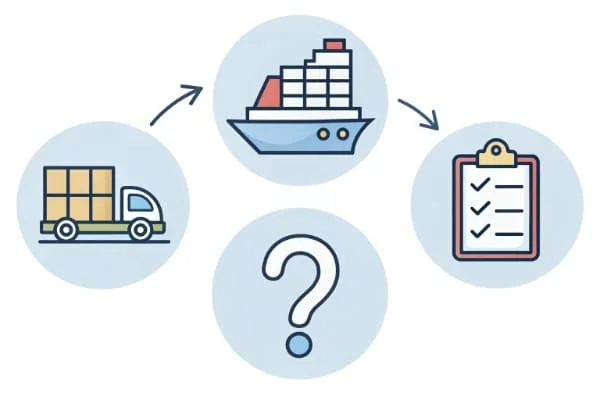
Navigating the details can be tough, so I've compiled answers to the most common questions I get from importers.
What's the most cost-effective way to ship 1,000 kg?
For a shipment of this size (1,000 kg, or about 1 ton), LCL sea freight2 is almost always the most cost-effective choice. Air freight for 1,000 kg would cost at least $4,000, while LCL sea freight2 might only be a fraction of that, depending on the volume. It's the perfect middle ground for shipments that are too small for a full container but too heavy to be affordably shipped by air.
Is FCL faster than LCL?
Yes, FCL is generally faster than LCL. An FCL container is sealed at the factory and opened at your destination. An LCL shipment, however, must be consolidated with other cargo at the origin port and then de-consolidated at the destination port. This extra handling can add 5-10 days to the total transit time.
How do surcharges affect my cost?
Surcharges are a major variable. During peak season (September-November) and just before Chinese New Year, expect rates to jump by 15-20%. Additionally, new environmental and fuel surcharges, like the Bunker Adjustment Factor (BAF), can add another 10-20% on top of your base ocean freight rate. Geopolitical issues, like disruptions in the Red Sea, can also cause sudden rate spikes.
How do I calculate my total landed cost14?
Your total landed cost14 is the final price per unit after all expenses. The basic formula is: Product Cost + China Logistics + International Freight + Insurance + Qatar Customs Duty + Qatar Port Fees + Final Delivery. This can be complex, which is why many of my clients prefer a DDP (Delivered Duty Paid) quote. It bundles all these costs into one clear, upfront price.
Conclusion
Shipping from China to Qatar involves choices on cost and time. Understanding sea, air, and customs duties helps you plan your budget and schedule for a successful import.
Explore comprehensive guides on shipping from China to Qatar to optimize your logistics and costs. ↩
Learn about the benefits of sea freight, including cost-effectiveness for bulk shipments. ↩
Discover the pros and cons of air freight versus sea freight to make informed shipping decisions. ↩
Learn about various shipping methods to choose the best option for your needs. ↩
Understand FCL shipping to determine if it's the right choice for your bulk shipments. ↩
Explore the advantages of LCL shipping for smaller shipments and how it can save costs. ↩
Get insights into the customs clearance process to avoid delays and unexpected costs. ↩
Find out the expected delivery times to plan your shipments effectively. ↩
Find out which express courier services offer the fastest and most reliable shipping options. ↩
Explore the various factors that can affect your logistics costs for better budgeting. ↩
Learn about Qatar's import duties to accurately calculate your total landed costs. ↩
Learn about CIF value and how it impacts your customs duties and overall shipping costs. ↩
Stay informed about potential VAT changes in Qatar that could affect your shipping costs. ↩
Get a clear formula for calculating your total landed cost to ensure accurate budgeting. ↩