
Worried about unpredictable shipping costs from China to Canada1? Confusing quotes and hidden fees can ruin your budget. Let's break down the real costs for you.
Shipping from China to Canada can cost from a few hundred dollars for LCL sea freight2 to several thousand for a full container. Air freight costs several dollars per kilogram.
Getting a handle on these numbers is the first step. But the final price on your invoice depends on many different things. It's not just about picking sea or air. I've seen many clients get surprised by the final bill because they didn't understand all the factors involved. Let's dive into what really shapes your shipping costs so you can avoid those surprises and make smarter decisions for your business. We'll look at everything from the type of cargo to the fine print in your contract.
What factors affect shipping costs from China to Canada1?
Is your shipping quote higher than expected? You can't find savings if you don't know what drives the cost. Here are the main factors that determine your price.
Your shipping costs are mainly affected by the shipping method (sea/air), cargo weight and volume3, the shipping terms (incoterms), origin and destination ports4, and the time of year.
Understanding your quote means breaking it down. Several key elements come together to form your final price. First is the shipping method. Air freight is fast but costs more per kilogram, while sea freight is much cheaper but takes weeks longer. Next is your cargo's size and weight. Freight is priced by either actual weight or volumetric weight, whichever is greater. This is why smart packing is so important. The origin and destination also matter. Shipping from a major port like Shenzhen to Vancouver is cheaper than from an inland city to an inland Canadian location. Finally, timing is everything5. Shipping during peak seasons, like before Christmas or Chinese New Year, will always cost more due to high demand. We always advise clients to plan ahead to avoid these seasonal spikes and secure better rates and space on vessels.
How do freight forwarders calculate shipping quotes?
Do you get wildly different quotes from freight forwarders? It's hard to compare them when they all look different. Let's see how forwarders actually calculate their prices.
Freight forwarders calculate quotes by combining the base freight rate6 from the carrier (airline or shipping line) with various surcharges. These include fuel, security, and terminal handling charges.

A freight forwarder's quote isn't just one number. It's a collection of different costs. The biggest part is the base freight rate6, which is what the airline or shipping line charges to move the cargo from port to port. On top of that, they add several surcharges. These can change often. For example, the Bunker Adjustment Factor (BAF) covers fuel price changes, while a Peak Season Surcharge (PSS) applies during busy times. Then you have origin and destination charges. These cover things like trucking to the port, handling at the terminal (THC), and customs paperwork. Finally, the forwarder adds their own service fee. This is why quotes can vary so much. Some forwarders have better contracts with carriers, while others might bundle fees differently.
| Cost Component | Description |
|---|---|
| Base Freight | Cost to move cargo from Port A to Port B. |
| Surcharges | Fuel, security, peak season, etc. |
| Origin Fees | Trucking, export customs, handling (THC). |
| Destination Fees | Import customs, handling (THC), delivery. |
| Forwarder Fee | The agent's service charge for coordination. |
What is the difference between EXW, FOB, and DDP pricing?
Confused by shipping terms like EXW, FOB, and DDP? Choosing the wrong one can lead to unexpected costs and big headaches. Let's clarify what they mean for you.
EXW (Ex Works) means you handle all shipping from the factory door. FOB (Free On Board) means the supplier gets it to the Chinese port. DDP (Delivered Duty Paid) means your forwarder handles everything to your door.
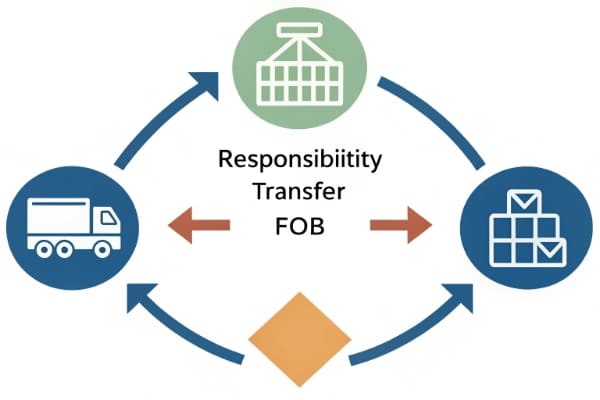
These three letters, known as Incoterms, define who is responsible for the shipment at each stage. It's crucial to get this right.
EXW - Ex Works
With EXW, your responsibility starts at the factory door. You must arrange for pickup, trucking to the port, export customs, and all shipping to Canada. This gives you full control but requires a lot of coordination on the ground in China. We often manage this for our clients.
FOB - Free On Board
FOB is the most common term. Your supplier is responsible for all costs until the goods are loaded onto the vessel at the Chinese port. From that point on, you and your freight forwarder take over. It's a good balance of cost and control.
DDP - Delivered Duty Paid
DDP is the simplest option for you as the buyer. The price you are quoted covers everything, all the way to your warehouse in Canada, including import duties and taxes. We handle the entire process, making it a true door-to-door service.
How can you reduce your shipping costs effectively?
Are high shipping costs eating into your profits? It's frustrating to feel like you're overpaying for freight. Here are practical ways to reduce your shipping expenses now.
To reduce shipping costs7, consolidate smaller shipments into one, optimize your packaging to reduce volume, book well in advance, and ship during the off-season. Also, work with a good forwarder.

Saving money on shipping is about being strategic. It’s not just about finding the cheapest quote. My most successful clients use a few key tactics. First, consolidate your cargo. If you have multiple small orders from different suppliers, don't ship them separately. We can collect them at our warehouse and combine them into a single, more cost-effective shipment, either as a larger LCL or even a full container (FCL). Second, optimize your packaging. Wasted space in boxes costs you money, especially with air freight where volumetric weight is key. We work with factories to ensure products are packed efficiently. Third, plan your shipping calendar. Booking your freight well in advance, especially during non-peak seasons, can save you a lot. Last-minute shipments always come at a premium. Finally, choosing the right partner gives you access to better rates and smarter logistics solutions, which is the biggest long-term cost-saver.
Ever get a low quote only to face a much higher final bill? Hidden fees can wreck your budget and trust. Let's uncover the common extra charges to watch for.
Yes, hidden charges can appear. Look out for destination terminal handling charges9 (THC), customs inspection fees10, warehouse storage fees, and duties or taxes not included in the initial quote.

The term "hidden charges" is tricky. Often, they aren't hidden, just not included in a basic "port-to-port" quote. You need to know what to ask about. A common one is destination terminal handling (THC). Your initial quote might only cover THC at the origin port in China. Another surprise can be customs inspection fees10. If Canadian customs (CBSA) decides to examine your container, you are responsible for the costs, which can be hundreds of dollars. Also, watch out for demurrage and detention fees11. These are charged if your container isn't picked up from the port or returned to the carrier on time. We manage this closely for our clients to avoid these penalties. The best way to prevent surprises is to ask your forwarder for a detailed, door-to-door breakdown of all potential costs, not just the base freight.
Is it cheaper to use a freight forwarder or ship directly?
Thinking of cutting out the middleman to save money on shipping? Dealing directly with carriers seems complex and maybe not worth it. Let's compare both options for you.
For most businesses, using a freight forwarder is cheaper. They get bulk rates from carriers12 that you can't access, and they manage all the complex logistics for you.

This is a question I get a lot. While it seems like going direct to a shipping line like Maersk or COSCO would be cheaper, it's rarely the case for most importers. Shipping lines sell space in bulk. Freight forwarders are their biggest customers. Because we buy so much space, we get significant volume discounts that an individual business simply can't get. So, the rate we offer you is often lower than what you could get directly. But the real value goes beyond just the price. A freight forwarder manages the entire process for you. We handle the local trucking in China13, the export documents, the customs clearance14, and the final delivery in Canada. If you go direct, you have to coordinate all those pieces yourself. For most businesses, the time, hassle, and risk of error far outweigh any potential cost savings of going direct.
Conclusion
In summary, understanding your shipping options and working with a reliable partner are key. This allows you to control costs and get your products from China to Canada smoothly.
Explore this link to understand the various factors influencing shipping costs and how to budget effectively. ↩
Learn about LCL sea freight to see if it's the right shipping method for your needs. ↩
Understanding the impact of weight and volume can help you optimize your shipping expenses. ↩
Explore how the choice of ports can significantly impact your shipping expenses. ↩
Learn how shipping during off-peak times can save you money. ↩
Discover what the base freight rate includes and how it affects your total shipping cost. ↩
Explore practical strategies to lower your shipping expenses and improve your bottom line. ↩
Learn about common hidden charges to avoid unexpected costs in your shipping. ↩
Understanding these charges can help you budget more accurately for shipping. ↩
Learn about customs fees to avoid surprises during the shipping process. ↩
Understanding these fees can help you avoid costly penalties. ↩
Learn how bulk rates can lead to significant savings on shipping costs. ↩
Understanding local trucking can help streamline your shipping process. ↩
Learn about customs clearance to ensure smooth shipping and delivery. ↩