
Struggling to understand the difference between all the "MagSafe" options? Choosing the wrong accessory can lead to slow charging, poor quality, and even safety risks for your customers.
MagSafe compatible accessories1 use a specific ring of magnets to perfectly align with an iPhone's internal charging coil2. This ensures a secure attachment for accessories and creates an efficient connection for wireless power transfer3, reducing heat and improving charging speed4 compared to non-magnetic wireless chargers.
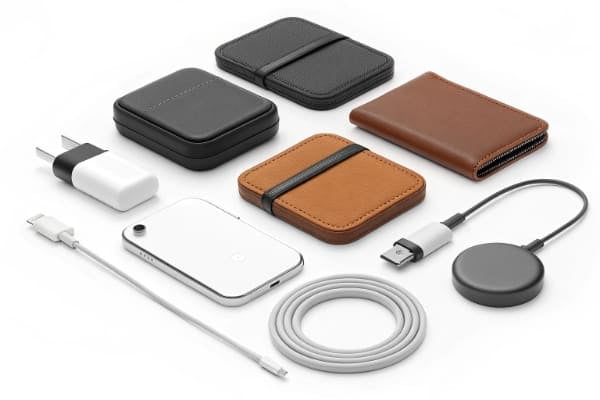
It all comes down to the magnets, but there is so much more to it than just a satisfying "snap." The real difference between a great product and a bad one is in the technical details. These details affect performance, safety, and your brand's reputation. Let's dive into how this technology really functions and what you need to know before you source your next product.
How does MagSafe magnetic alignment technology work?
Ever used a wireless charger that was slow and made your phone hot? Misalignment wastes energy and creates heat. MagSafe's magnetic ring solves this by ensuring a perfect connection.
MagSafe technology uses a circular array of magnets inside both the iPhone and the accessory. This system forces the internal charging coil2s to line up perfectly, which maximizes charging efficiency5 and minimizes the waste heat generated during power transfer. It makes charging faster and safer.
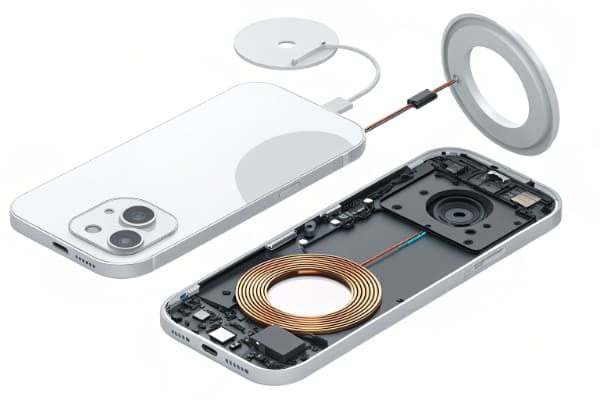
I remember a client who ordered thousands of standard Qi wireless chargers6 for a promotion. They soon got feedback that the chargers were slow and made phones feel warm. The problem was simple: customers were not placing their phones in the exact right spot. The coils were misaligned. When we helped them develop a new version with a magnetic ring based on the MagSafe design, the complaints stopped completely. This experience showed me how a small design detail—magnetic alignment—can totally change a product's performance and user satisfaction.
The Core Components of Magnetic Alignment
The system is more than just a single magnet. It's an engineered solution with three key parts working together.
- Charging Coil: This is the copper coil that sends or receives power wirelessly.
- Magnet Ring: A circular array of small magnets that provides the main attraction force.
- Alignment Magnet: A single, vertically oriented magnet that prevents the accessory from rotating, ensuring it snaps into the correct orientation every time.
This precise alignment, often called "coil coupling," is what makes the system so efficient. Here is how it compares to standard wireless charging.
| Feature | Standard Qi Charging | MagSafe Magnetic Alignment |
|---|---|---|
| Coil Alignment | Manual; user must place it correctly | Automatic; magnets snap it into place |
| Charging Efficiency | Variable, often lower due to misalignment | High and consistent |
| Waste Heat | Higher, especially when misaligned | Lower, due to efficient power transfer |
| Connection | Unstable; can be easily knocked off | Secure and stable |
By ensuring the coils are perfectly matched, you get a faster and cooler charge.
What is Apple Made for MagSafe (MFM) certification7?
Are you worried about guaranteeing quality and top performance for your customers? Uncertified accessories can be a huge gamble. Apple's MFM certification provides a guarantee of speed, safety, and full compatibility.
"Made for MagSafe" (MFM) is Apple's official certification program. It proves that an accessory contains a licensed Apple MagSafe module, which enables full 15W fast charging for iPhones and meets Apple's strict safety and performance standards.
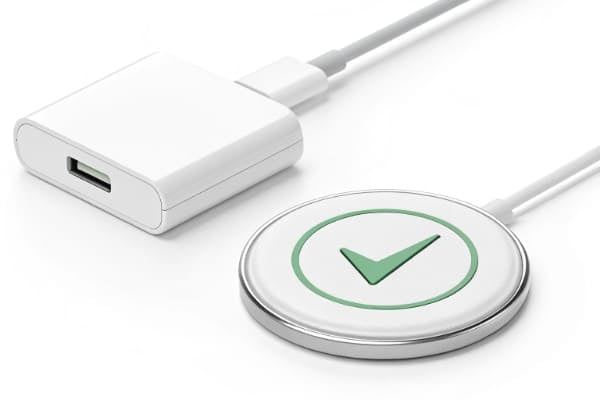
Think of MFM as the gold standard. For any brand that wants to promise the absolute best experience to iPhone users, this is the path to take. It's similar to the MFi (Made for iPhone/iPad) program that has existed for years for cables and other accessories. When you see the MFM logo, you know the product has an official component inside that communicates directly with the iPhone. This "handshake" is what unlocks the faster 15W charging speed4. Without it, iPhones limit wireless charging to a maximum of 7.5W, even if the charger itself is more powerful.
MFM vs. MagSafe Compatible
It is important to understand the difference when sourcing products. One is a certified standard, while the other is a design feature.
| Feature | Made for MagSafe (MFM) | MagSafe Compatible |
|---|---|---|
| Certification | Official Apple Certification | No official certification |
| Charging Speed | Up to 15W for iPhones | Max 7.5W for iPhones |
| Core Component | Official Apple MagSafe module | Standard Qi coil + magnets |
| Cost | Higher due to licensing fees | Lower |
| Guarantee | Performance and safety guaranteed | Varies by manufacturer |
Sourcing MFM products means paying a premium for the Apple module and testing. However, it completely removes the risk of performance issues8. For brands where quality and trust are the top priorities, MFM is a clear choice.
How are third-party MagSafe compatible products9 designed?
Do you want to offer magnetic accessories without the high cost of MFM certification? Many third-party products offer a great solution. But you need to know exactly how they are designed.
Most third-party "MagSafe compatible" products are essentially standard Qi wireless chargers6 with a magnetic ring added. They provide the convenient magnetic attachment but lack the official Apple module needed to achieve 15W charging speed4s on an iPhone.
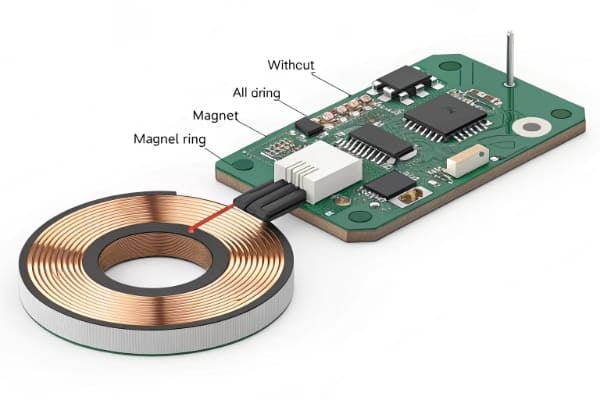
The process is quite straightforward from a manufacturing perspective, which is why these products are so common. We work with factories that take a standard, certified Qi charging PCBA (Printed Circuit Board Assembly) and simply affix a magnet array to the housing. The key is getting the magnet placement and strength just right so it aligns with the iPhone's internal magnets. I once reviewed a sample from a new factory where the magnets were too weak. The phone would slide off with a small bump. We had to specify the exact N52 magnet grade and dimensions in our quality control10 checklist to ensure the product had the right "snap" and holding force.
Key Design Considerations
When sourcing these "compatible" products, you are the one responsible for quality control10. There is no Apple oversight.
- Magnet Specification: The grade (e.g., N52), size, and placement of the magnets are critical. Poor choices lead to a weak connection or misalignment, which increases heat.
- Qi Coil Quality: The underlying charger must still be a high-quality Qi charger. It should have its own safety features like over-voltage and foreign object detection.
- Heat Management: The product design needs to allow for heat dissipation. Look for materials and construction that help keep the charger and the phone cool.
These products are a fantastic, cost-effective option. They give users the magnetic convenience they love. You just have to be extra diligent during the sourcing and QC process to ensure the final product is safe and reliable.
What are the potential risks of low-quality MagSafe accessories?
Sourcing the cheapest option seems like a good way to increase margins, right? But a low-quality magnetic accessory can damage phones, create safety hazards, and destroy your brand's reputation.
Low-quality MagSafe accessories can cause overheating from poor alignment, have weak magnets that allow devices to fall and break, or lack critical safety circuits11. Some can even demagnetize credit cards if they are not designed with proper shielding.
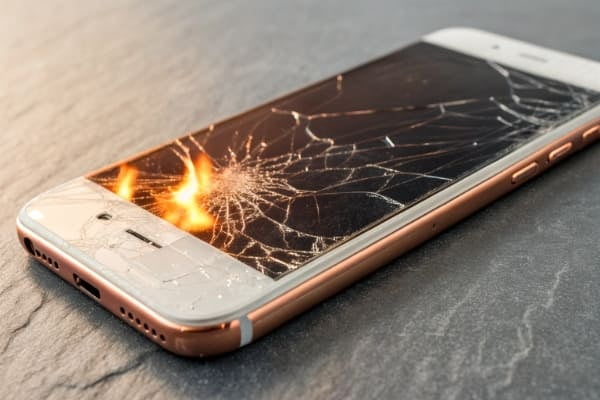
This is an area where cutting corners can have serious consequences. I've seen reports of car mounts with weak magnets that drop phones on the first big bump, and chargers that get alarmingly hot. These issues are almost always tied to a factory cutting costs on components or design. For example, a wallet accessory without magnetic shielding12 is a disaster waiting to happen. The strong magnets needed for a secure attachment can easily wipe the magnetic stripe on a credit card or hotel key. A good design includes a layer of shielding material to protect the cards.
A Buyer's Safety Checklist
When evaluating a "MagSafe compatible" product from a supplier, you need to check for these potential failure points.
| Risk Category | What to Look For | Red Flags |
|---|---|---|
| Thermal Risk | Does it have a temperature sensor (NTC)? | No mention of thermal protection. Gets very hot in tests. |
| Mechanical Risk | What is the magnet grade? Test the holding force. | Weak "snap." Phone rotates or falls off easily. |
| Electrical Risk | Is the underlying Qi circuit certified? | No CE, FCC, or RoHS compliance documents. |
| Data Risk (Wallets) | Is there a shielding layer? | The supplier cannot confirm if shielding is included. |
Protecting your customers and your brand means not just trusting a supplier's claims. It means asking the right questions and testing for these specific risks.
How does MagSafe charging impact battery health13?
Does wireless charging destroy your phone's battery? This is a very common fear. The truth is that it is not the method of charging that matters, but the amount of heat generated.
MagSafe charging is safe for battery health13 because the technology is designed to manage heat. The precise magnetic alignment makes charging more efficient, creating less waste heat. Additionally, certified chargers have temperature sensors that automatically slow down charging if the phone gets too warm.
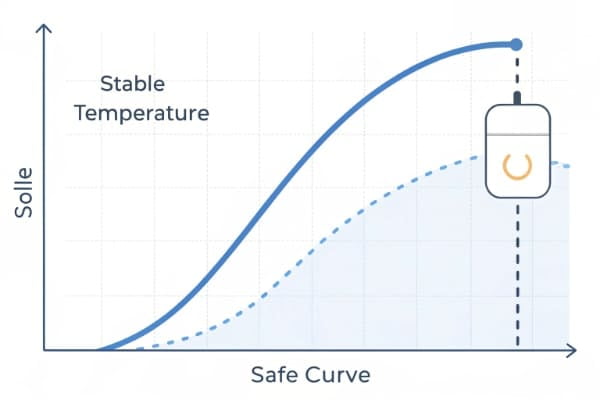
Heat is the number one enemy of any lithium-ion battery. Over time, high temperatures permanently reduce a battery's capacity to hold a charge. This is where MagSafe's design actually provides an advantage over older wireless chargers. Because the magnetic alignment is perfect every time, the power transfer is very efficient. Less energy is wasted as heat. In contrast, a poorly aligned standard Qi charger can generate a lot of extra heat, which is bad for the battery. Apple's own software also plays a big role. The "Optimized Battery Charging" feature on iPhones learns your daily routine and will delay charging past 80% until you need it, which also reduces heat and battery aging.
Heat Management is Key
When you are sourcing charging accessories, your focus should be on how well they manage heat.
- Certified Chargers (MFM & Qi2): These are required to have integrated temperature sensors. The charger communicates with the phone and can throttle, or reduce, the power if temperatures rise too high. This is a closed-loop system that actively protects the battery.
- Well-Designed Compatible Chargers: While not required, good manufacturers will still include a thermistor (NTC) in their charging circuit as a safety measure. This can prevent the charger itself from overheating, which in turn helps keep the phone cooler.
By choosing chargers with active heat management14, you are providing a product that not only works well but also helps protect your customer's expensive smartphone. It's a critical selling point.
What are the future trends with MagSafe, Qi2, and magnetic ecosystems15?
The world of charging technology is moving fast. Staying ahead of big trends like Qi2 is essential. The future is a unified magnetic charging standard16 for both Apple and Android devices.
The new Qi2 standard17 officially adopts the magnetic profile from MagSafe. This means future "MagSafe compatible" accessories will work perfectly with both new iPhones and upcoming Android phones, creating a universal, cross-platform magnetic charging ecosystem.
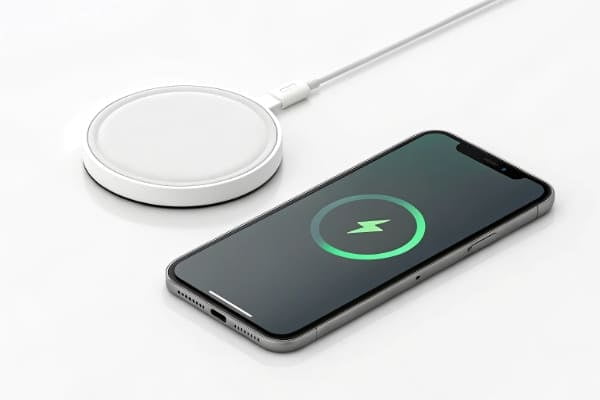
This is a game-changer for the entire accessories industry. For years, we've had separate ecosystems. Apple had MagSafe, and Android had various magnetic solutions that were not compatible. The Wireless Power Consortium (WPC), which manages the Qi standard, worked with Apple to integrate the MagSafe magnetic profile into the next generation of Qi, called Qi2. This means a single Qi2-certified charger will offer perfect magnetic alignment and fast charging (up to 15W) for both iPhones and new Android phones that support the standard. For a business like yours, this simplifies everything.
The Impact of a Universal Standard
The move toward a unified standard has several major benefits for anyone sourcing or selling accessories.
- Larger Market: You can design and produce one product that serves the entire smartphone market, not just one segment.
- Simplified Inventory: No more stocking separate Apple and Android versions of the same product. This reduces complexity and cost.
- Guaranteed Performance: The Qi2 certification program will ensure that all certified products meet strict standards for performance, safety, and interoperability, just like MFM does.
- Smarter Accessories: The future of these ecosystems will likely include accessory identification. A charger could recognize if it's connected to a phone, a power bank, or a fan, and negotiate the optimal power output for that specific device, further improving safety and efficiency.
As a sourcing partner, we are already working with factories that are developing Qi2-certified components. This is the clear future, and getting on board early is a huge competitive advantage.
Conclusion
MagSafe's magnetic alignment improves charging efficiency5 and safety. While MFM certification offers top performance, well-designed "compatible" accessories and the new universal Qi2 standard17 are creating a more reliable, unified ecosystem.
Explore this link to understand the range of accessories that work seamlessly with MagSafe technology. ↩
Understand the role of the charging coil in wireless charging systems and its importance. ↩
Learn about the technology behind wireless power transfer and its benefits for charging devices. ↩
Explore the factors that influence charging speed and how to maximize it. ↩
Discover the key factors that influence charging efficiency and how to optimize it. ↩
Learn about Qi wireless chargers and how they compare to MagSafe technology. ↩
Find out why MFM certification is crucial for ensuring quality and performance in accessories. ↩
Find out about common performance issues with wireless chargers and how to avoid them. ↩
Explore the options available for third-party MagSafe compatible products and their benefits. ↩
Learn best practices for ensuring quality control in the sourcing of charging accessories. ↩
Understand the role of safety circuits in ensuring the safe operation of charging devices. ↩
Understand the importance of magnetic shielding in protecting devices from damage. ↩
Understand the impact of charging methods on battery health and longevity. ↩
Learn about the importance of heat management in wireless chargers and its effects on performance. ↩
Discover how magnetic ecosystems are evolving and their impact on charging technology. ↩
Explore the benefits of a unified magnetic charging standard for consumers and manufacturers. ↩
Learn about the new Qi2 standard and its implications for the future of wireless charging. ↩