

Struggling with shipping from China to the UAE1? Costs, delays, and complex logistics can hurt your business. We'll explain the best methods to simplify your supply chain.
The best way to ship from China to the UAE depends on your cargo's size, weight, and urgency. Sea freight is cheapest for bulk goods (16-30 days), while air freight2 is faster for urgent items (3-7 days). Express couriers are quickest for small parcels (2-5 days).

Navigating the logistics between China and the UAE can feel like a huge challenge, especially for new importers. I've worked with many clients like David, an e-commerce owner in Dubai, who initially felt completely lost. He needed a reliable way to get his products without the headaches of dealing with multiple factories and shipping agents. Understanding the core options is the first step toward building a smooth and profitable supply chain. Let's break down the process so you can ship your goods with confidence.
What Shipping Methods Are Available From China to the UAE?
Confused by the different shipping options? Choosing the wrong one can cost you time and money. Let's break down the three main methods for you.
The primary shipping methods3 from China to the UAE are sea freight4, air freight2, and express courier services5. Sea freight is ideal for large, heavy shipments. Air freight is for time-sensitive, high-value goods. Express couriers are best for small, urgent packages and documents.
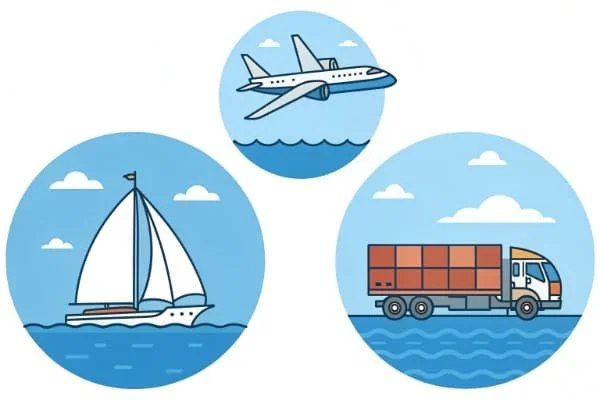
Choosing the right shipping method is a critical decision that impacts your cost, speed, and overall logistics strategy6. Each option has its own strengths, and the best choice depends entirely on your specific needs. I always advise my clients to evaluate their inventory, budget, and customer expectations before making a decision.
Sea Freight
This is the most common and cost-effective method for shipping large quantities of goods. If your shipment is over 2 cubic meters, sea freight4 is almost always the cheapest option. It's the workhorse of global trade and perfect for businesses that can plan their inventory in advance. Most of our clients who import general merchandise, home goods, or outdoor gear rely on sea freight4 for their main stock.
Air Freight
When speed is more important than cost, air freight2 is the answer. It's ideal for high-value, lightweight, or perishable items. For example, if you're launching a new electronics product or need to quickly restock a best-selling item, air freight2 can get it to the UAE in days instead of weeks. While more expensive, it can save you from costly stockouts.
Express Courier
Think of express couriers like DHL, FedEx, or Aramex as the fastest door-to-door service. This method is perfect for sending urgent samples, important documents, or small, high-margin e-commerce orders directly to customers. The cost per kilogram is the highest, but the convenience and speed are unmatched.
Here is a simple comparison:
| Feature | Sea Freight | Air Freight | Express Courier |
|---|---|---|---|
| Best For | Bulk goods, heavy items | Urgent, high-value goods | Samples, small parcels |
| Cost | Low | High | Very High |
| Speed | Slow (16-30 days) | Fast (3-7 days) | Fastest (2-5 days) |
| Volume | High | Medium to Low | Low |
How Much Does It Cost to Ship From China to the UAE?
Worried about unpredictable shipping costs7? Hidden fees can destroy your profit margins. Understand the key factors that determine your final shipping price.
Shipping costs from China to the UAE vary greatly. Sea freight is the cheapest per kilogram for bulk orders, while air freight2 is more expensive but faster. Costs depend on the shipping method, cargo weight8 and volume, fuel prices, season, and chosen Incoterms9 (like FOB or DAP).
One of the biggest pain points I hear from new importers is the shock of "hidden" shipping fees. The quote you get initially often isn't the final price. The total cost is a combination of many different charges, and understanding them is key to protecting your profit margins. As your sourcing partner, we provide transparent, all-in pricing so you know exactly what you're paying for.
Factors Influencing Cost
Several variables determine your final bill. The weight and volume of your cargo are the most obvious. Shipping lines use a metric called "chargeable weight," which is the greater of the actual weight and the volumetric weight. Other factors include:
- Fuel Surcharges: These fluctuate with global oil prices.
- Seasonality: Prices spike before major holidays like Christmas or Chinese New Year.
- Terminal Fees: Charges for handling your container at the ports of origin and destination.
- Customs Fees: Duties and taxes levied by the UAE government.
Understanding Incoterms9
The Incoterm you agree on with your supplier has a huge impact on your final cost. It defines who pays for what part of the shipping journey. For example:
- FOB (Free On Board): Your supplier pays to get the goods to the Chinese port. You pay for everything from that point onward. This gives you control over the main shipping leg.
- DAP (Delivered at Place): We handle everything from the factory to your warehouse door in the UAE, but you are responsible for paying the import duties10 and taxes upon arrival.
- DDP (Delivered Duty Paid): This is the most hands-off option. The price includes all costs, including shipping, insurance, customs clearance11, and duties. It's simple and predictable, which is great for beginners.
Choosing an Incoterm like FOB or DAP helps you avoid unexpected costs because responsibilities are clearly defined from the start.
How Long Does Shipping From China to the UAE Take by Sea and Air?
Are shipping delays12 hurting your inventory planning? Miscalculating transit times can lead to stockouts or missed deadlines. Here are the realistic timeframes you should expect.
Standard sea freight4 from China to UAE ports like Jebel Ali takes about 16-30 days, port-to-port. Air freight is much faster, typically taking 3-7 days door-to-door. Express couriers are the quickest, delivering in just 2-5 days. These times do not include customs clearance11.

"How long will it take?" This is always one of the first questions I get. The answer isn't just about the time the cargo spends on a ship or a plane. The total delivery time includes everything from factory pickup to your warehouse door. I always tell my clients to add a buffer to their timeline to account for potential delays.
Sea Freight Transit Times
For sea freight4, the port-to-port transit time is just one piece of the puzzle. A typical journey from major Chinese ports like Shanghai or Shenzhen to Jebel Ali in Dubai takes around 16 to 30 days.
| From (China) | To (UAE) | Estimated Sea Transit Time |
|---|---|---|
| Shanghai | Jebel Ali | 18-25 days |
| Shenzhen | Jebel Ali | 16-22 days |
| Ningbo | Khalifa Port | 20-28 days |
| Guangzhou | Jebel Ali | 17-24 days |
Air Freight Transit Times
Air freight is significantly faster. From the moment the cargo leaves a major Chinese airport like Shanghai (PVG) or Guangzhou (CAN), it can arrive at Dubai (DXB) or Abu Dhabi (AUH) in about 3 to 7 days. This timeline usually includes local transport and handling at both ends.
Factors Causing Delays
The quoted transit time is an estimate. Real-world shipping is affected by many factors:
- Customs Clearance: This can take anywhere from a few hours to several days, especially if documentation is incomplete.
- Port Congestion: Busy ports can have backlogs, adding days to your wait time.
- Weather: Bad weather can delay departures and slow down ships.
- Inland Transport: Getting your goods from the port to your final destination takes time.
We help our clients manage these variables by ensuring all paperwork is perfect and by using our network to choose the most efficient routes and ports.
Should You Choose FCL13 or LCL14 When Shipping to the UAE?
Unsure whether to book a full or partial container? The wrong choice can be unnecessarily expensive. Let's clarify when to use FCL13 and LCL14.
Choose Full Container Load (FCL13) if your cargo is large enough to fill most of a 20ft or 40ft container, as it offers a lower cost per unit. Use Less than Container Load (LCL14) for smaller shipments, as you only pay for the space you use.
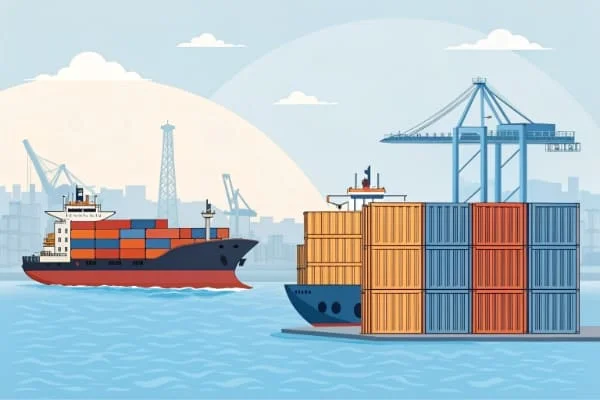
When you ship by sea, you'll hear the terms FCL13 and LCL14. This is a fundamental choice that directly impacts your cost and logistics. Making the right decision depends on the size of your shipment. As a rule of thumb, if your goods take up more than about 15 cubic meters, FCL13 is usually the more economical path.
What is FCL13 (Full Container Load)?
With FCL13, you rent an entire container (usually 20ft or 40ft) for your exclusive use. Your goods are loaded at the factory, the container is sealed, and it isn't opened again until it reaches you. This is generally faster, cheaper per cubic meter (for large volumes), and more secure since your goods aren't handled alongside others. It's the standard for our clients who are wholesalers or retail chains placing large orders.
What is LCL14 (Less than Container Load)?
If you don't have enough cargo to fill a whole container, you can use LCL14. With this method, your shipment is combined with goods from other importers in a shared container. You only pay for the volume your goods occupy. LCL14 is perfect for e-commerce sellers testing new products or businesses with smaller, more frequent orders.
Making the Right Choice
The decision comes down to volume and cost. While LCL14 has a higher cost per cubic meter, its total cost is lower for small shipments. FCL13 becomes cheaper once your volume is large enough.
| Factor | FCL13 (Full Container Load) | LCL14 (Less than Container Load) |
|---|---|---|
| Cost | Lower cost per CBM, but high flat fee | Higher cost per CBM, but lower total for small volumes |
| Speed | Faster (no consolidation/deconsolidation) | Slower (requires extra handling at ports) |
| Security | Higher (sealed container) | Lower (shared with other cargo) |
| Ideal Volume | > 15 CBM | < 15 CBM |
We help clients consolidate multiple small orders from different suppliers into a single FCL13 shipment, giving them the cost benefits of FCL13 even with smaller individual orders.
How Do You Ship Goods From China to the UAE Step by Step?
Feeling overwhelmed by the shipping process15? One missed step can cause major delays and fees. Here’s a simple step-by-step guide to follow.
First, prepare your goods and documents. Next, book your shipment with a freight forwarder16. Then, handle export customs clearance11 in China. The goods are then transported. Finally, manage import customs clearance11 and last-mile delivery in the UAE. A good partner can handle this entire process.
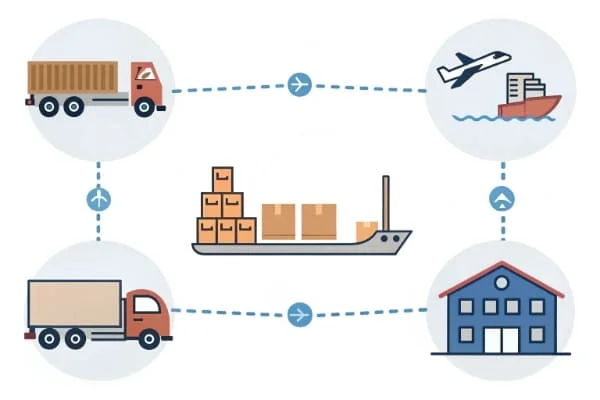
I've seen many importers get bogged down by the complexity of the shipping process15. It's not just about moving a box from A to B. It involves paperwork, regulations, and coordination across multiple parties. That's why we offer a fully managed service that handles every step for you. Here is a breakdown of what the process looks like.
Step 1: Preparation and Documentation
This is the foundation of a smooth shipment. First, your goods must be properly packed and labeled for export. Then, you need to gather the essential documents: the Commercial Invoice (details of the transaction), the Packing List (details of the cargo), and the Bill of Lading (the contract with the carrier). Accurate paperwork is non-negotiable; mistakes here are the #1 cause of customs delays.
Step 2: Booking and Export
Once your documents are ready, you book your shipment with a freight forwarder16 like us. We find the best vessel or flight based on your needs. Your goods are then transported from the factory to the port or airport. Next comes China export customs clearance11. We handle all the declarations to ensure your goods can legally leave the country.
Step 3: Transit, Arrival, and Clearance
After clearing customs, your cargo is loaded onto the ship or plane for its journey to the UAE. We provide tracking so you know where your goods are. Upon arrival at a port like Jebel Ali, the import process begins. We manage the import customs clearance11, submitting all necessary documents and paying any applicable duties and taxes on your behalf. Jebel Ali's free zone status often helps streamline this process. Finally, once cleared, we arrange for inland trucking to deliver the goods directly to your warehouse or fulfillment center.
What Is the Best Shipping Option for First-Time Importers?
Importing for the first time? The logistics can seem incredibly complex and risky. Let's discuss the simplest and safest approach for beginners.
For first-time importers, the best option is often working with a full-service freight forwarder16 or a sourcing agent17 like Toncentlink. We can manage the entire process, from choosing the right shipping method (often LCL14 sea freight4 for initial orders) to handling all paperwork and customs.

If you are just starting, the world of international shipping can be intimidating. My advice is always the same: don't try to do it all yourself. The risk of making a costly mistake is too high. Your focus should be on building your business, not becoming a logistics expert overnight. That's where a partner comes in.
Start Small with LCL14
For your first few shipments, you're likely not ordering a full container. LCL14 sea freight4 is the perfect starting point. It allows you to test products and the market with a smaller investment. You can order from multiple suppliers, and we can consolidate the goods into a single LCL14 shipment to save you money and simplify logistics.
Partner with an Expert
The single best thing a first-time importer can do is partner with an experienced sourcing and shipping company. We act as your team on the ground in China. We handle supplier communication, quality control, and all the shipping logistics18. This eliminates the pain points of language barriers, unreliable factories, and confusing paperwork. We are your "China office," dedicated to making your sourcing journey simple and reliable.
Focus on DDP Shipping
I highly recommend first-timers use DDP (Delivered Duty Paid) shipping. With DDP, the price we quote you is the final, all-inclusive price to your door. It includes shipping, insurance, customs clearance, and all taxes and duties. There are no surprise fees. This allows you to budget accurately and removes all the logistical burdens of the import process. You just place the order and wait for it to arrive. It's the most stress-free way to import.
Conclusion
Shipping from China to the UAE is simple with the right partner. By choosing the best method and planning ahead, you can ensure a smooth, cost-effective, and reliable supply chain.
Explore expert insights on shipping methods and costs to streamline your logistics. ↩
Discover why air freight is the best choice for urgent shipments and high-value goods. ↩
Explore various shipping methods to find the best fit for your needs. ↩
Learn about sea freight's advantages for bulk shipping and how it can save you money. ↩
Find out which express couriers offer the fastest and most reliable delivery options. ↩
Discover strategies to optimize your logistics for better efficiency. ↩
Understand the factors that influence shipping costs to avoid hidden fees. ↩
Understand how cargo weight affects shipping costs and logistics. ↩
Learn how Incoterms define shipping responsibilities and impact your budget. ↩
Learn about import duties to better prepare for your shipping costs. ↩
Get insights into customs processes to ensure smooth importation of goods. ↩
Learn about common shipping delays and tips to mitigate them. ↩
Explore the benefits of FCL for large shipments and how it can reduce costs. ↩
Understand LCL shipping for smaller shipments and how it can save you money. ↩
Follow a step-by-step guide to navigate the complexities of shipping goods. ↩
Learn how freight forwarders can manage your shipping logistics efficiently. ↩
Discover how a sourcing agent can simplify your import process. ↩
Explore the essential elements of shipping logistics to enhance your operations. ↩