
Your cargo is stuck, and costs are soaring because of a crisis miles away. This uncertainty threatens your business. You need a plan to protect your supply chain right now.
To reduce shipping risks from the Strait of Hormuz1 crisis, importers should diversify carriers2, secure war risk insurance3, map supply chain vulnerabilities4, and explore alternative routes like the Middle Corridor5. Building safety stock6 and reserving freight capacity7 in advance are also critical protective measures.
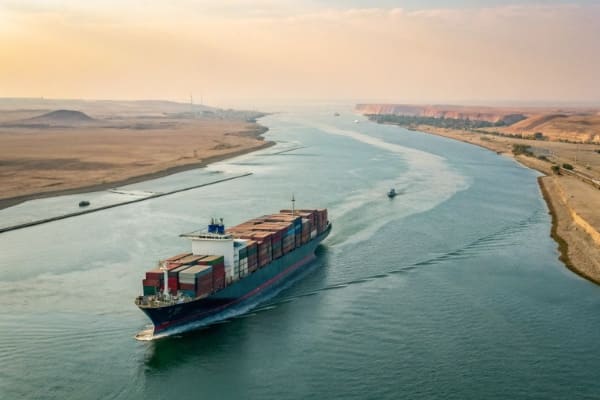
The news is filled with updates about tensions in the Strait of Hormuz1, a critical chokepoint for global trade. For importers like you, this isn't just a headline; it's a direct threat to your operations, timelines, and budget. It’s easy to feel powerless when global events disrupt your plans, but you are not. I have helped many clients navigate these exact challenges. You can take control by understanding the risks and preparing a smart, flexible strategy to keep your goods moving. Let's break down how you can do that.
What risks does the Strait of Hormuz1 crisis create for global importers?
Your shipments are delayed, and you're facing unexpected surcharges. The Strait of Hormuz1 crisis directly impacts your bottom line and delivery promises, creating massive operational headaches you can't ignore.
The crisis creates severe risks, including massive shipping delays8 due to route diversions, skyrocketing freight rates9 and insurance premiums, and even the potential for cargo damage or loss. This volatility directly threatens supply chain stability, inventory levels, and overall business profitability for importers worldwide.
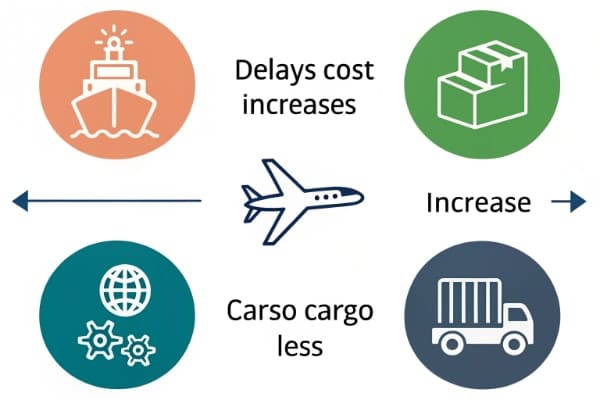
When I talk to clients about this, I break the risks down into three main areas. It helps to see how interconnected they are. First, you have the immediate operational problems. Your container ship might be rerouted around Africa, adding weeks to its journey. Or it might be stuck waiting for a safe passage. This means your production lines could halt, and you might miss key retail seasons. Second, the financial impact is huge. War risk insurance premiums go up instantly. Carriers add emergency surcharges to cover their extra fuel and security costs. Your predictable shipping budget is suddenly unpredictable. Lastly, there's the reputational risk10. If you can't deliver to your customers on time, they lose trust in your brand. These aren't just abstract problems; they are real-world challenges that require a solid plan.
Key Risk Categories for Importers
| Risk Type | Description | Example |
|---|---|---|
| Operational | Delays in transit, port congestion, and unpredictability of cargo arrival. | A shipment from China to Europe is diverted around the Cape of Good Hope, adding 10-14 days to the journey. |
| Financial | Sudden increases in freight rates9, war risk insurance3, and other surcharges. | A standard container freight quote doubles overnight due to an "emergency risk surcharge" imposed by the carrier. |
| Reputational | Failure to meet customer delivery deadlines, leading to loss of trust and business. | An e-commerce seller has to cancel hundreds of orders because their inventory is stuck on a delayed vessel. |
How can shipping delays8 and cost surges11 be minimized?
Watching freight costs spiral out of control while your cargo sits idle is frustrating. You need practical ways to manage these spikes and delays before they cripple your cash flow.
Minimize delays and costs by booking freight capacity7 well in advance, diversifying your shipments across multiple carriers and shipping alliances12, and using real-time tracking13 to anticipate disruptions. Also, consider negotiating longer-term contracts14 with fixed rates to hedge against market volatility.
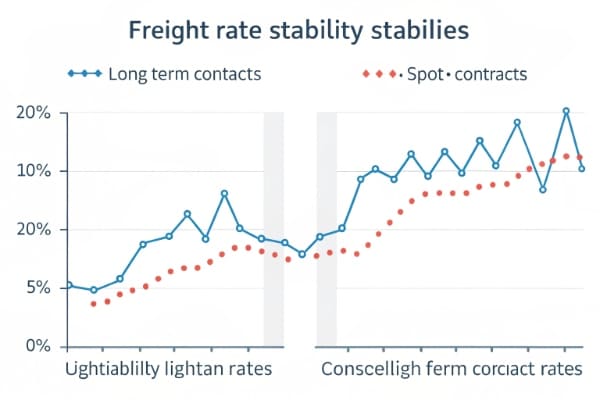
One of the first things I advise clients is not to put all their eggs in one basket. Relying on a single shipping line is risky. If that carrier's alliance decides to skip a port or reroute all its vessels, your entire supply chain is affected. We work to spread shipments across different carriers. This gives you flexibility. If one option becomes too slow or expensive, you have others ready to go. Another key step is to get ahead of the problem. We use real-time monitoring tools to track geopolitical events and vessel movements. This gives us a 48- to 72-hour head start to make decisions, like rerouting a shipment before it even reaches a conflict zone. Securing capacity in advance is also crucial. During a crisis, space on vessels becomes a hot commodity. By reserving slots early, you lock in a spot and often a better rate, avoiding the last-minute price gouging that happens when everyone is scrambling for a solution.
Actionable Steps to Reduce Volatility
- Diversify Carriers: Spread your cargo across at least two different shipping alliances12 (e.g., 2M, Ocean Alliance, THE Alliance).
- Book in Advance: Secure shipping space 4-6 weeks ahead of your planned departure date.
- Use Technology: Implement a real-time visibility platform to track shipments and receive early warnings of delays.
- Negotiate Contracts: Work with your freight forwarder15 to explore multi-month or annual contracts with carriers to lock in rates.
What alternative shipping routes16 can be used during disruptions?
Your usual sea route is now a high-risk zone. You know you need another way to move your goods, but finding a reliable and cost-effective alternative seems impossible on your own.
Alternative routes include diverting ships around Africa's Cape of Good Hope, which is longer but safer. The multi-modal "Middle Corridor5" (China-Central Asia-Europe rail/sea) is another option. For some goods, a combination of sea-air transport can bypass chokepoints effectively.
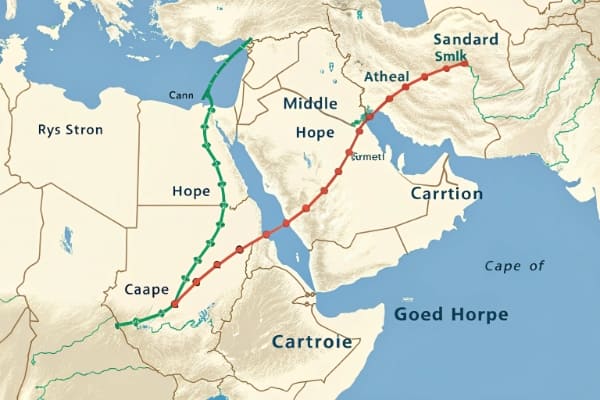
When the primary sea lanes become unreliable, we have to get creative. The most common alternative is rerouting vessels around the Cape of Good Hope in Africa. It’s a well-established route, but it adds significant time and fuel costs. I recently had a client with a time-sensitive promotional product order. The Cape route was too slow. So, we looked at the "Middle Corridor5." This is a multi-modal route that uses a mix of rail and sea transport to move goods from China, across Central Asia and the Caspian Sea, and into Europe. It's often faster than the diverted sea route and avoids maritime chokepoints. It's more complex to coordinate, which is where having a partner on the ground in China is essential. We manage all the handoffs between trains and ships. For other clients, we’ve used a sea-air solution, where goods travel by sea to a safe hub like Dubai and then are flown the rest of the way. It costs more than pure ocean freight but is much cheaper than pure air freight17.
Comparing Alternative Routes
| Route | Transit Time (vs. Suez) | Cost (vs. Suez) | Key Considerations |
|---|---|---|---|
| Cape of Good Hope | +10 to 14 days | +20% to 50% | Reliable but slow. Increases fuel consumption and carbon footprint. |
| Middle Corridor5 | -5 to 10 days | +40% to 80% | Faster than diverted sea freight. Involves multiple transfers. |
| Sea-Air Combo | -10 to 15 days | +100% to 300% | A good balance of speed and cost for urgent cargo. Requires a transshipment hub. |
Is air freight17 a viable backup during ocean freight disruptions?
Your ocean shipment is delayed indefinitely, and your factory is about to shut down. You're wondering if you should switch to air freight17, but you're worried about the extreme cost.
Air freight is a viable but expensive backup. It is best used for high-value, low-volume, or time-critical products where the cost of a production stoppage or lost sale outweighs the high shipping expense. It is not a sustainable solution for all goods.
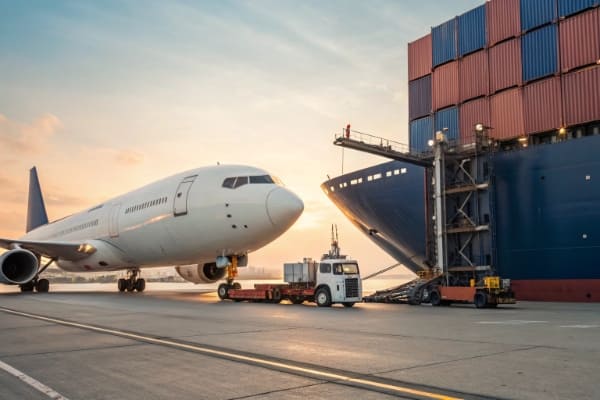
I always tell my clients to think of air freight17 as an emergency tool, not a replacement strategy. When an ocean freight crisis hits, many people panic and try to shift everything to air. This causes air freight17t capacity] to fill up quickly, and prices shoot up. The key is to be strategic. You don't need to fly everything. Instead, identify your most critical components or products. A few years ago, a client in the electronics business had a critical microchip shipment stuck at sea. Their entire assembly line was going to stop. The cost of shutting down the factory for a week was far greater than the cost of air freight17ing that one small, high-value shipment. So we arranged to fly just the essential chips, while the rest of the less critical components continued by sea on a diverted route. This approach kept their business running without breaking the bank. It's about a surgical approach: analyze the cost of the delay versus the cost of the flight.
When to Use Air Freight
- High-Value Goods: Products like electronics or pharmaceuticals where shipping is a small percentage of the total value.
- Time-Critical Cargo: Components needed to prevent a factory shutdown or products for a specific event or launch date.
- Small, Lightweight Items: Items where the volumetric weight doesn't lead to astronomical shipping costs.
How should importers manage inventory during unstable shipping conditions?
With shipping times so unpredictable, you're constantly running out of stock or holding too much. This feast-or-famine inventory cycle is hurting your sales and tying up your capital.
Importers should increase their safety stock6 for critical products to buffer against delays. Establishing regional warehouses closer to end markets can also reduce lead times. A "just-in-case" inventory strategy temporarily replaces a "just-in-time" model during periods of high instability.
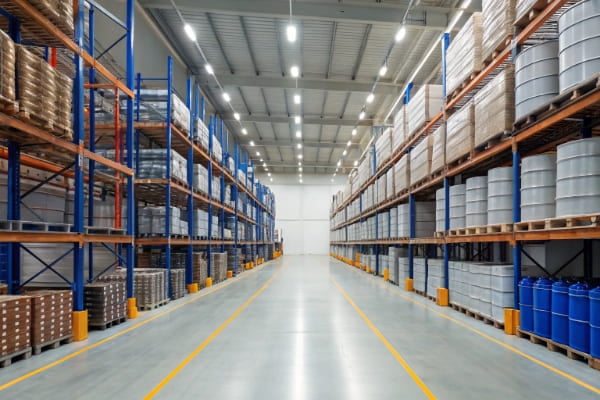
The "just-in-time" inventory model is great when supply chains are running smoothly. But during a crisis, it’s a recipe for disaster. I encourage our clients to shift to a "just-in-case" mindset. This means strategically increasing inventory for your most important products. We help them analyze their sales data to identify their A-list items—the 20% of products that generate 80% of their revenue. For these items, we recommend holding an extra 2-4 weeks of inventory, which we call "safety stock6." Another effective strategy is to split your inventory storage. Instead of keeping everything in one central location, we can arrange for buffer stock to be held in a regional warehouse. For a client in the US, we might hold extra inventory in a bonded warehouse on the West Coast. This means that even if their next big shipment from China is delayed, they can still fulfill orders from their regional hub, keeping customers happy and sales flowing. It’s all about creating buffers to absorb the shock of unexpected delays.
What contract strategies18 protect importers from freight volatility?
You agreed to one shipping price, but now you're being hit with new surcharges every week. Your contracts don't seem to be protecting you from this constant financial uncertainty.
To protect against volatility, importers should negotiate longer-term contracts14 with fixed rates or capped increases. It's also crucial to clearly define force majeure clauses and agree on specific Incoterms that clarify who bears the risk and cost during transit disruptions.

Your shipping contract is your first line of defense. Relying on the spot market for freight rates9 during a crisis is like gambling. I always push my clients to secure longer-term agreements. A six-month or one-year contract with a carrier or forwarder can lock in a base rate, protecting you from the wild swings of the spot market. You also need to pay close attention to the fine print. Look at the force majeure clause. This is the part of the contract that addresses "acts of God" or unforeseen events. A vague clause can leave you exposed. Your contract should clearly state what happens in a crisis—who is responsible for extra costs if a ship has to be rerouted? Incoterms are also critical. Terms like FOB (Free On Board) and EXW (Ex Works) define when risk and responsibility transfer from the seller to you. During a crisis, we often advise clients to use terms like DDP (Delivered Duty Paid), where we, as their partner, manage the entire process and assume the risk until the goods arrive at their door.
Key Contractual Protections
| Contract Element | Purpose | What to Look For |
|---|---|---|
| Fixed-Rate Agreements | To lock in pricing and avoid spot market volatility. | A clear base rate, defined surcharge caps, and a specific contract duration (e.g., 6-12 months). |
| Force Majeure Clause | To define responsibilities during unforeseen crises. | Specific language that covers geopolitical conflicts, port closures, and route diversions. |
| Incoterms | To clarify risk and cost transfer points. | Choose terms like DDP that place the logistics burden on a trusted partner, reducing your direct risk. |
How can a freight forwarder15 help secure stable shipping solutions?
You're trying to manage carriers, routes, and customs on your own, and it's overwhelming. You're losing time and money trying to react to a crisis you can't control.
A good freight forwarder15 acts as your strategic partner. They leverage their carrier relationships to secure space and fair rates, provide alternative route options, manage complex documentation, and offer risk mitigation strategies like cargo insurance, giving you a stable, managed solution.

Trying to navigate a global shipping crisis alone is incredibly difficult. This is where a partner like us at Toncentlink becomes essential. We aren't just booking space on a ship; we are managing your risk. Because we work with a large volume of shipments, we have strong relationships with multiple carriers. This means when capacity is tight, they are more likely to give us space. We also have dedicated teams that do nothing but monitor global trade lanes. We see a problem developing and can immediately present you with pre-vetted alternative solutions, whether it's rail, sea-air, or a different sea route. I had a client who was completely overwhelmed by the paperwork and communication required to reroute a shipment. We stepped in and handled everything—from negotiating with the carrier to updating the customs declarations. We essentially act as your in-house logistics department, absorbing the complexity so you can focus on running your business. We provide the stability and expertise needed to turn a chaotic situation into a manageable process.
Conclusion
To protect your business from the Strait of Hormuz crisis, you need a proactive, flexible supply chain strategy. This includes diversifying partners, managing inventory wisely, and using expert help.
Understanding the risks of the Strait of Hormuz is crucial for importers to navigate potential disruptions. ↩
Exploring carrier diversification can enhance your supply chain resilience against disruptions. ↩
Learn how war risk insurance can protect your cargo from geopolitical threats. ↩
Mapping vulnerabilities is essential for identifying risks and strengthening your supply chain. ↩
Discover how the Middle Corridor can provide a reliable shipping alternative during crises. ↩
Safety stock can buffer against delays, ensuring you meet customer demand even during crises. ↩
Securing freight capacity early can prevent last-minute price hikes and ensure timely deliveries. ↩
Understanding the causes of shipping delays can help you develop strategies to minimize their impact. ↩
Learn about the factors that influence freight rates and how to manage costs effectively. ↩
Understanding reputational risk can help you maintain customer trust during disruptions. ↩
Understanding the causes of cost surges can help you prepare and budget effectively. ↩
Exploring shipping alliances can reveal opportunities for cost savings and improved service. ↩
Real-time tracking can provide critical insights to anticipate and mitigate shipping disruptions. ↩
Longer-term contracts can stabilize shipping costs and protect against market volatility. ↩
A freight forwarder can provide expertise and resources to navigate complex shipping challenges. ↩
Exploring alternative routes can help maintain supply chain continuity during crises. ↩
Understanding when to use air freight can help you make cost-effective shipping decisions. ↩
Implementing strong contract strategies can safeguard your business against unexpected costs. ↩